● Updated March 2026 · 12 min read · By Arch. Vincent Abuya
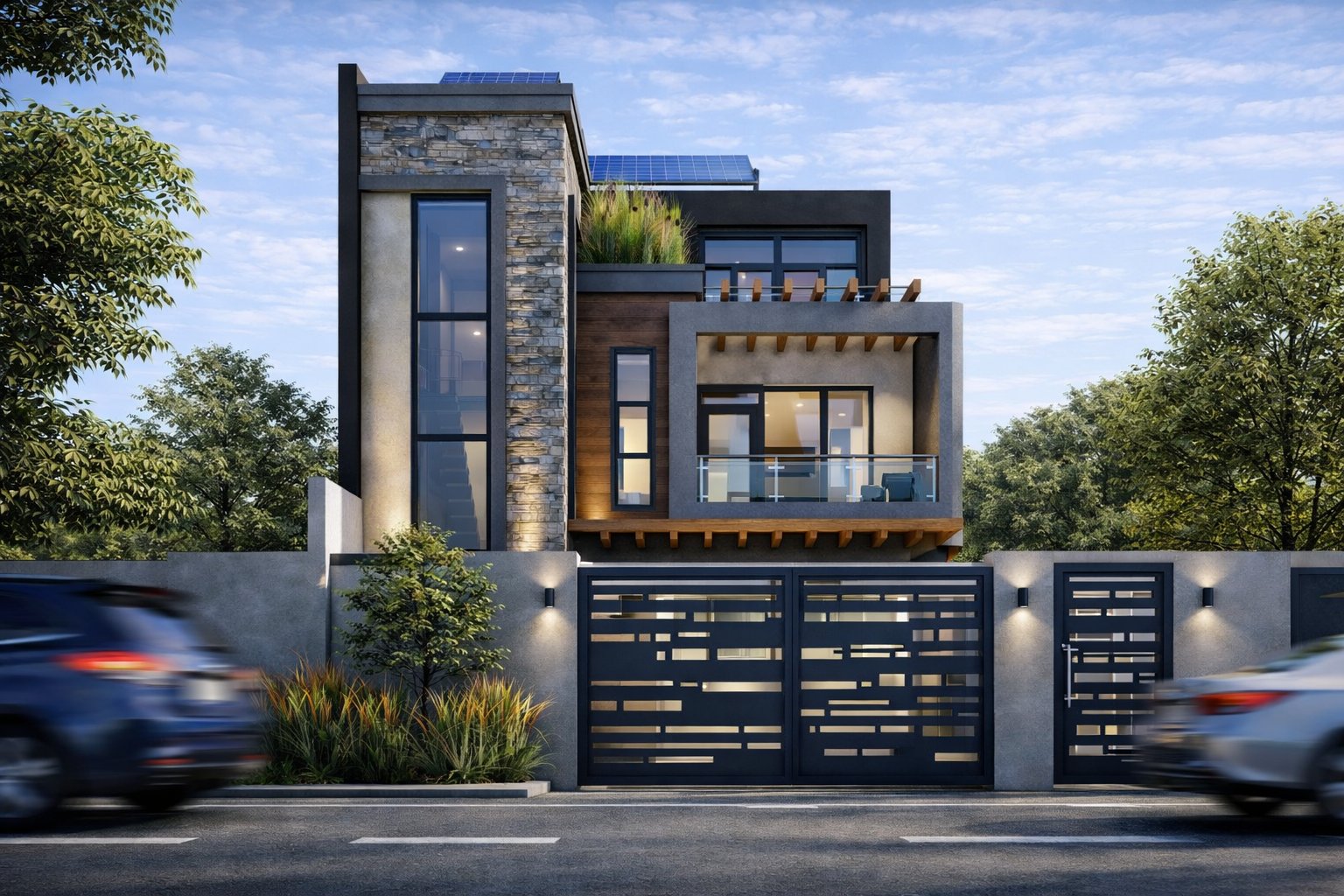
Flat roof houses have become one of the most recognisable trends in modern residential architecture across Kenya. From contemporary bungalows in Nairobi to luxury maisonettes in Kiambu, Nakuru, and Eldoret, flat roof designs are increasingly popular among homeowners seeking a clean, modern aesthetic combined with practical rooftop functionality.
Unlike traditional pitched roofs, flat roof houses feature horizontal rooflines and minimalist architectural forms. These designs suit urban environments where rooftop terraces, solar installations, and future vertical expansion are all desirable. At Aalis Studios, we specialise in contemporary residential architecture across Kenya. In this guide, we explore modern flat roof house designs, their advantages, construction considerations, and estimated building costs.
01 — Why Flat Roofs
Why Flat Roof Houses Are Becoming Popular in Kenya
The shift toward flat roof architecture in Kenya reflects both changing aesthetic preferences and practical demands of modern urban living. Here are the key drivers behind their growing popularity.
Contemporary Architectural Appeal
Flat roofs create a clean, minimalist appearance that aligns with modern architectural design trends. Many homeowners today prefer the bold, geometric "box house" look over traditional sloped roof styles — and flat roofs are the defining feature that makes that aesthetic possible.
Rooftop Outdoor & Functional Spaces
A flat roof is usable space. Homeowners are increasingly converting their rooftops into terraces, entertainment areas, rooftop gardens, or utility zones for water tanks and solar systems — particularly valuable in urban areas where ground-level outdoor space is limited.
Solar Panel Compatibility
Kenya has among the highest solar irradiation levels in the world. Flat roofs provide the ideal surface for solar panel installation because panels can be oriented at the optimal tilt angle regardless of the building orientation — something that pitched roofs cannot always accommodate.
Future Vertical Expansion
Flat roof houses are structurally easier to expand vertically than traditional roof structures. If your plot is modest in size but your family is likely to grow, a flat roof design preserves the option to add one or more floors in future without demolishing complex timber truss or steel roof systems.
Space Efficiency & Interior Volume
Without a pitched roof consuming overhead volume, flat roof homes can deliver higher usable ceiling heights throughout — lending interiors a sense of openness and space that can be difficult to achieve in traditional designs of the same footprint.
A contemporary flat roof residence in Kenya showing the clean horizontal roofline, full-height glazing, and integrated outdoor living terrace — defining features of modern flat roof architecture.
02 — Popular Designs
Popular Flat Roof House Designs in Kenya
Flat roof architecture can be applied across a wide range of residential typologies — from compact starter homes to large luxury maisonettes. Below are the most commonly designed flat roof house types in Kenya.
Starter Home
2 Bedroom Flat Roof Bungalow
80 – 100 m² · Single Storey
An ideal entry point into flat roof architecture. These compact homes maximise every square metre with open-plan living and dining layouts, and the clean roofline makes even a modest home feel contemporary and considered.
- ✓ Open-plan living & dining
- ✓ Covered front porch or terrace
- ✓ Rooftop space for water tank & solar
- ✓ Expandable to 3BR with simple addition
Most Popular
3 Bedroom Flat Roof House
110 – 140 m² · Single Storey
The most requested residential design in Kenya. Three-bedroom flat roof homes strike the ideal balance between family functionality and contemporary aesthetic, with room for a generous living area, separate dining, and an outdoor terrace or patio.
- ✓ Open-plan living, dining & kitchen
- ✓ Master bedroom with en-suite
- ✓ Outdoor patio or terrace
- ✓ Covered parking or carport
Family Home
4 Bedroom Flat Roof Bungalow
150 – 180 m² · Single Storey
Spacious single-storey homes where the flat roof enables maximum ceiling heights throughout and a large usable rooftop deck. These designs often incorporate internal courtyards, wraparound terraces, and dedicated home office or study spaces.
- ✓ Multiple en-suite bedrooms
- ✓ Large open-plan common areas
- ✓ Internal courtyard or atrium
- ✓ Rooftop entertainment deck
Luxury
4–5 Bedroom Flat Roof Maisonette
200 – 320 m² · Two Storey
Flat roof maisonettes combine multi-level living with the dramatic horizontality of contemporary architecture. Double-height spaces, floor-to-ceiling glazing, cantilevered upper floors, and expansive rooftop terraces define this typology at its most compelling.
- ✓ Double-height living room
- ✓ Cantilevered balconies
- ✓ Rooftop terrace or pool
- ✓ Floor-to-ceiling glazing
"The flat roof is not simply a cost decision — it is a design decision. When executed properly, it transforms even a modest plot into a contemporary home that reads as deliberate, confident architecture." — Arch. Vincent Abuya
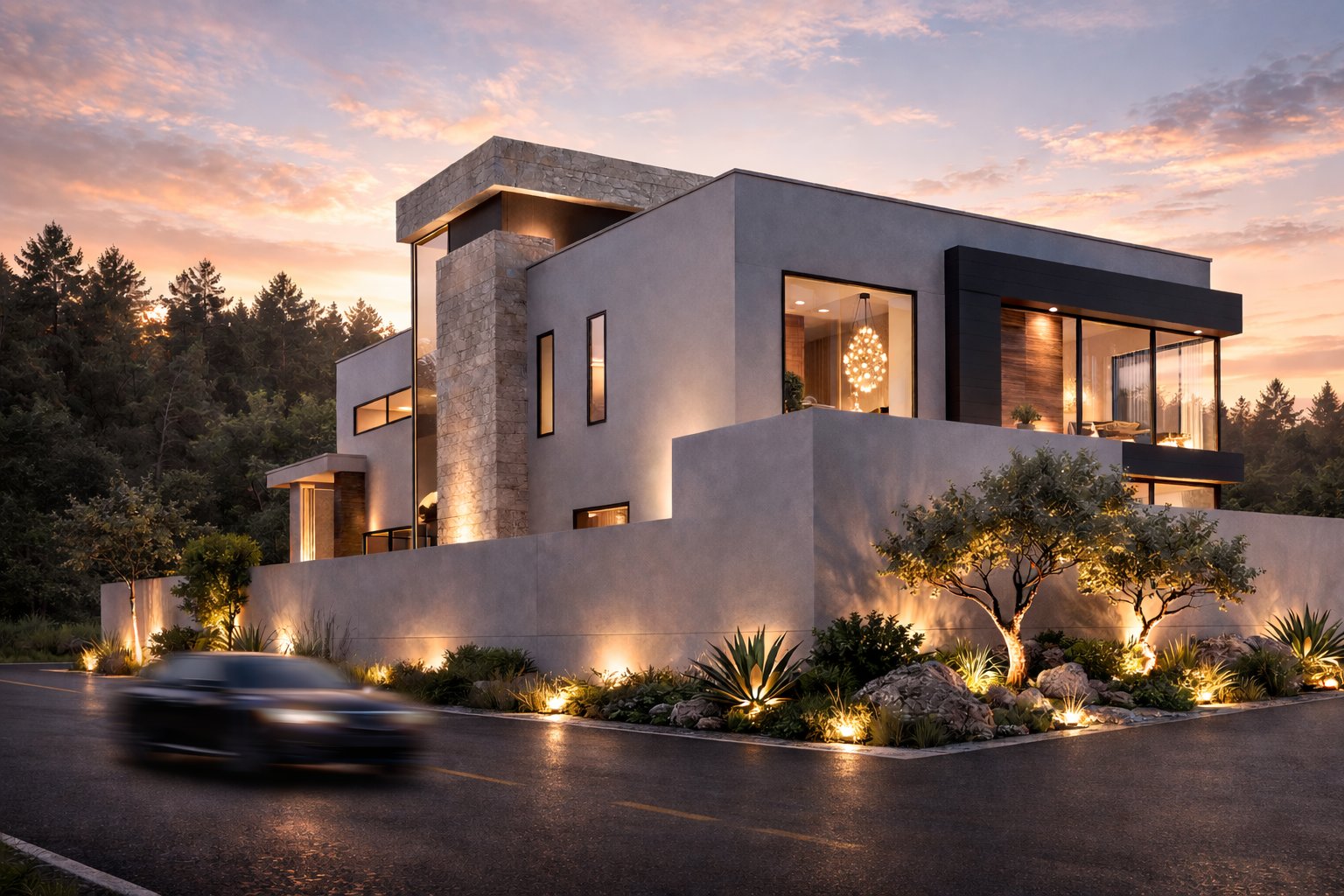
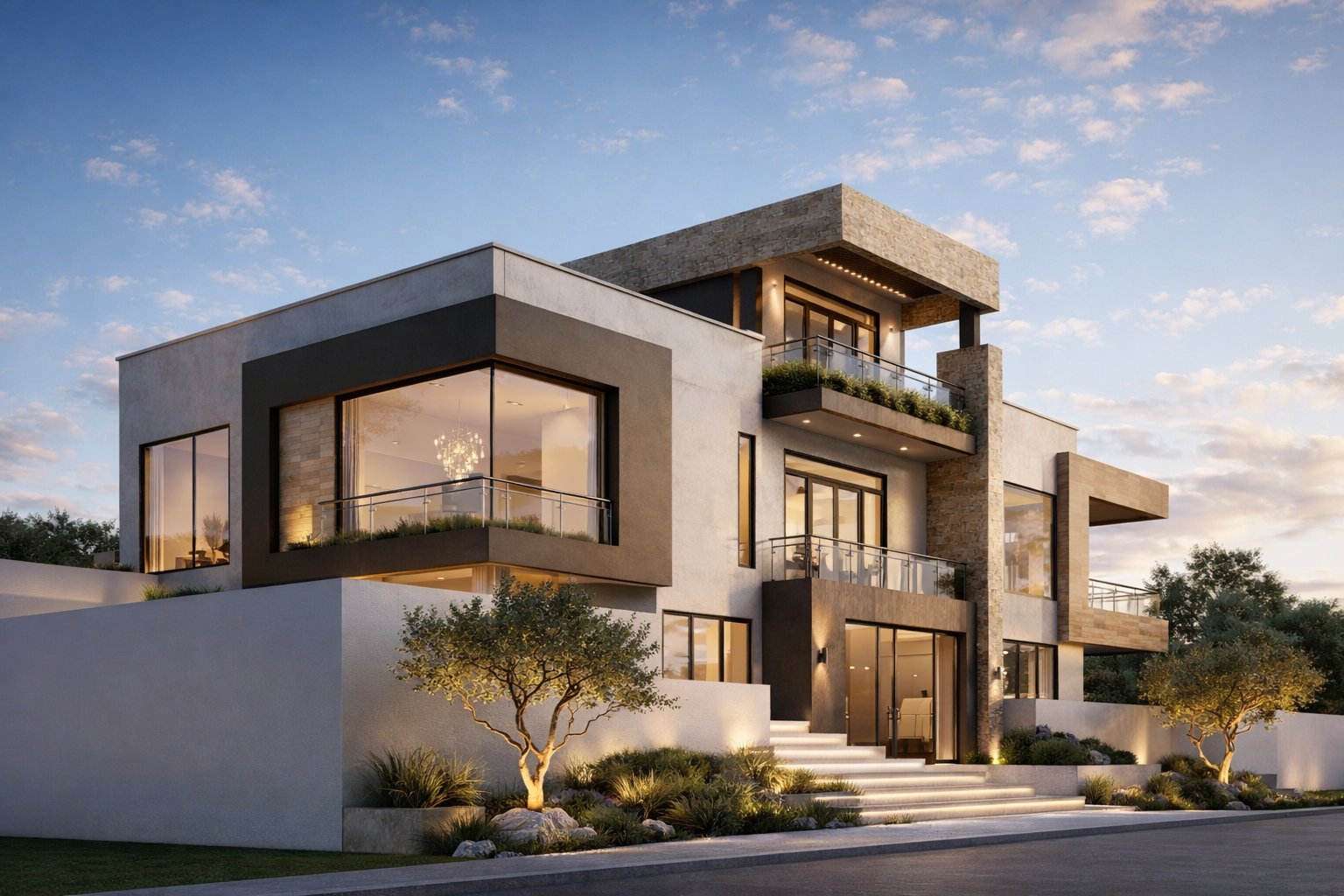
Flat Roof House Designs — Kenya
Contemporary flat roof residential designs by Aalis Studios — ranging from compact family homes to large multi-storey mansions across Kenya.
For a detailed walkthrough of how we approach residential design at Aalis Studios, visit our Our Work page to explore completed projects, or read our guide on construction cost per square metre in Kenya for a full cost framework.
03 — Construction Costs
Cost of Building a Flat Roof House in Kenya
Construction costs for flat roof houses in Kenya vary significantly depending on house size, structural design, finish level, and location. The table below gives indicative cost ranges based on current Nairobi market rates.
ⓘ
These are indicative estimates based on 2025/2026 Nairobi market rates. Actual costs vary with site conditions, design specifications, contractor rates, and county. All figures are in Kenya Shillings (KES). Contact Aalis Studios for a detailed Bill of Quantities specific to your project.
| House Type |
Approx. Size |
Estimated Cost |
Notes |
| 2 Bedroom Flat Roof Bungalow | 80–100 m² | KSh 2.5M – 3.8M | Standard finishes |
| 3 Bedroom Flat Roof House | 110–140 m² | KSh 3.5M – 5.5M | Mid-range finishes |
| 4 Bedroom Flat Roof Bungalow | 150–180 m² | KSh 5M – 8M | Mid-range to premium |
| 4 Bedroom Flat Roof Maisonette | 200–250 m² | KSh 6M – 10M | Standard to mid-range |
| 5 Bedroom Luxury Maisonette | 280–320 m² | KSh 12M – 20M+ | High-end or luxury finishes |
These figures cover structural construction, concrete slab roofing, waterproofing, interior finishes, plumbing, and electrical works. They typically exclude land, professional fees (architecture, structural engineering, quantity surveying, county approvals), external works (boundary wall, gate, driveway, landscaping), and a contingency buffer of at least 10–15%.
Entry Level
Basic Finish
40K–55K
KSh per m² · Local materials
- ✓ Ceramic floor tiles
- ✓ Standard paint finishes
- ✓ Basic plumbing & electrical
- ✓ Standard steel windows
- ✓ RC slab + basic waterproofing
Most Common
Standard
Mid-Range Residential
55K–75K
KSh per m² · Mid-range spec
- ✓ Porcelain floor tiles
- ✓ Quality paint & textured finishes
- ✓ Aluminium window systems
- ✓ Suspended gypsum ceilings
- ✓ Quality waterproof membrane
- ✓ Fitted kitchen & wardrobes
Premium
High-End & Luxury
75K–95K+
KSh per m² · Premium spec
- ✓ Large-format imported tiles
- ✓ Curtain wall glazing systems
- ✓ Specialty ceilings & joinery
- ✓ Imported kitchen & bathroom suites
- ✓ Liquid waterproofing + insulation
For a comprehensive cost breakdown across all house types — including maisonettes, bungalows, and multi-unit developments — read our full guide on cost of building a 3 bedroom house in Kenya, or speak to our team directly about architect fees and what a full design package costs at Aalis Studios architect fees in Kenya.
Get a Detailed Cost Estimate
Book a Paid Design Consultation with Arch. Vincent Abuya
KES 5,000 · 60 Minutes · Fee Credited to Your Project
In one focused session you receive: a review of your plot and zoning requirements, a realistic cost estimate for your specific flat roof design, guidance on the county approval process, and a written project roadmap within 24 hours. Available in-person in Nairobi or via video call for diaspora clients.
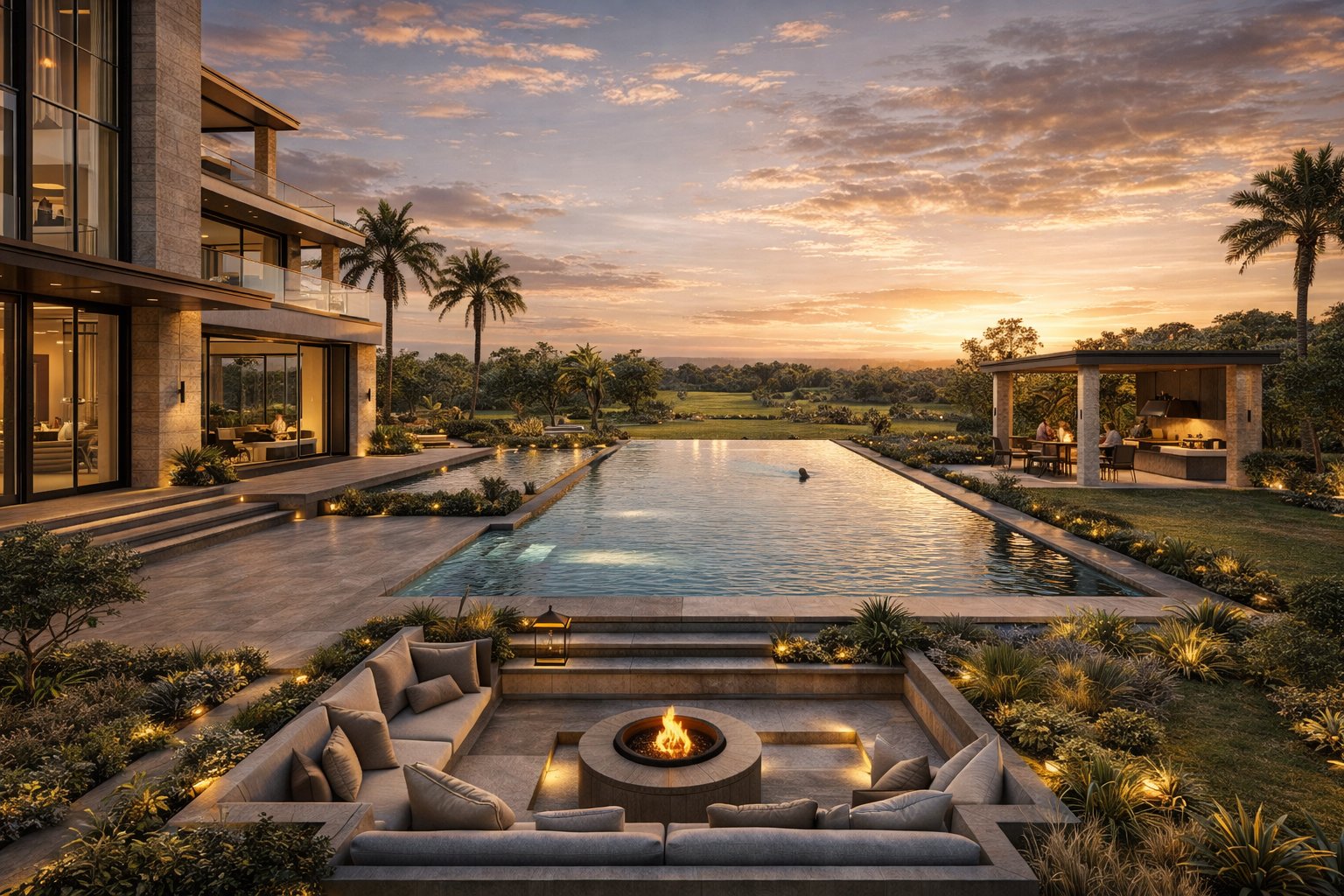
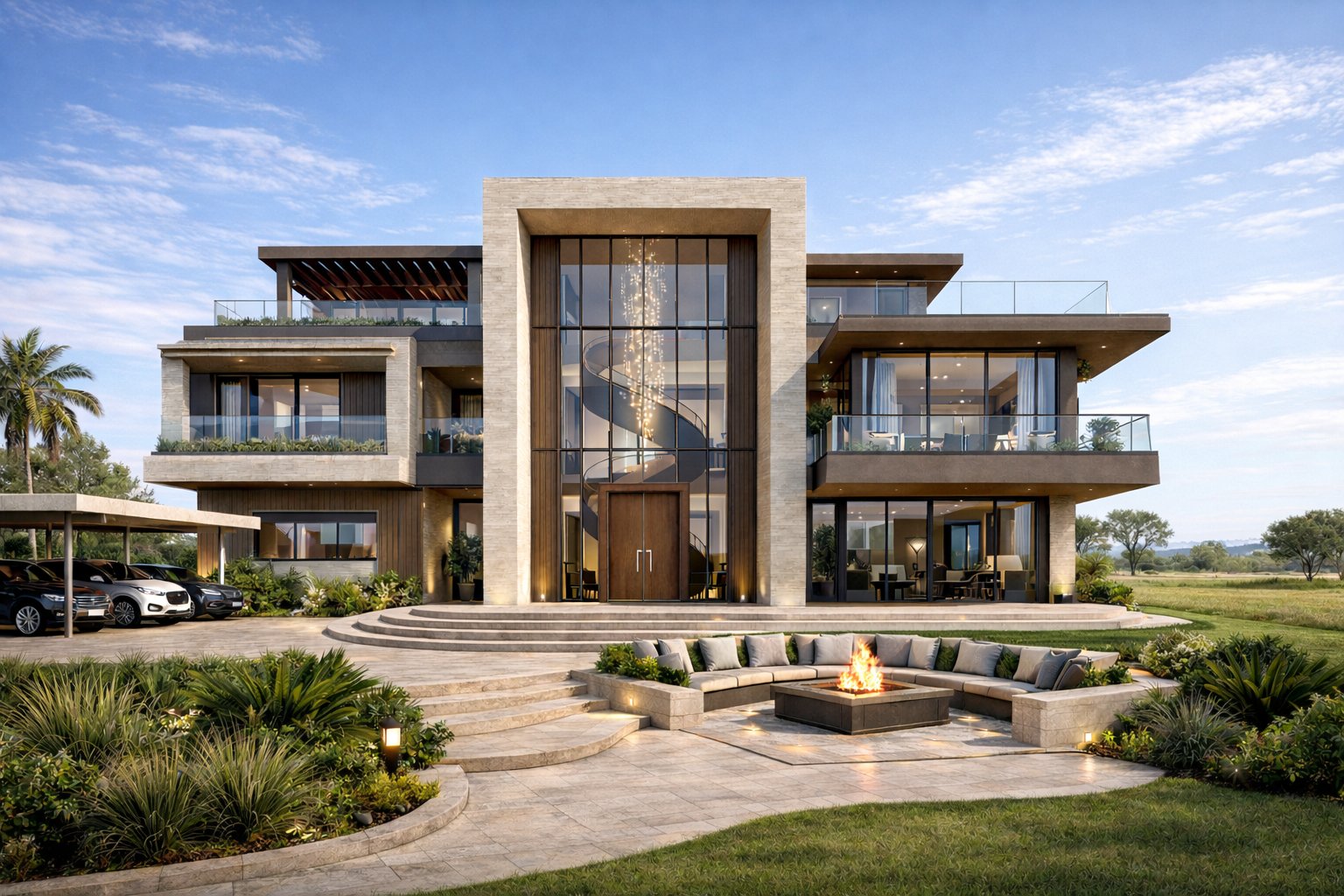
The outdoor living terrace — a defining feature of flat roof homes in Kenya. A well-designed flat roof unlocks covered terraces, fire pit areas, and landscaped gardens that extend the living space beyond the walls of the house.
04 — Flat vs Pitched Roof
Flat Roof vs Pitched Roof Designs in Kenya
Both flat and pitched roofs remain popular in Kenya, and each offers distinct advantages depending on location, budget, and design intent. Understanding the trade-offs before committing to a design direction can save significant cost and avoid regret.
| Factor |
Flat Roof |
Pitched Roof |
| Architectural aesthetic | Modern, minimalist, contemporary | Traditional, classic, familiar |
| Rainwater drainage | Requires engineered drainage channels and scuppers | Natural gravity drainage — simpler |
| Waterproofing requirement | High — quality membrane essential | Lower — relies on slope for runoff |
| Rooftop usable space | Yes — terrace, solar, water tanks | No usable rooftop space |
| Solar panel installation | Optimal — panels can be tilted freely | Depends on roof orientation and pitch |
| Future vertical expansion | Easier — no truss system to remove | Requires demolition of roof structure |
| Construction cost | Similar overall — RC slab + waterproofing | Timber/steel trusses can be cheaper at entry level |
| Long-term maintenance | Requires regular waterproofing inspection | Lower maintenance if tiles are intact |
The right choice depends on your architectural vision, site location, rainfall intensity, and long-term plans for the plot. Our team at Aalis Studios advises on roof design as part of every architectural project — ensuring the structural and aesthetic choices are aligned from the outset. See our full range of architectural expertise here.
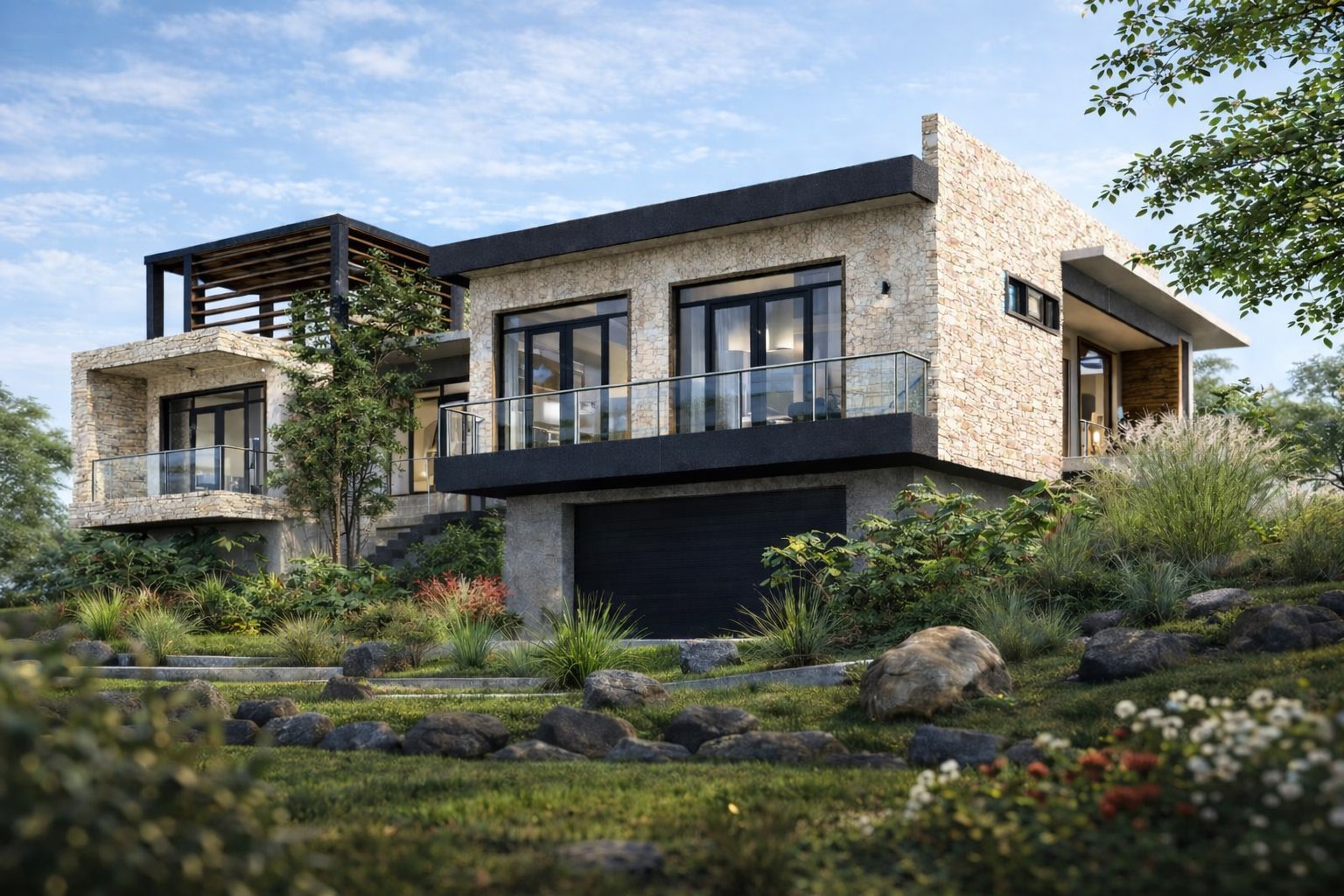
Flat Roof vs Pitched Roof — Visual Comparison
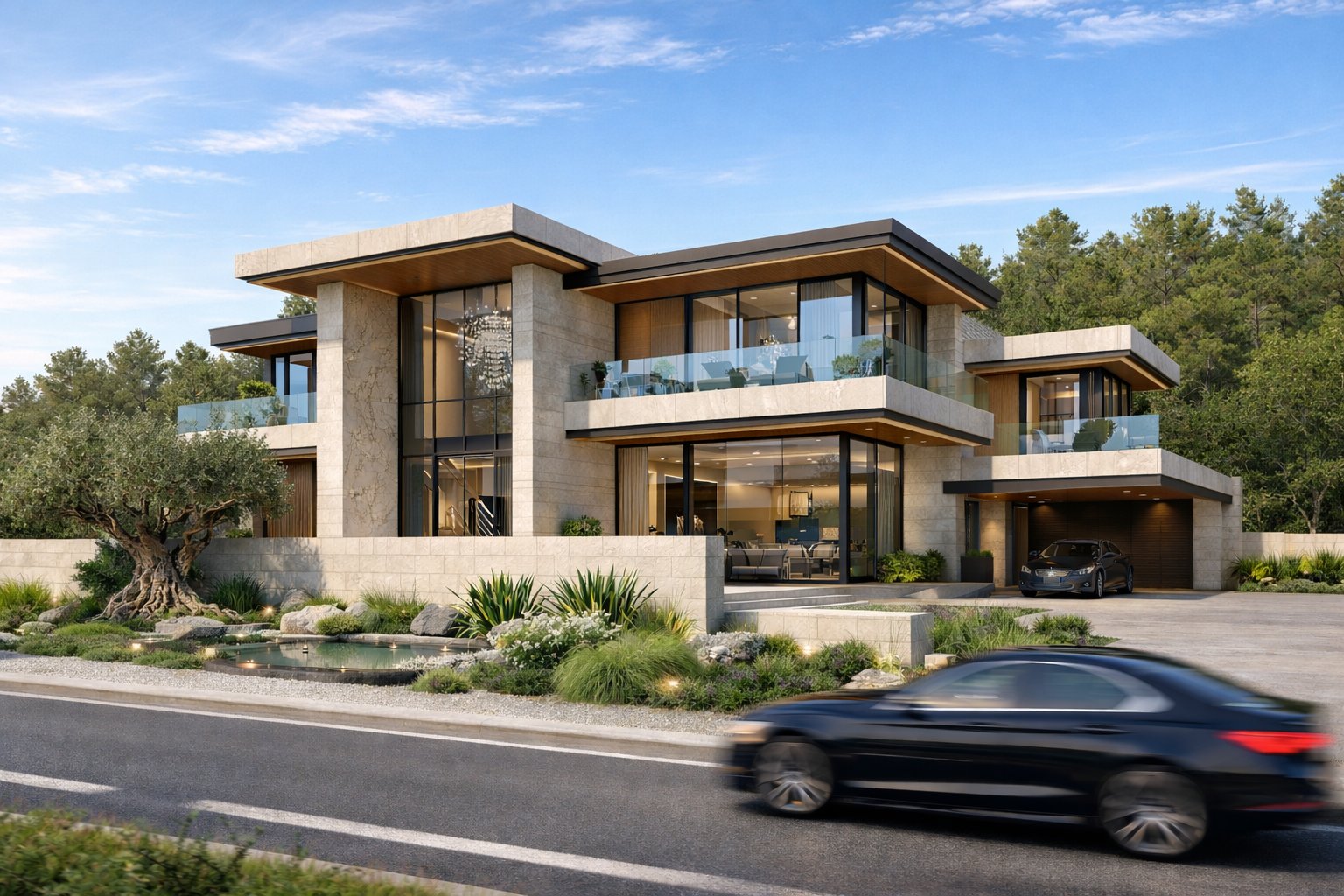
Left: A contemporary pitched-roof design with stone cladding and large glazed openings. Right: A hillside bungalow using stone cladding with a clean flat roofline. Both approaches use premium materials — the roof form is the key design and structural decision.
05 — Construction Materials
Best Materials for Flat Roof Construction in Kenya
The durability of a flat roof depends directly on the quality of the materials used in its construction and waterproofing. Using substandard materials is the most common cause of leaking flat roofs in Kenya — an expensive and disruptive problem that is entirely preventable.
Layer 01
Reinforced Concrete Slab
150mm
minimum slab thickness
The structural base of every flat roof in Kenya. A properly designed RC slab with the correct steel reinforcement, concrete mix, and minimum 1–2% drainage fall is non-negotiable. Always engage a structural engineer.
Layer 02
Screed & Drainage Fall
1–3%
minimum drainage slope
A sand-cement screed is laid over the structural slab to create the drainage fall toward outlets or scuppers. Without adequate fall, water ponds on the roof — the leading cause of premature waterproofing failure.
Layer 03
Waterproofing Membrane
2–3mm
torch-on or liquid applied
The waterproofing layer is the most critical element of flat roof performance. Options include torch-on bituminous membrane, liquid-applied polyurethane coatings, or EPDM rubber systems — each with different cost, durability, and maintenance profiles.
Layer 04
Thermal Insulation
50–75mm
rigid foam or mineral wool
Insulation beneath or above the waterproofing membrane dramatically improves indoor thermal comfort — keeping interiors cooler in Kenya's hot seasons and reducing air conditioning costs. An investment that pays back quickly in energy savings.
Layer 05
Protective Surface
UV resistant
tiles, gravel or coatings
The outermost finish protects the waterproofing from UV degradation and physical damage. Options include paving tiles on pedestals for accessible terraces, river gravel ballast for uninverted roofs, or reflective UV-resistant coatings.
Detail
Parapets & Upstands
300mm+
minimum upstand height
Parapet walls and waterproofing upstands at all roof edges, penetrations, and abutments are critical details. Most flat roof leaks in Kenya originate at poorly detailed junctions — not through the main roof membrane itself.
06 — Maintenance & Waterproofing
Waterproofing & Maintenance for Flat Roof Houses
A well-waterproofed flat roof requires minimal ongoing intervention. The key is getting the initial design and installation right — and performing simple periodic inspections to catch minor issues before they become major problems.
Annual Drainage Inspection
Check and clear all roof outlets, scuppers, and downpipes at least twice a year — particularly after the rainy seasons. Blocked drainage is the single most common cause of flat roof water damage in Kenya. This takes less than 30 minutes and costs nothing.
Membrane Condition Check
Every two to three years, arrange a professional inspection of the waterproofing membrane — checking for blisters, cracks, separation at upstands, or UV degradation. Minor repairs at this stage are inexpensive; ignoring them leads to structural water damage.
Parapet & Upstand Maintenance
The junction between the flat roof membrane and vertical wall surfaces is the most vulnerable point. Check that all upstands are intact, that no cracking has occurred at corners, and that any coping stones or metal flashings remain secure and watertight.
Re-coating & Re-membering
Quality torch-on bituminous membranes have a 15–20 year lifespan. Liquid-applied systems may require re-coating every 7–10 years. With proper maintenance and timely re-coating, a flat roof on a well-built Kenyan house can last 30 to 50 years without structural intervention.
"Flat roof failures in Kenya are almost never a design problem — they are an execution and maintenance problem. Built correctly, with quality materials and proper drainage, a flat roof is as reliable as any other in our climate." — Arch. Vincent Abuya
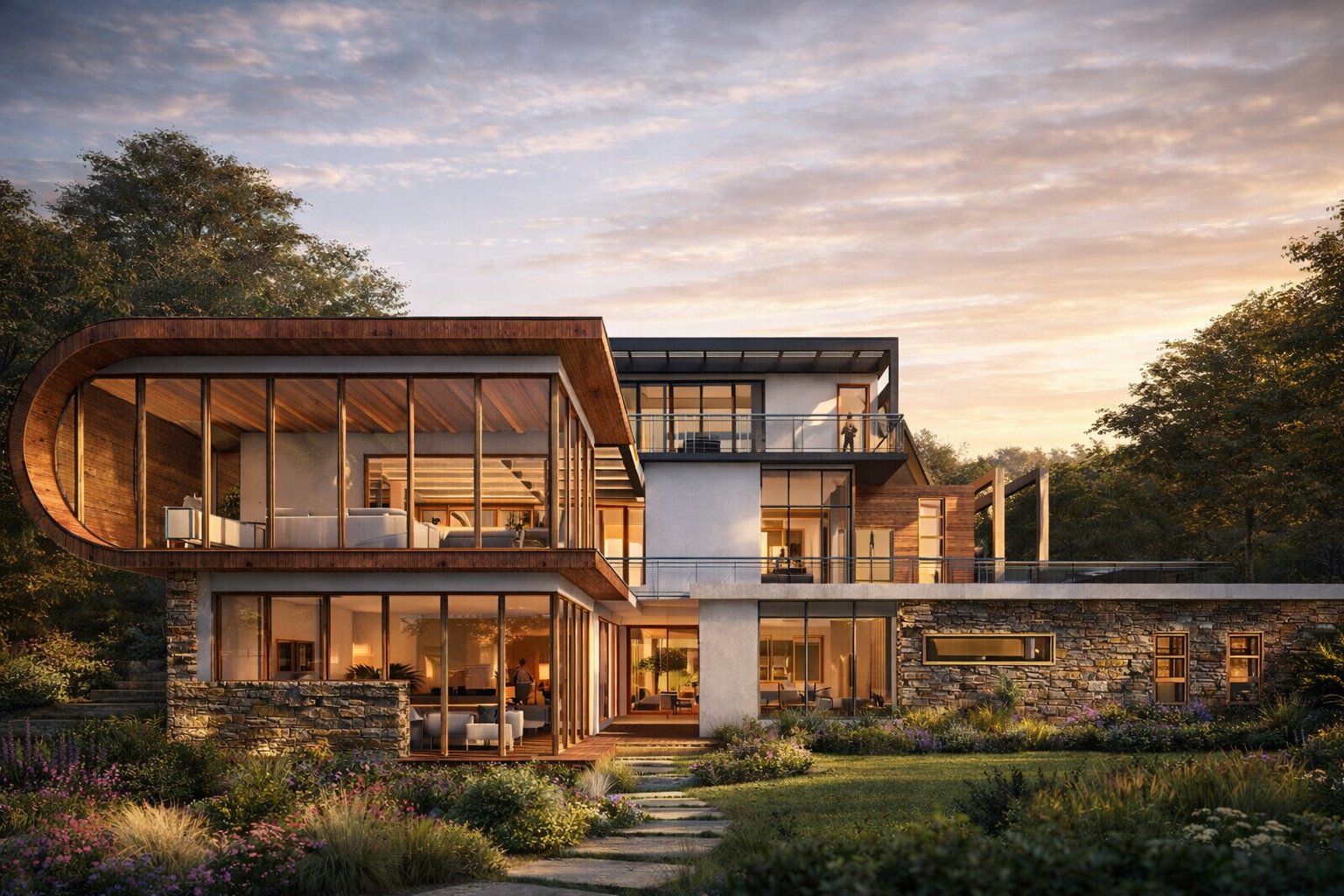
A well-executed flat roof villa in Kenya showcasing the combination of timber, full-height glazing, and clean horizontal rooflines — the result of proper design, quality materials, and professional waterproofing.
07 — Design Considerations
Designing Flat Roof Houses for Kenya's Climate
A flat roof house designed for Kenya must respond intelligently to local climate conditions — from the intense equatorial sun and high-altitude cold of Nairobi and Eldoret, to the coastal humidity of Mombasa and the heavy rainfall of western Kenya. Good design integrates these realities from the outset.
Deep Overhangs for Sun Control
In Kenya's equatorial climate, direct solar gain is a major contributor to indoor overheating. Well-designed flat roof houses incorporate generous eave overhangs, projecting canopies, or louvred brise-soleil elements to shade walls and openings — keeping interiors comfortable without relying on air conditioning.
Cross-Ventilation Design
Position openings to allow prevailing breezes to pass through the house — particularly important in low-altitude, warm regions. Flat roof houses with high clerestory windows or roof vents can create convective airflow that naturally cools interiors, reducing mechanical cooling requirements.
Roof Drainage Capacity for High-Rainfall Areas
In high-rainfall counties such as Kisumu, Nakuru, Nyeri, and western Kenya, flat roof drainage systems must be engineered to handle intense peak rainfall events — not just average annual rainfall. Oversizing outlets and providing overflow scuppers as a secondary drainage layer is essential in these regions.
Thermal Mass & Insulation for Highland Climates
At higher altitudes — Nairobi, Eldoret, Meru — nights can be cold. A flat roof slab with proper insulation retains daytime heat and moderates overnight temperature drops, reducing the need for heating. This is one area where flat roofs offer a genuine thermal advantage over lightweight pitched roof structures.
BORAQS & County Approval Compliance
All residential construction in Kenya requires BORAQS-certified architectural drawings before county approval can be obtained. Flat roof structural designs also require signed-off structural engineering drawings. Attempting to build without these documents is illegal and risks demolition orders.
Learn about our design and approval service.
Aalis Studios Design & Approval Service
Full Architectural Design & County Approval for Your Flat Roof Home
Our BORAQS-registered team handles everything from initial concept and 3D visualisation through to approved structural drawings and NCA project registration — so you can break ground with confidence.
The moment your design becomes reality — a family approaching their newly completed home. Every flat roof project at Aalis Studios is designed around how a family actually lives: the arrival sequence, the outdoor spaces, the morning light, the evening gathering.
08 — FAQ
Frequently Asked Questions About Flat Roof Houses in Kenya
Are flat roof houses suitable for Kenya's climate? +
Yes. When properly designed with adequate drainage falls, quality waterproofing membranes, and appropriate sun shading elements, flat roof houses perform very well in Kenya's climate — including high-rainfall areas. The key is professional design and execution, not avoiding flat roofs.
Are flat roof houses cheaper to build in Kenya? +
Flat roofs eliminate the need for timber or steel trusses but require a reinforced concrete slab and professional waterproofing — which are not cheap. The overall cost is broadly comparable to a pitched roof of similar quality. At entry level, a pitched roof can be marginally less expensive; at mid-to-high specification, costs are similar. The value in a flat roof comes from usable rooftop space and design quality, not from lower construction cost.
How much does it cost to build a 3 bedroom flat roof house in Kenya? +
A typical 3-bedroom flat roof house in Kenya (110–140 m²) costs between KSh 3.5M and KSh 5.5M depending on location, finish level, and structural design. This figure typically covers construction, waterproofing, plumbing, electrical, and mid-range finishes — but excludes land, professional fees, and external works. For a detailed breakdown, read our
3 bedroom house cost guide.
Can I install solar panels on a flat roof house in Kenya? +
Yes — and flat roofs are arguably the best surface for solar installation in Kenya. Unlike a pitched roof where the panel angle is largely fixed by the roof slope and orientation, flat roof panels can be mounted on adjustable frames at the optimal tilt angle (typically 10–15° from horizontal in equatorial Kenya) facing any direction. This maximises solar yield and simplifies maintenance access.
Do flat roof houses need more maintenance than pitched roofs? +
Flat roofs require more attention to drainage and waterproofing than pitched roofs — but with quality materials and a simple annual maintenance routine (clearing drains, inspecting upstands and membranes), they are not significantly more demanding. Problems arise when drainage is neglected or when substandard waterproofing is applied. A well-built flat roof in Kenya can last 30–50 years with proper care.
Do I need an architect for a flat roof house in Kenya? +
Yes. Under Kenyan law (Cap 525), BORAQS-registered architectural drawings are required before county approval can be granted for any residential building. For flat roof structures, a structural engineer must also sign off on the slab and drainage design. Proceeding without registered professionals exposes you to stop-notices, demolition orders, and insurance voidance. Aalis Studios provides BORAQS-certified design and full county approval submission as part of our standard service.
Can I add a second floor to a flat roof house in Kenya later? +
Yes — and this is one of the most compelling arguments for building flat roof from the outset. Provided the original structure is designed to carry the additional load (which requires input from a structural engineer), adding a second floor is straightforward: there is no complex roof structure to demolish, and the existing flat slab simply becomes the new floor. Always design for future expansion at the initial structural design stage to avoid costly remedial work.
Designing a Modern Flat Roof House in Kenya?
At Aalis Studios, we specialise in contemporary residential architecture tailored to Kenya's climate, lifestyle, and county approval requirements. Whether you are planning a compact flat roof bungalow, a spacious maisonette, or a luxury villa — we bring design intelligence and professional rigour to every project.
Explore our completed projects on the Our Work page, learn about our team on the About page, or reach out directly via the contact page to start the conversation about your project.
VA
Arch. Vincent Abuya
BORAQS Registered
NCA Registered
Principal Architect
Arch. Vincent Abuya is the Principal Architect and founder of Aalis Studios, a Nairobi-based architecture and interior design firm. With extensive experience delivering contemporary residential projects across Kenya, he specialises in modern flat roof architecture, luxury residential design, and translating client visions into beautifully executed, structurally sound homes.