● Updated March 2026 · 12 min read · By Arch. Vincent Abuya
- 01 · Construction Cost Overview in Kenya
- 02 · Typical Size & Design of a 3 Bedroom House
- 03 · Estimated Construction Cost
- 04 · Full Cost Breakdown Table
- 05 · Cost of Building in Rural Kenya
- 06 · Materials Breakdown — What You Actually Need
- 07 · Factors That Affect the Cost
- 08 · How Architectural Design Affects Cost
- 09 · Practical Tips for Homeowners
- 10 · Frequently Asked Questions
The cost of building a 3 bedroom house in Kenya in 2025 typically ranges between KSh 4 million and KSh 9 million for a standard bungalow with mid-range finishes. Larger designs, premium specifications, or challenging site conditions can push costs well above KSh 12 million. This guide breaks down exactly what drives those numbers — and how to plan your budget before a single brick is laid. For a broader look at all house types, see our complete guide to building costs in Kenya.
Construction Cost Overview in Kenya 2025
Kenya's residential construction market operates across a wide cost spectrum. At the lower end, a basic single-storey house can be built for KSh 40,000 per square metre using locally sourced materials and standard finishes. At the premium end, high-specification homes in Nairobi's satellite towns reach KSh 90,000 per square metre or more once imported fittings, smart home systems, and luxury finishes are factored in.
For a 3 bedroom house, most Kenyan homeowners fall in the mid-range: a well-designed, comfortable home at roughly KSh 55,000–70,000 per square metre. This is the range that delivers durable construction, quality finishes, and a design that holds its value — without the excess of a high-end specification.
- ✓ Ceramic floor tiles
- ✓ Standard steel windows
- ✓ Basic plumbing & wiring
- ✓ Simple roof design
- ✓ Porcelain tiles throughout
- ✓ Aluminium window frames
- ✓ Fitted kitchen & wardrobes
- ✓ Suspended ceilings
- ✓ Quality paint finishes
- ✓ Imported porcelain or marble
- ✓ Curtain wall glazing
- ✓ Custom kitchen & joinery
- ✓ Feature ceilings & lighting
- ✓ Smart home systems
Typical Size & Design of a 3 Bedroom House in Kenya
The most common 3 bedroom residential design in Kenya is a single-storey bungalow ranging from 100 m² to 160 m² in total floor area. This size comfortably accommodates three bedrooms (typically a master en-suite and two standard rooms), one family bathroom, an open-plan or semi-open kitchen and dining space, a living room, and a small utility area.
Standard Bungalow Layout
A well-designed 120 m² bungalow on a standard 40×80 plot typically allocates space as follows: the master bedroom with en-suite takes approximately 20 m², each secondary bedroom takes 14–16 m², and the combined kitchen and dining area occupies 22–28 m². The remaining area covers the living room, circulation spaces, bathrooms, and a small veranda. This compact but efficient layout is achievable on most residential plots in Nairobi, Kiambu, Machakos, and other counties.
Two-Storey 3 Bedroom Design
Some homeowners choose a two-storey format — a three-bedroom configuration with the master bedroom upstairs and living areas below, or all three bedrooms on the upper floor. This delivers more living space on a smaller plot footprint. However, the structural requirements of a second floor increase cost per square metre by approximately 20–35% compared to a bungalow of equivalent area. For a full comparison of single and multi-storey construction costs, see the overall cost of building a house in Kenya guide.
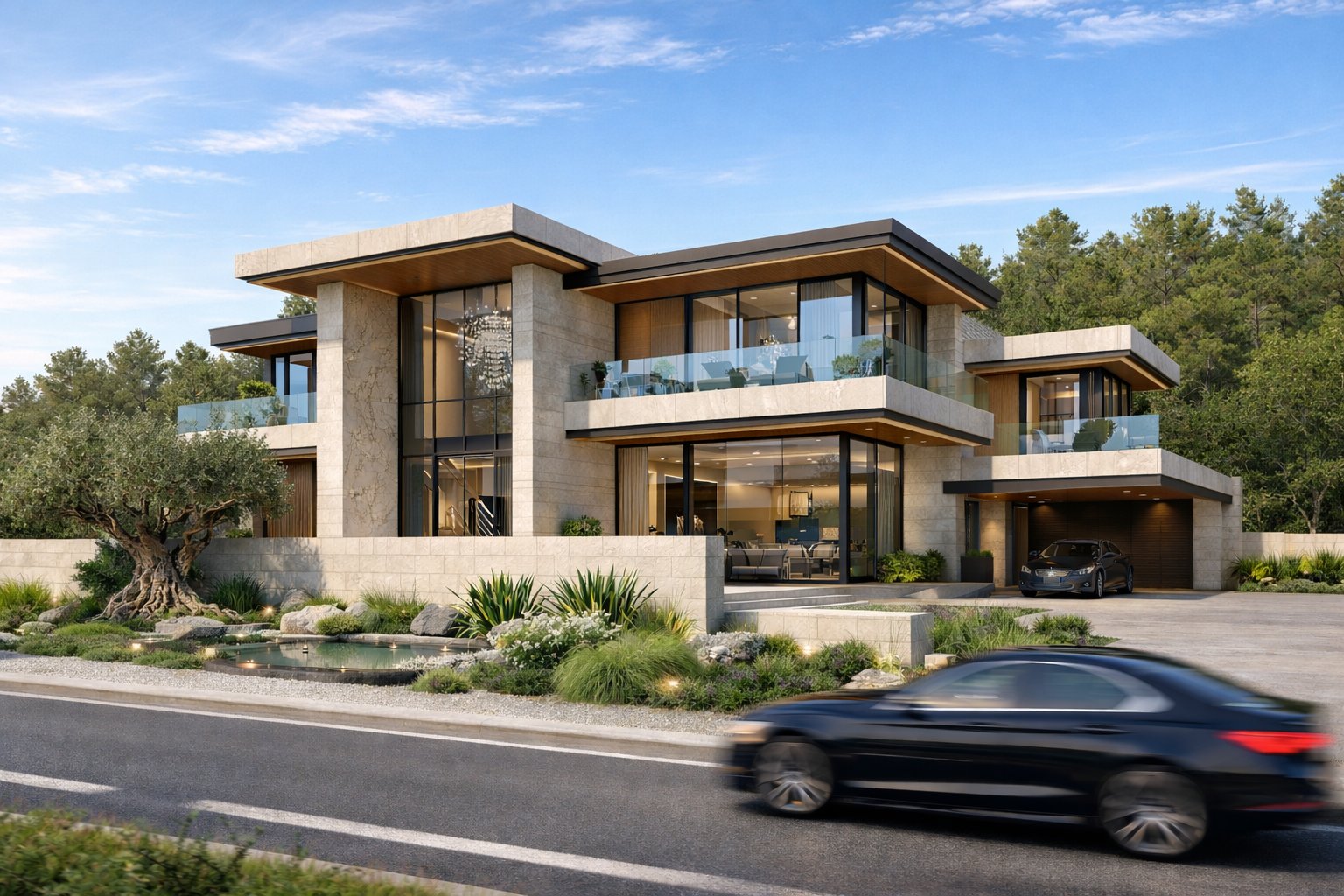
A well-executed 3 bedroom residential design in Kenya with stone cladding, generous glazing, and landscape lighting — achievable at KSh 65,000–75,000 per m²
Design tip: A rectangular or L-shaped plan is consistently more cost-efficient than irregular geometries. Every additional corner in a wall plan adds material, formwork, and labour cost. Our architects regularly save clients 8–15% on structural costs simply through plan optimisation at the design stage.
Estimated Construction Cost of a 3 Bedroom House in Kenya
Based on current 2025 market rates in Nairobi and surrounding counties, here are realistic cost estimates for a 3 bedroom house at different sizes and specification levels.
Cost per m²: KSh 65,000
Cost per m²: KSh 45,000
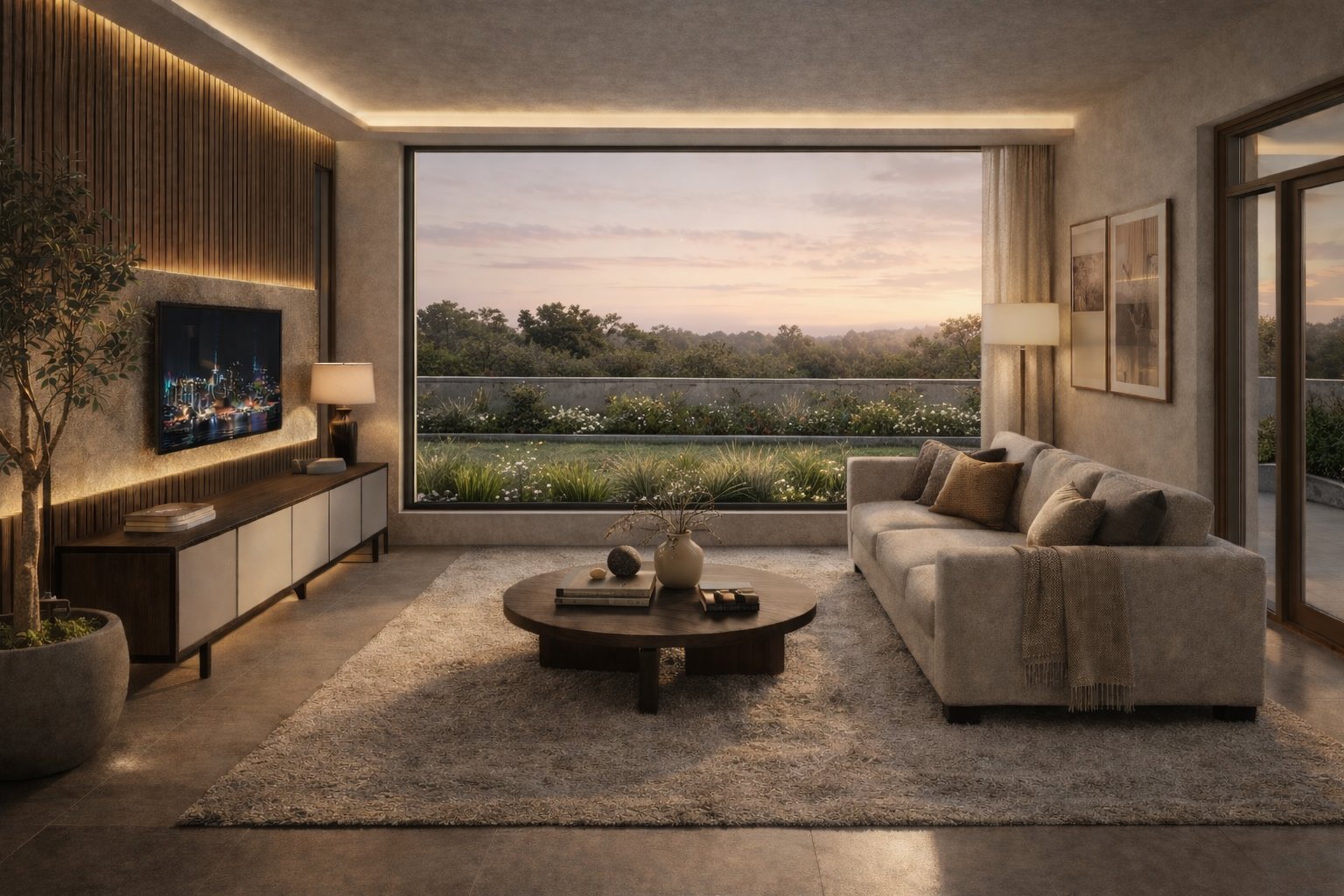
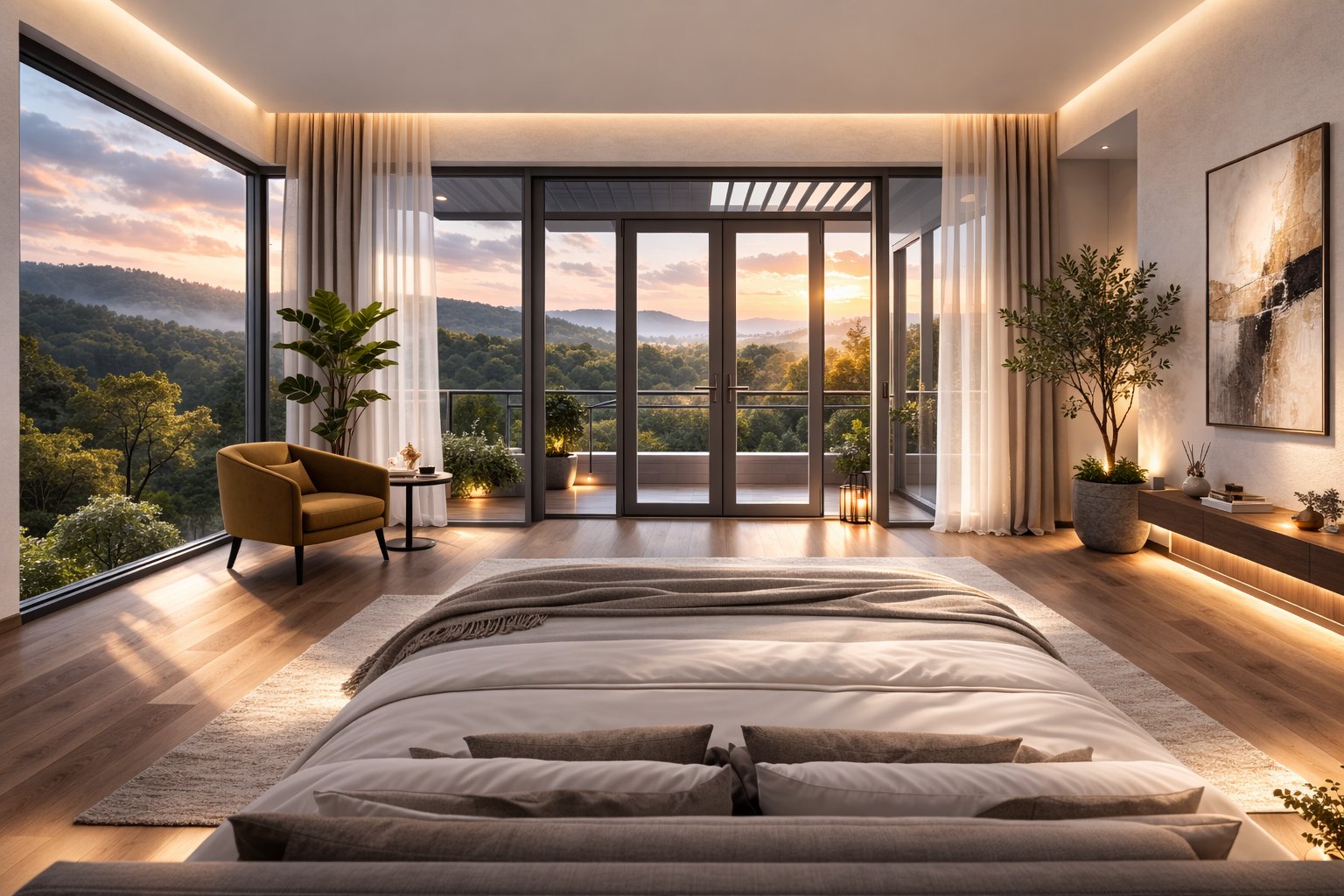
Completed interiors from an AALIS Studios 3 bedroom residential project — living room and master bedroom suite with balcony access
3 Bedroom House Cost Table — Kenya 2025
The table below provides a comprehensive cost reference for a 3 bedroom house in Kenya across different sizes and finish specifications. All figures are in Kenya Shillings and assume mid-range contractor rates.
| House Size | Finish Level | Cost per m² | Estimated Total Cost |
|---|---|---|---|
| 100 m² Bungalow | Basic | KSh 40,000–50,000 | KSh 4M – 5M |
| 100 m² Bungalow | Standard | KSh 55,000–65,000 | KSh 5.5M – 6.5M |
| 120 m² Bungalow | Standard | KSh 60,000–70,000 | KSh 7.2M – 8.4M |
| 120 m² Bungalow | Premium | KSh 75,000–90,000 | KSh 9M – 10.8M |
| 150 m² Bungalow | Standard | KSh 60,000–70,000 | KSh 9M – 10.5M |
| 150 m² Two-Storey | Standard | KSh 70,000–80,000 | KSh 10.5M – 12M |
| Typical range — 3 bedroom house in Kenya | KSh 4M – 12M+ | ||
Note: These estimates cover construction from foundation to completion. They exclude land purchase, county approval fees, professional fees (typically 8–15% of construction cost), external works such as boundary walls and driveways, and a recommended 10–15% contingency allowance.
Our complete guide covers bungalows, maisonettes, villas, and luxury homes — with cost per m² tables, stage-by-stage breakdowns, and real KES examples.
Cost of Building a 3 Bedroom House in Rural Kenya
One of the most common questions we receive is: how much does it cost to build a 3 bedroom house in rural Kenya? The short answer is that rural construction can be 20–35% cheaper than building in Nairobi or Mombasa — but the savings depend heavily on proximity to suppliers, availability of skilled labour, and the quality of site access.
Why Rural Builds Cost Less
Labour rates in rural counties such as Murang’a, Kisii, Bungoma, Meru, Kakamega, and Kitui are typically 20–30% lower than Nairobi rates. In addition, land is cheaper, plot sizes are more generous, and there is less premium on compact, complex design. A standard rural bungalow can be built at KSh 35,000–50,000 per m² — compared to KSh 55,000–70,000 in the city.
| Location | Finish Level | Cost per m² | Total Cost (120 m²) |
|---|---|---|---|
| Rural village / upcountry | Basic (mabati roof) | KSh 28,000–38,000 | KSh 3.4M – 4.6M |
| Rural town / market centre | Basic–Standard | KSh 38,000–50,000 | KSh 4.6M – 6M |
| Satellite town (e.g. Thika, Kitengela, Rongai) | Standard | KSh 50,000–62,000 | KSh 6M – 7.4M |
| Nairobi / Mombasa urban | Standard | KSh 60,000–75,000 | KSh 7.2M – 9M |
| Rural Kenya saving vs Nairobi (same spec) | 20–35% lower | ||
What the Rural Cost Saving Looks Like in Practice
A 120 m² basic-finish bungalow built in a rural area — with mabati (iron sheet) roofing, ceramic floor tiles, standard steel windows, and basic plumbing — can realistically be completed for KSh 3.5–4.8 million. The same house with concrete tile roofing and mid-range finishes sits at KSh 5–6.5 million. These figures assume locally sourced materials and that sand, ballast, and hardcore are available nearby.
Important: Transport costs are the hidden expense in rural builds. If your site is more than 40 km from the nearest hardware town or cement depot, budget an additional KSh 150,000–350,000 for materials haulage — particularly for cement, steel, and roofing sheets. Remote sites with poor road access can add 8–15% to total materials cost.
Does Rural Kenya Still Require Architectural Drawings?
Yes. BORAQS-registered architectural drawings are a legal requirement under Kenyan law (Cap 525) for any permanent residential structure — regardless of location. County government approval is required whether you are building in Nairobi or in a rural ward. Building without approved drawings exposes you to demolition orders and insurance voidance. AALIS Studios provides county-approval packages for clients across Kenya, including remote and upcountry projects. Contact us to discuss your rural build.
Materials Breakdown for a 3 Bedroom House in Kenya
Understanding the materials required for a 3 bedroom house is essential for budgeting accurately before you approach a contractor or hardware store. Below is a practical guide to the main materials — including realistic quantities, current 2025 price ranges, and guidance on the most cost-effective choices available in Kenya.
How Many Bags of Cement for a 3 Bedroom House?
A standard 120 m² bungalow typically requires between 600 and 900 bags of cement (50 kg bags) from foundation to roof, excluding finishes. This figure varies depending on foundation type, wall construction method (blocks vs. bricks), and floor slab specification. Finishes — plastering, screeding, and tiling mortar — can add a further 150–250 bags. Plan for a minimum of 800 bags total for a well-finished standard bungalow.
How Many Tonnes of Sand for a 3 Bedroom House?
Sand is used at multiple stages: in concrete mixes (foundation, slab, ring beam), in block/brick laying mortar, and in plastering and screed. For a standard 120 m² bungalow, you should budget for approximately 35–50 tonnes of sharp sand (for concrete) and 20–30 tonnes of plaster sand (for plastering and screeding), giving a combined total of roughly 55–80 tonnes. Sandy soil or loose hardcore on site may reduce the sharp sand requirement slightly. Always purchase from certified quarries to ensure clean, silt-free sand.
How Many Stones (Blocks) for a 3 Bedroom House in Kenya?
In Kenya, "stones" in construction typically refers to concrete hollow blocks (6-inch or 9-inch). For a 120 m² bungalow with standard 9-inch external walls and 6-inch internal partitions, you will need approximately 3,000–4,500 blocks, depending on wall height (typically 3 m floor-to-ceiling), number of window and door openings, and the mix of 6-inch and 9-inch blocks used. If using burnt clay bricks instead of hollow blocks, the equivalent quantity is roughly 12,000–16,000 bricks. Your structural engineer’s drawings will specify the exact requirement.
How Many Roofing Sheets for a 3 Bedroom House?
For a simple gable or hip roof on a 120 m² bungalow, you will typically need 80–120 gauge-30 mabati sheets (3 m length) depending on roof pitch and overhang. A steeper pitch requires more sheets but sheds water more effectively. Concrete roof tiles are an alternative and typically require 1,100–1,500 tiles for the same roof area. Mabati is cheaper upfront; concrete tiles last longer and provide better insulation.
How Many Steel Bars (Reinforcement) for a 3 Bedroom House?
Steel reinforcement (Y12, Y16, R6 ties) is used in the foundation, columns, ring beam, and slab. For a standard 120 m² bungalow without an upper floor, budget approximately 2.5–4 tonnes of reinforcement steel. A structural engineer should specify the exact grade and quantities from approved drawings — over-specification wastes money, and under-specification is a structural risk.
| Material | Estimated Quantity | Unit Price (2025) | Estimated Cost |
|---|---|---|---|
| Cement (50 kg bags) | 800–1,000 bags (incl. finishes) | KSh 650–750 per bag | KSh 520K – 750K |
| Sand (sharp + plaster) | 55–80 tonnes | KSh 2,000–3,500 per tonne | KSh 110K – 280K |
| Ballast / Hardcore | 20–35 tonnes | KSh 2,000–3,000 per tonne | KSh 40K – 105K |
| Hollow blocks (6" & 9") | 3,000–4,500 blocks | KSh 55–80 per block | KSh 165K – 360K |
| Reinforcement steel | 2.5–4 tonnes | KSh 110,000–130,000 per tonne | KSh 275K – 520K |
| Roofing sheets (mabati) | 80–120 sheets (gauge 30) | KSh 1,800–2,500 per sheet | KSh 144K – 300K |
| Timber (roof trusses) | 2–4 m³ | KSh 70,000–90,000 per m³ | KSh 140K – 360K |
| Doors (frames + leaf) | 5–7 units | KSh 18,000–45,000 per unit | KSh 90K – 315K |
| Windows (aluminium) | 8–12 units | KSh 12,000–28,000 per unit | KSh 96K – 336K |
| Floor tiles (ceramic/porcelain) | 130–160 m² | KSh 900–2,800 per m² | KSh 117K – 448K |
| Electrical wiring & fittings | Full house | KSh 200,000–450,000 | KSh 200K – 450K |
| Plumbing & sanitary fittings | Full house (3 bathrooms) | KSh 250,000–550,000 | KSh 250K – 550K |
| Estimated Total Materials Cost (120 m² bungalow) | KSh 2.1M – 3.8M | ||
Note: Materials typically represent 50–60% of total construction cost. Labour, professional fees, approvals, and external works make up the balance. Prices are 2025 estimates and vary by region, supplier, and purchase volume.
What Are the Cheapest Building Materials in Kenya?
The cheapest house building materials in Kenya that still deliver a durable, liveable result are:
What Materials Are Used to Build Houses in Kenya?
The materials used in Kenyan residential construction vary by region and budget, but the standard palette for a permanent 3 bedroom house includes:
Architect’s note: The choice of walling material should be driven by what is locally abundant, not just by upfront cost. In Nakuru or Nyeri, where building stone is quarried nearby, stone walls can be cheaper and more durable than hollow blocks transported from Nairobi. Your architect should specify materials that match both your budget and your site’s geography. AALIS Studios always includes a materials sourcing strategy in our design packages.
Major Factors That Affect the Cost
No two 3 bedroom houses cost the same to build in Kenya. Understanding the main drivers will help you budget more accurately and make smarter decisions before you break ground.
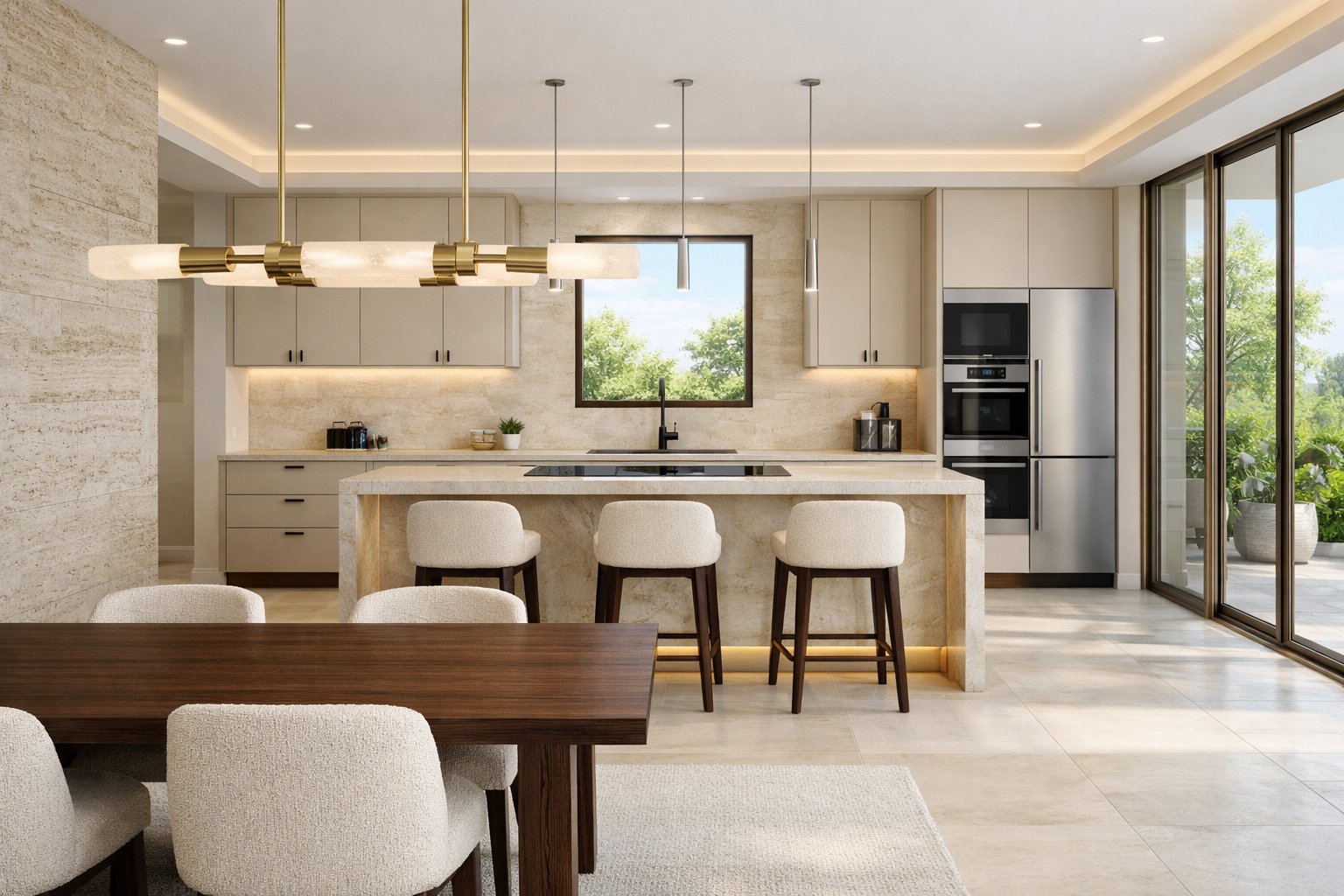
Premium kitchen finishes — the single biggest cost variable between a standard and high-end 3 bedroom house in Kenya
How Architectural Design Affects Your Building Cost
Good architectural design is not an expense that adds to your building cost — it is one of the most effective tools available to reduce it. Here is how professional design directly controls what you spend.
Optimising the Floor Plan
A well-optimised floor plan eliminates wasted circulation space, reduces external wall length, and maximises usable area per shilling of structure. At AALIS Studios, we regularly reduce a client's initial sketch by 10–20 m² while improving the livability of the design — saving KSh 600,000–1,400,000 on a standard 3 bedroom build.
Structural Efficiency
A structural engineer working from properly detailed architectural drawings can specify the minimum steel and concrete required for safe construction. Without coordinated drawings, contractors routinely over-specify reinforcement — adding unnecessary cost — or under-specify it, creating structural risk. Coordinated architectural and structural design is the single most important technical investment in any construction project.
Avoiding Costly Changes During Construction
Design changes made on site cost 3–5 times more than the same changes made at drawing stage. A fully detailed set of architectural drawings — including floor plans, sections, elevations, and room-by-room finish schedules — eliminates the ambiguity that leads to site variations and contractor claims. This is where professional design more than pays for itself on every project.
"The most expensive house we see is not the luxury villa — it is the one started without proper drawings, where every decision becomes an emergency and every change order eats into the budget." — Arch. Vincent Abuya, AALIS Studios
BORAQS-certified drawings, structural engineering, county approval submission, 3D renders, and a QS-reviewed Bill of Quantities — all in one package.
Practical Tips for Homeowners Building in Kenya
After working with hundreds of residential clients across Kenya, these are the pieces of advice our architectural team returns to most consistently.
Frequently Asked Questions
Planning to Build a 3 Bedroom House in Kenya?
Our architects at AALIS Studios can help you design and plan your home with accurate construction budgeting, county-approved drawings, and professional project management from concept to completion. In-person consultations in Nairobi, and video call appointments for diaspora clients.