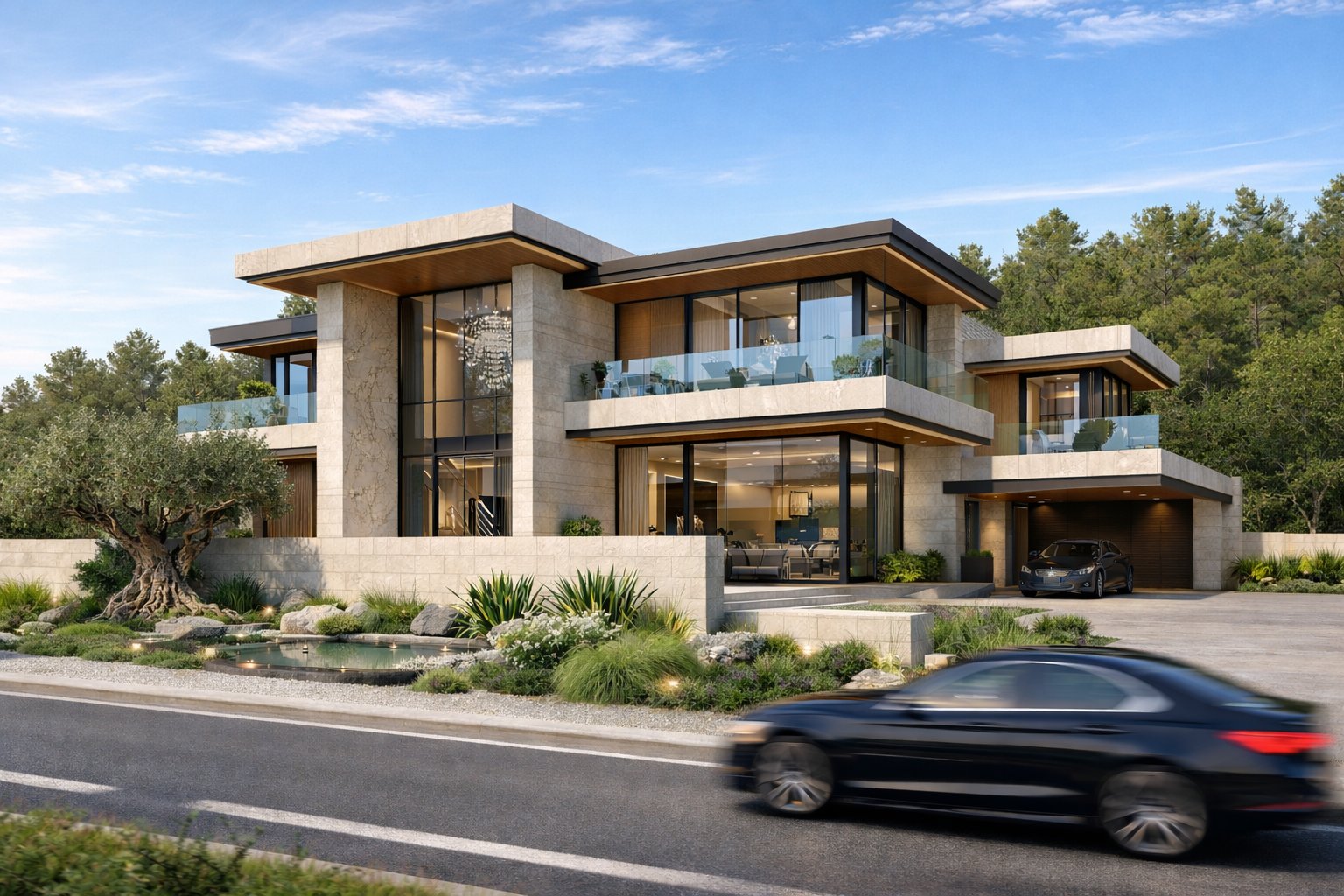
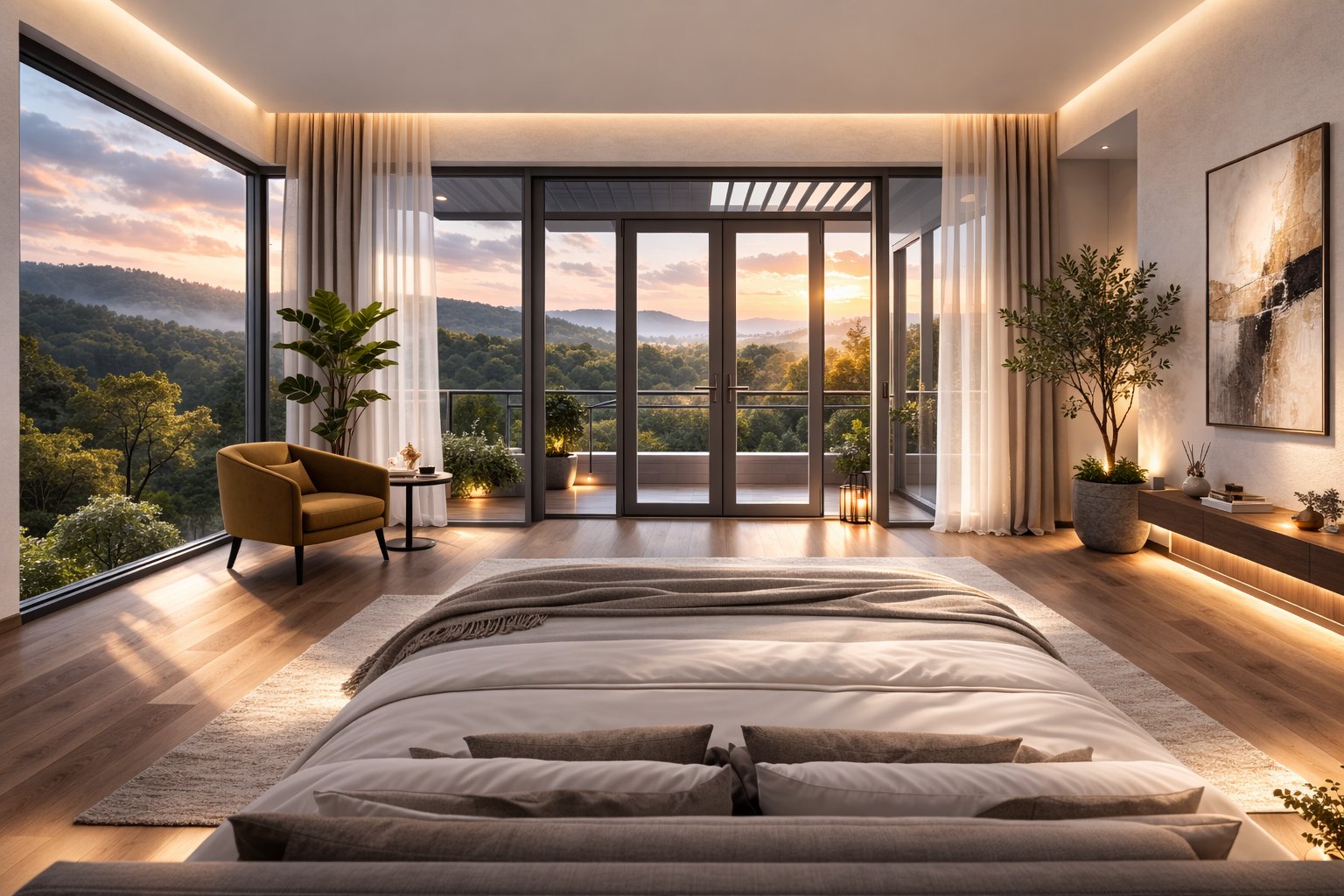
Contemporary flat roof houses are reshaping Kenya's residential landscape — from Nairobi's leafy suburbs to Mombasa's coastal estates and Kisumu's lakeside neighbourhoods. In this comprehensive 2026 guide, you will understand why flat roof designs are surging in popularity, compare flat vs pitched roofs side by side, explore 9 stunning flat-roofed house designs from across Kenya, and get expert construction tips on materials, waterproofing, drainage, and budgeting. Whether you are a first-time builder or a seasoned property investor, this is your definitive resource.
Section 01
Benefits of Contemporary Flat Roof Houses
Contemporary flat roof houses — crafted by architects in Kenya with decades of local experience — merge sleek modern aesthetics with high-performance functionality. They are no longer simply "roofs without a pitch." Today they are design statements, solar energy platforms, rooftop retreats, and smart investments rolled into one structure.
Cost-Effectiveness & Speed
Flat roofs generally require fewer materials and simpler structural framing than pitched counterparts. This translates directly into savings of 15–25% on roofing costs, and on-site construction durations can be reduced by up to 30% for modular flat-roof designs — critical when managing phased builds on limited budgets.
Extra Usable Rooftop Space
A level roof surface opens a genuinely new dimension to your home. Kenyan homeowners are increasingly converting rooftops into solar-panel arrays, rooftop gardens, outdoor lounges, water-storage platforms, and even staff quarters — all without expanding the building's footprint on land that is increasingly expensive.
Modern Aesthetic Appeal
The clean horizontal lines, cantilevered overhangs, and expansive glazing that define contemporary Kenyan architecture are most powerfully expressed through flat roof design. It is the dominant language of high-end homes in Nairobi's Karen, Runda, Kilimani, Lavington, and Syokimau neighbourhoods.
Easy Maintenance & Inspection
Without complex slopes or hipped ridge-lines, flat roof homes simplify semi-annual inspections and minor repairs. A skilled roofer can walk the entire surface safely to check membrane seams, clear scupper drains, and reseal flashings — reducing long-term maintenance costs significantly.
Energy Efficiency & Sustainability
Modern flat roof membranes — EPDM rubber and TPO thermoplastic — combined with ≥ 50mm PIR insulation boards and cool-roof reflective coatings can reduce solar heat gain by up to 30%. This is especially valuable under Kenya's equatorial sun, cutting air-conditioning energy demand and lowering utility bills over the building's lifetime.
Long Lifespan with Proper Membranes
High-performance EPDM rubber roofing, which costs approximately KES 1,800–2,120 per m² installed in Nairobi, delivers UV resistance and waterproofing for 25–50 years with correct maintenance. This exceeds many pitched iron-sheet roofs, which can deteriorate within 15–20 years if not properly coated and maintained.
Explore Our Work
See our award-winning flat roof house designs
Browse completed Aalis Studios projects — from compact urban residences to expansive luxury villas — each with custom flat roof solutions engineered for Kenya's climate.
Section 02
Kenya & Africa Market Context 2026
Kenya's real estate sector continues its upward trajectory in 2026, driven by urbanisation, a growing middle class, and substantial diaspora remittances. Annual residential growth forecasts exceed 6%, with demand concentrated in Nairobi's satellite towns — Syokimau, Ruiru, Kitengela, Athi River — and coastal zones around Mombasa and Diani.
Construction costs in Kenya for residential homes now range from KES 48,000 to KES 95,000 per square metre depending on finish level, location, and structural design. Standard bungalows come in at approximately KES 54,730 per m², while semi-luxury maisonettes can reach KES 97,730 per m². In this environment, the cost savings inherent in flat roof construction become even more compelling for budget-conscious builders seeking a modern finish.
6%+
Annual real estate growth Kenya 2026
25%
Typical roofing cost saving vs pitched
50yrs
EPDM membrane lifespan (maintained)
30%
Heat gain reduction with cool-roof coating
Across Africa, contemporary flat roof houses are the dominant architectural language for new residential and commercial developments in South Africa, Nigeria, Ghana, and Tanzania. Kenyan architects — particularly those trained in European and American design schools — have embraced this global movement and are adapting it with locally appropriate passive cooling strategies, natural cross-ventilation, and indigenous material palettes.
Flat roofs are especially well-suited to Kenya's semi-arid zones — Nairobi, Machakos, Kajiado, Nakuru, and much of the Rift Valley — where annual rainfall is moderate and sunshine abundant. Their low thermal mass and reflective coatings keep interior temperatures comfortable with minimal mechanical cooling.
Section 03
Flat Roof vs. Pitched Roof — Full Comparison
When planning a new home in Kenya, the roof type decision affects your budget, timeline, maintenance schedule, energy performance, and available living space. Here is an honest, side-by-side breakdown to help you choose wisely.
Option A
Flat Roof Houses
Advantages
- ✓ Lower initial installation cost — fewer materials and simpler framing save 15–25% on roofing budget
- ✓ Versatile roofscape — ideal for solar panels, HVAC units, rooftop terraces, and water tanks
- ✓ Faster build times — modular designs reduce on-site construction by up to 30%
- ✓ Contemporary aesthetic — clean lines, wide overhangs, and horizontal emphasis
- ✓ Suited to Nairobi, Machakos, Nakuru, and Kenya's semi-arid climate zones
Disadvantages
- ✗ Drainage concerns — requires engineered 1–2% gradient and scuppers to prevent ponding
- ✗ Ventilation — no attic void means mechanical ventilation may be needed in some designs
- ✗ Higher maintenance vigilance — membrane seams and flashings need semi-annual inspection
Option B
Pitched Roof Houses
Advantages
- ✓ Excellent water runoff — slopes shed heavy rains quickly; ideal for Kakamega, Kisii, Mt. Kenya region
- ✓ Natural passive ventilation through attic void — keeps interiors cooler in humid zones
- ✓ Long material lifespan — clay tiles and stone-coated sheets can last 40+ years
- ✓ Familiar construction methods — wider availability of local contractors
Disadvantages
- ✗ Greater expense — complex framing and more materials drive costs 15–25% higher
- ✗ No usable roofscape — sloping planes cannot support terraces, gardens, or solar arrays
- ✗ Maintenance complexity — multiple angles, flashing intersections, and ridge caps need specialist upkeep
- ✗ Aesthetic limitations — harder to achieve the sleek, contemporary lines that define modern Kenyan homes
"In Nairobi and Kenya's semi-arid zones, a well-engineered flat roof with proper EPDM waterproofing and a 1–2% drainage gradient outperforms a pitched roof on cost, usable space, and modern aesthetics — provided the design is handled by a BORAQS-registered architect who understands local rainfall patterns and soil conditions."
| Factor |
Flat Roof |
Pitched Roof |
| Initial construction cost | Lower by 15–25% | Higher |
| Roofing cost as % of build | ~8–12% | ~12–18% |
| Membrane/tile lifespan | 25–50 yrs (EPDM/TPO) | 30–50 yrs (tiles/stone-coated) |
| Rooftop usability | High — terraces, solar, tanks | None |
| Best climate zone in Kenya | Semi-arid (Nairobi, Nakuru, Machakos) | High rainfall (Kakamega, Kisii) |
| Modern aesthetic rating | ★★★★★ | ★★★☆☆ |
| Maintenance complexity | Low–medium (inspection 2x/yr) | Medium–high |
| EPDM membrane cost, Nairobi | ~KES 1,800–2,120/m² | N/A |
Section 04
Nine Inspiring Contemporary Flat Roof Houses
From Nairobi's upmarket suburbs to coastal retreats and upcountry escapes, these nine homes represent the full spectrum of what contemporary flat roof design can achieve in Kenya. Each project demonstrates a unique response to site, climate, budget, and lifestyle.
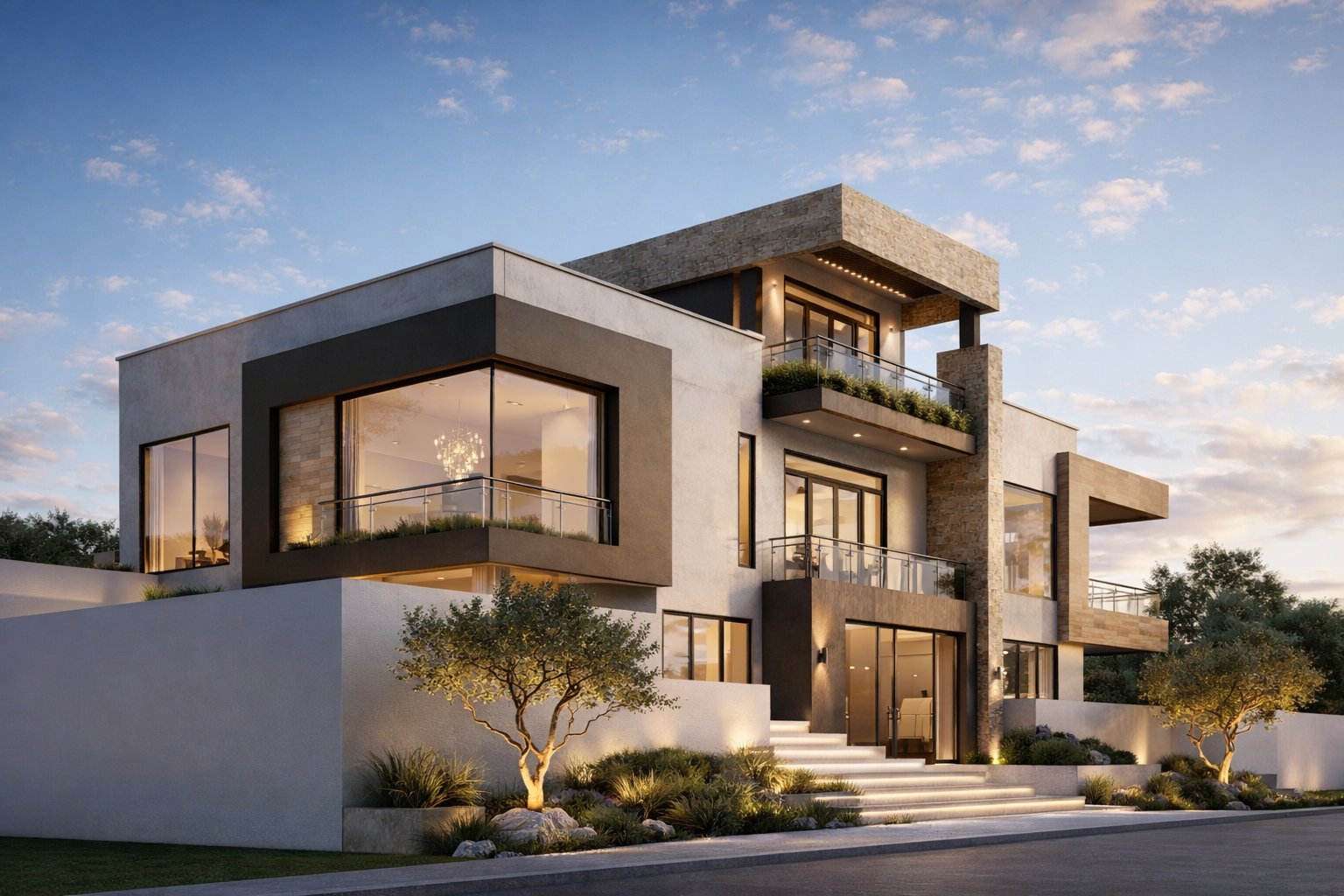
House 01
Urban Box-Style Villa — Nairobi
This striking box-form villa in the Nairobi metropolitan area exemplifies the power of horizontal planes and deep cantilevered overhangs. The fully flat roof supports a solar-panel installation that covers 80% of the home's energy needs, while the rooftop perimeter parapet conceals service equipment for a clean skyline silhouette. Floor-to-ceiling glazing maximises cross-ventilation and frames panoramic garden views. This design is particularly suited to plots in Karen, Runda, Muthaiga, and Syokimau.
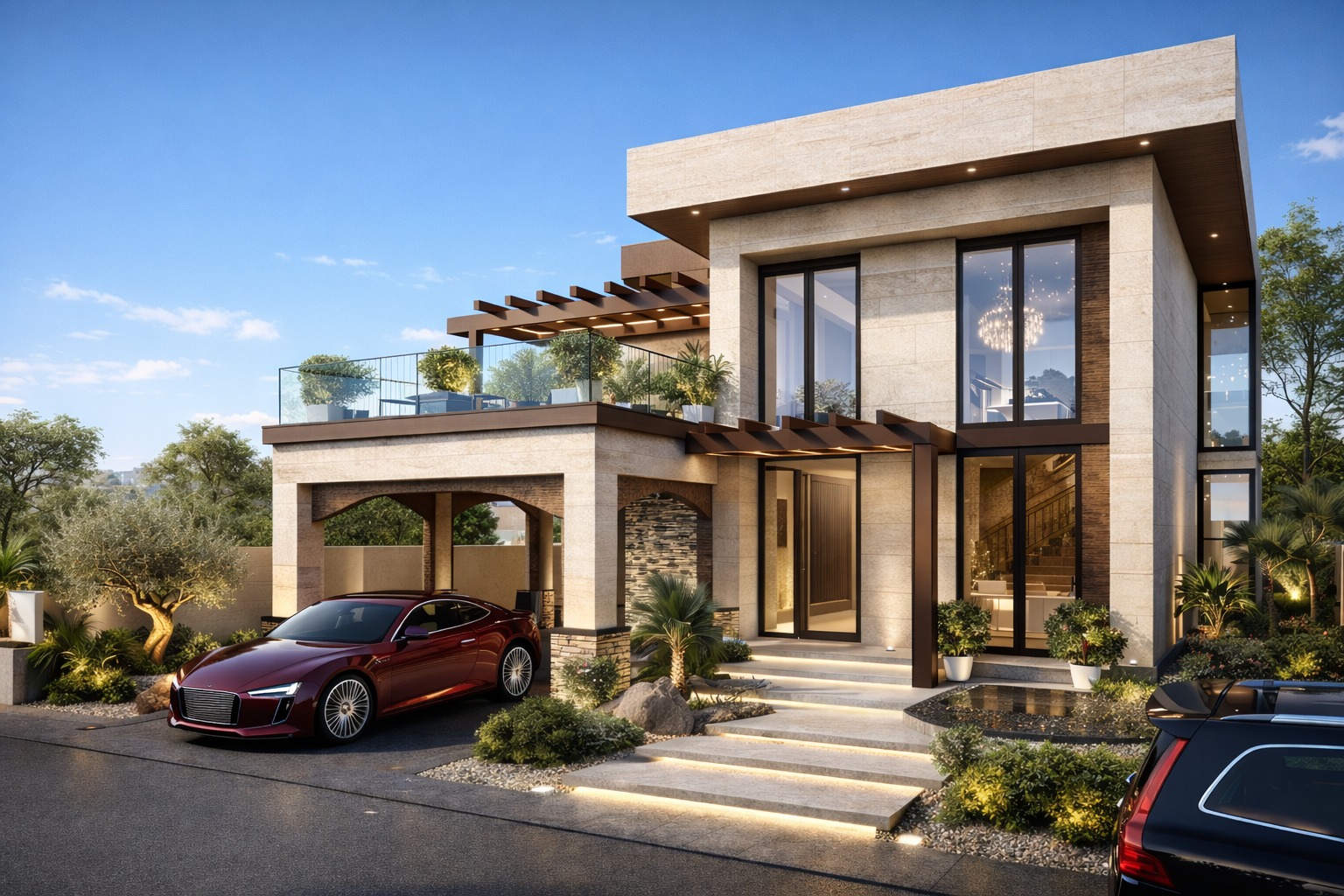
House 02
Eco-Bungalow Retreat — Mombasa
A single-storey coastal retreat where the flat roof doubles as a rain-harvesting platform, channelling Mombasa's abundant rainfall into underground cisterns. Natural coral stone cladding and wide overhanging eaves shade the interiors, while louvred vents in the parapet walls drive passive cross-ventilation without mechanical cooling. A TPO membrane ensures watertight performance in the humid coastal climate.
House 03
Compact Family Home — Kisumu
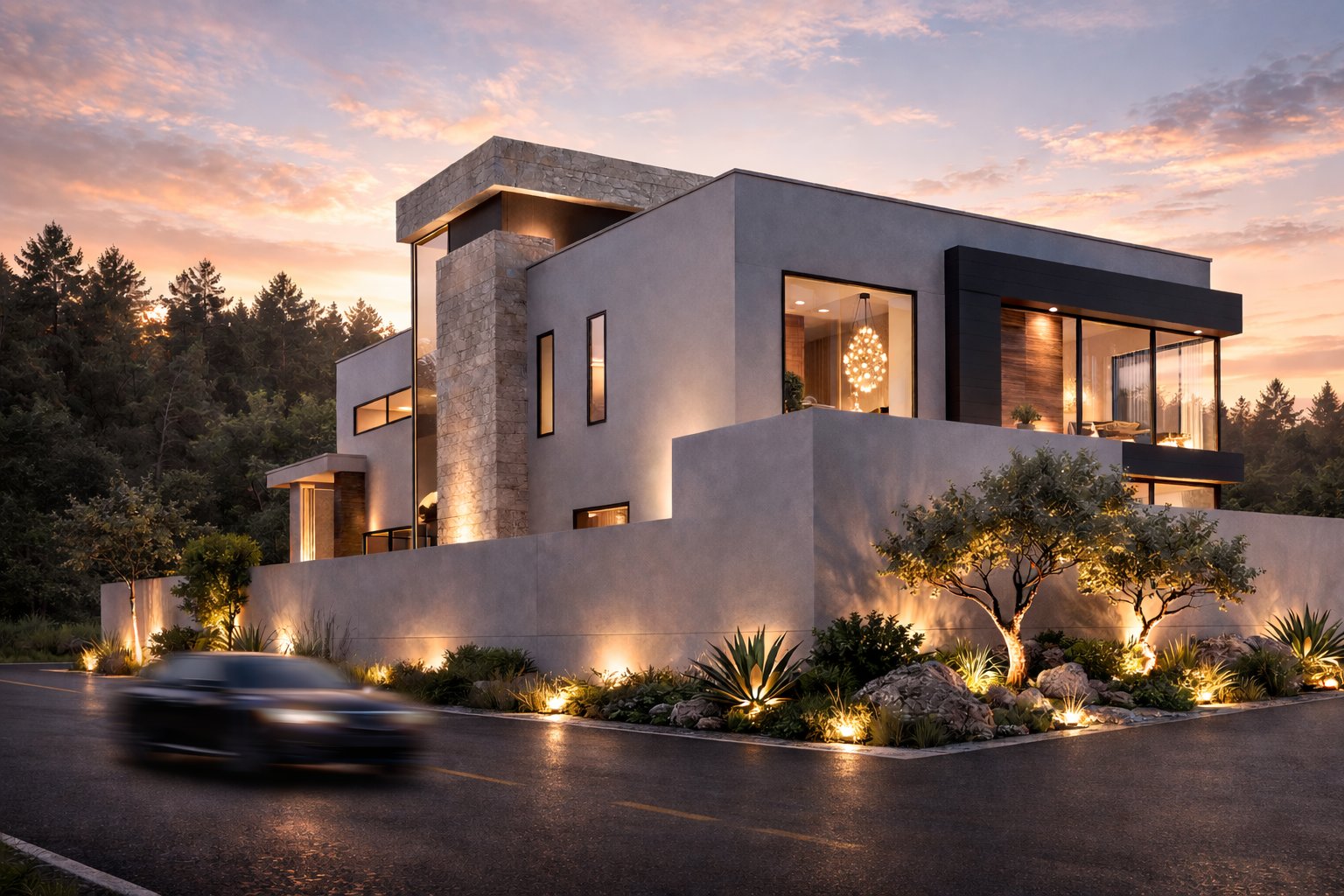
Designed for a lakeside plot in Kisumu, this three-bedroom flat roof home maximises every square metre of a modest 100m² footprint. An elevated roof-deck above the master bedroom suite offers unobstructed views of Lake Victoria at sunrise. The simple rectangular form keeps structural costs low — estimated at KES 48,000–55,000 per m² for mid-range finishes — making it an ideal template for cost-conscious families seeking a modern aesthetic.
House 04
Luxury Duplex — Nakuru
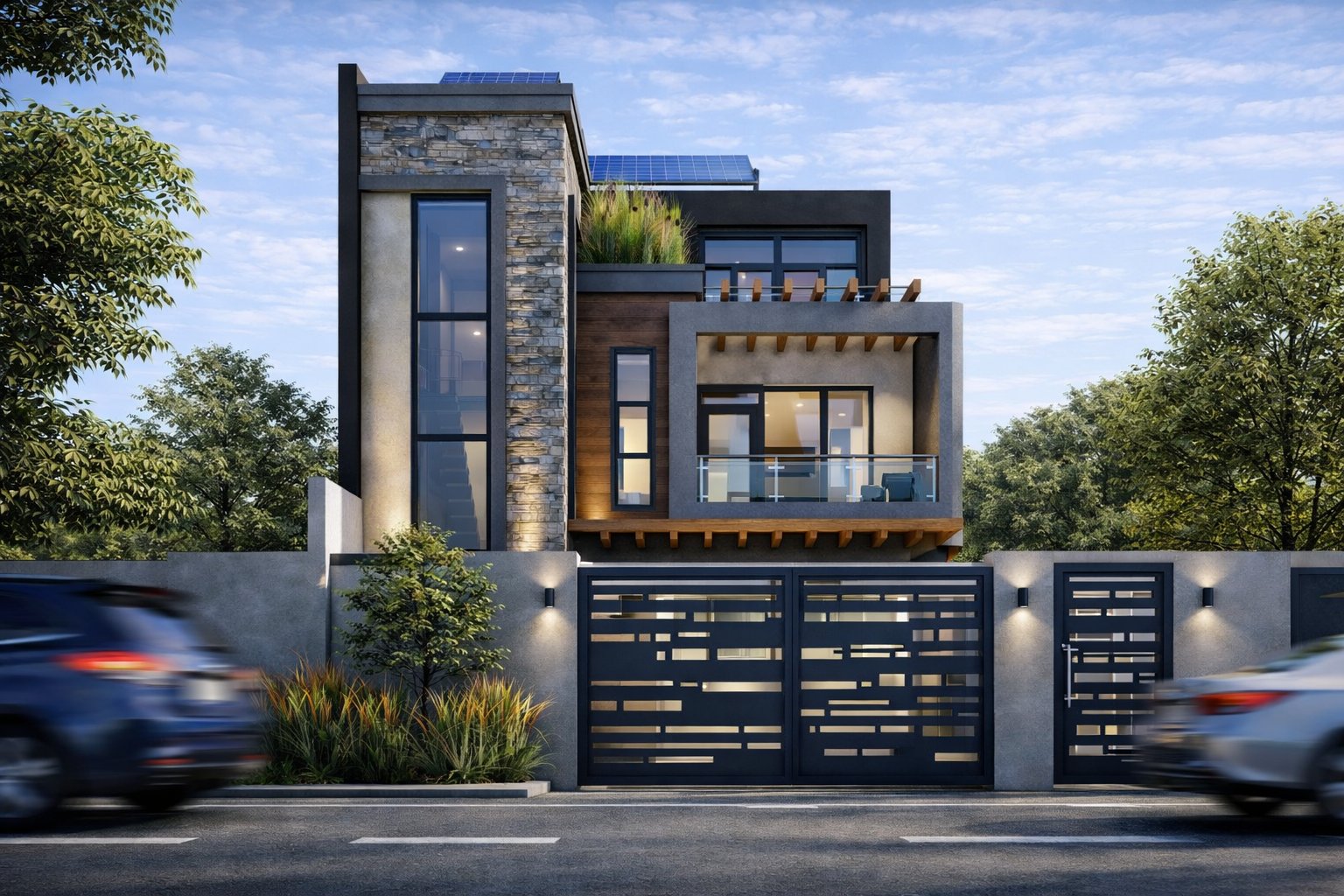
A pair of semi-detached flat-roofed duplexes in Nakuru that demonstrates how investment properties can achieve high aesthetic value without sacrificing rental yield. Shared boundary walls reduce material costs, while individual rooftop terraces give each unit a private outdoor living area. The contemporary façade — warm face-brick at ground level, white render above — achieves a timeless look that appeals to young professional tenants.
House 05
Contemporary Cottage — Naivasha
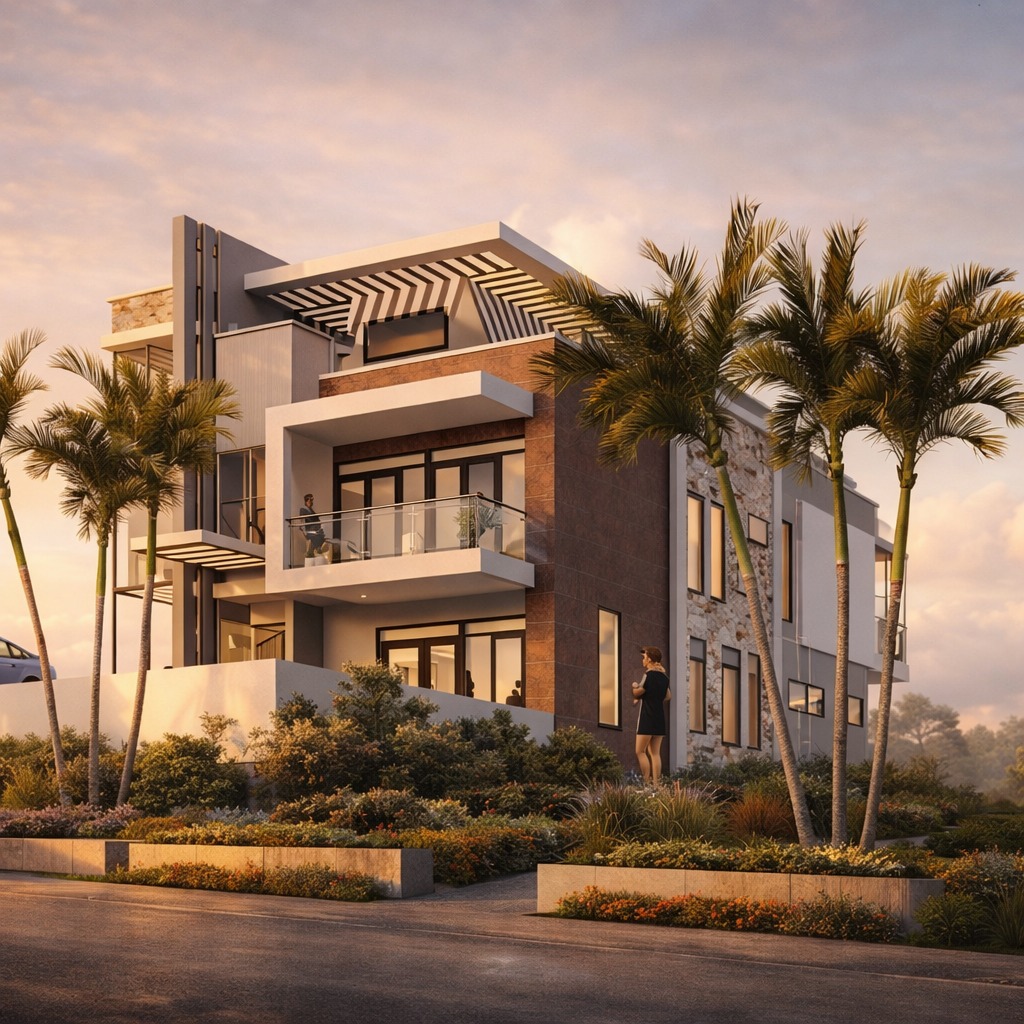
Nestled on a half-acre plot overlooking Lake Naivasha, this weekend retreat uses a green rooftop garden as both an insulation layer and an ecological habitat. Indigenous succulent plants planted in lightweight grow-media reduce the roof's thermal mass, keeping interior temperatures 4–6°C cooler than an uninsulated concrete slab roof. The result: no air conditioning needed, even in mid-afternoon heat.
House 06
Rooftop Garden House — Thika
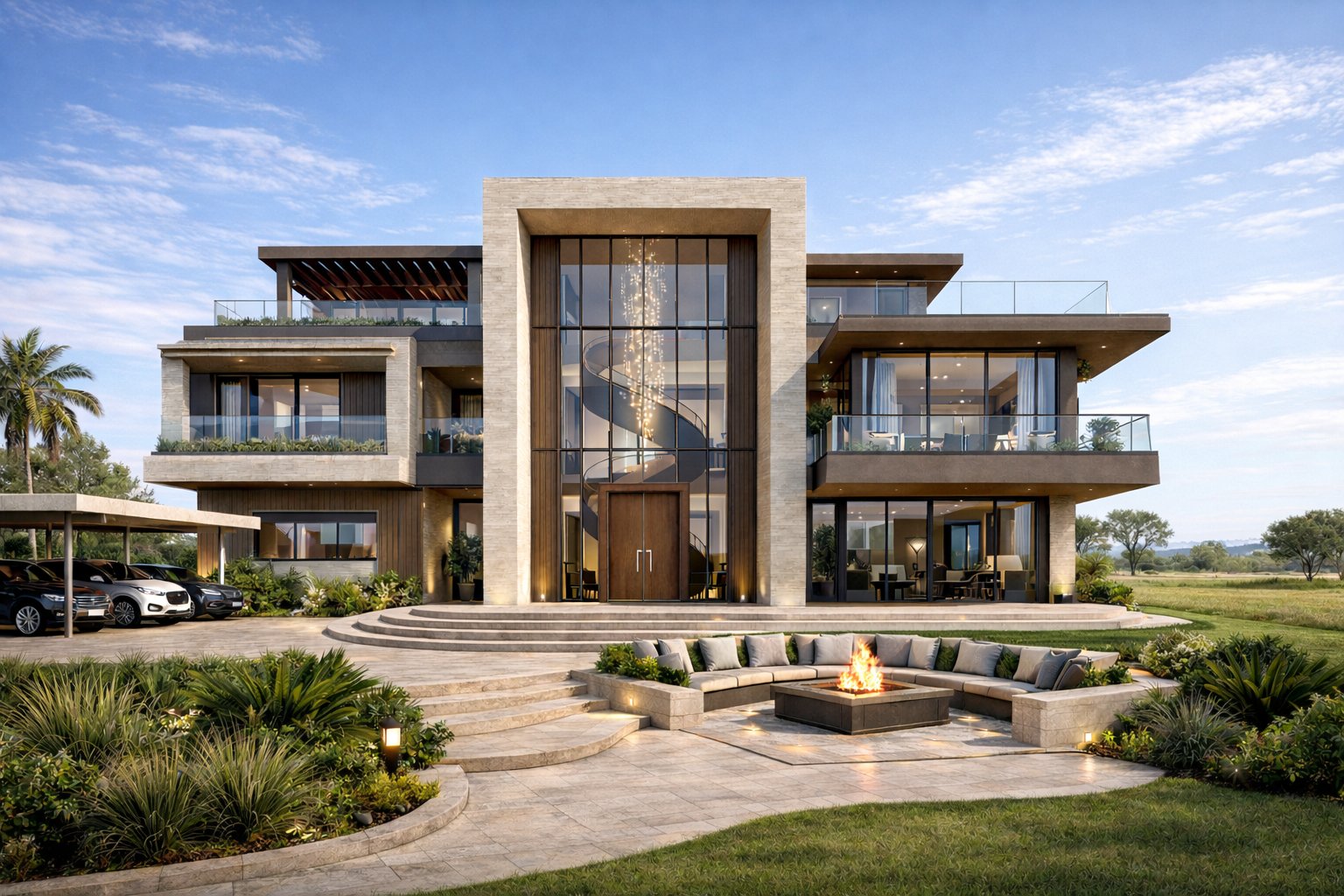
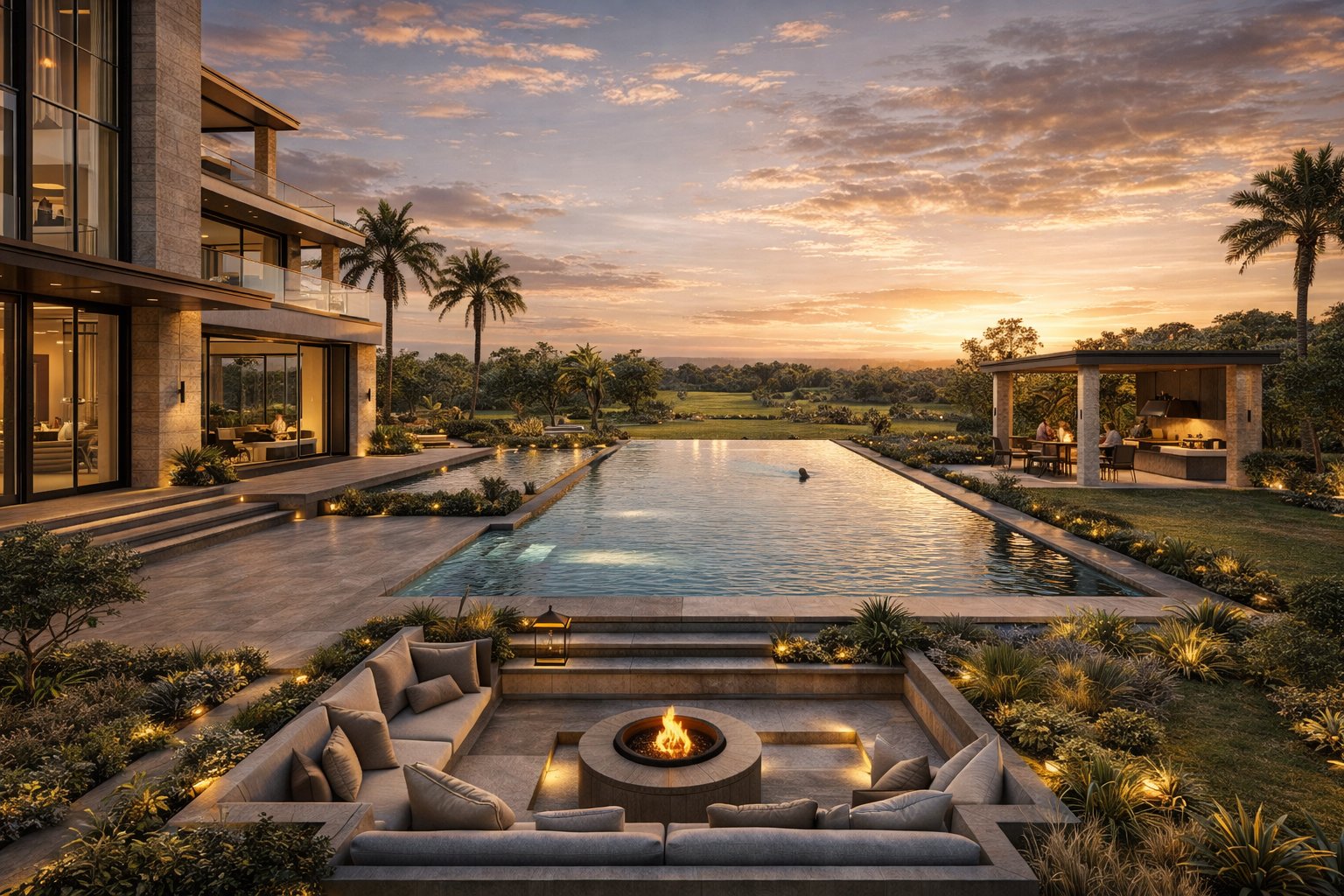
Perhaps the most ambitious of our nine examples — a substantial family home outside Thika town where the entire 320m² roof has been transformed into a productive kitchen garden, supplying vegetables and herbs year-round. A structural engineer designed the reinforced concrete flat roof slab to accommodate soil loads of up to 250kg/m², while a root-barrier EPDM membrane protects the waterproofing layer from plant penetration. Wide internal staircases connect living floors to the rooftop, making it a genuine outdoor room for the family. This project has been featured by regional architecture publications as a benchmark in sustainable residential design in Kenya.
House 07
Minimalist Desert Pavilion — Turkana
Designed for the extreme heat and arid conditions of Kenya's Turkana region, this pavilion home uses a flat concrete roof finished with highly reflective white elastomeric coating to deflect up to 85% of solar radiation. Raised on slender pilotis to encourage airflow beneath the structure, and oriented east–west to minimise direct sun on the long elevations, the design stays habitable without air conditioning even when ambient temperatures exceed 38°C.
House 08
Open-Plan Loft Home — Eldoret
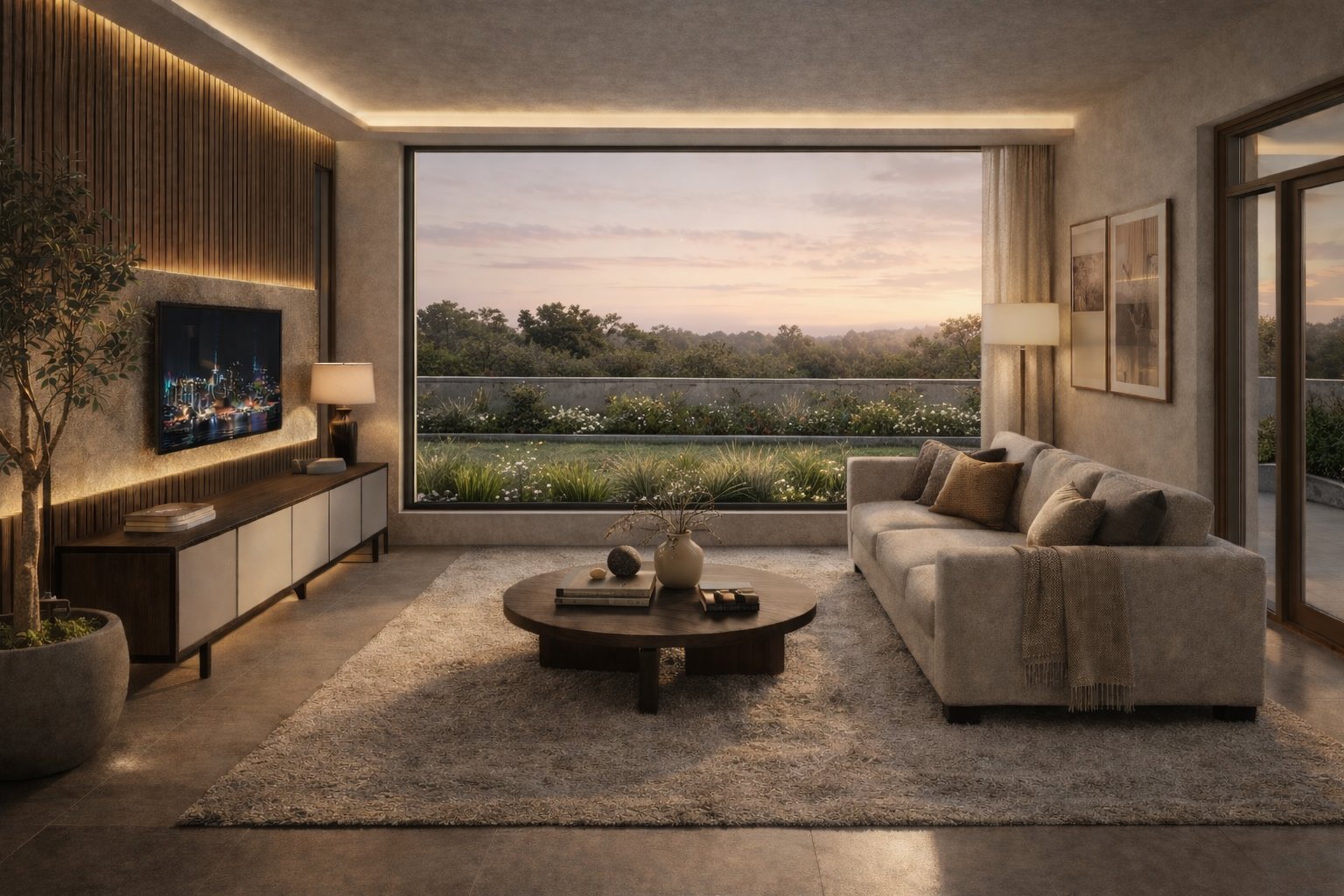
A single-level open-plan residence in Eldoret designed for a young professional couple. The flat roof with internal drain and overflow scupper channels rainwater into a 10,000-litre underground storage tank — a critical feature in a town where municipal water supply can be intermittent. Exposed concrete ceilings inside create a loft aesthetic that is increasingly fashionable among Eldoret's growing creative professional class.

House 09
Phased Diaspora Build — Nairobi Outskirts
Designed for a client based in the United Kingdom, this project demonstrates the phased flat-roof build strategy that Aalis Studios recommends for diaspora clients managing construction remotely. Phase 1 — completed in 18 months — delivers a complete, habitable ground-floor home with a structurally prepared flat concrete roof slab that is engineered to support a second storey when budget allows. The result is a home that looks complete and performs immediately, while preserving the option for vertical expansion without demolition. Aalis Studios managed the entire project remotely, with weekly photo and video site reports sent directly to the client in London.
Section 05
Flat Roof Construction Costs in Kenya (2026)
Understanding cost drivers is essential before committing to a flat roof design. The following figures are drawn from Aalis Studios' active project database, cross-referenced with publicly available 2026 construction data from Kenyan quantity surveyors.
| Flat Roof Element |
Specification |
Cost per m² |
| Structural concrete slab (150mm) | Grade 25 reinforced concrete | KES 7,000–12,000 |
| EPDM waterproofing membrane | 1.5mm, fully bonded, Nairobi supply & install | KES 1,800–2,120 |
| TPO membrane (alternative) | 1.2mm mechanically fastened | KES 1,500–1,900 |
| Modified bitumen (torch-applied) | 2-layer system | KES 900–1,400 |
| PIR insulation boards (50mm) | Rigid polyisocyanurate, R-value 3.5 | KES 850–1,200 |
| Reflective cool-roof coating | Elastomeric white, 2-coat system | KES 400–650 |
| Drainage channels & scuppers | uPVC or galvanised steel | KES 350–600 |
| Parapet wall (600mm, rendered) | 220mm blockwork + plaster | KES 3,500–5,500/lm |
| Total flat roof system cost (mid-spec) | Incl. slab, EPDM, insulation, drainage | KES 12,000–18,000/m² |
For overall residential construction, a standard 3-bedroom flat roof bungalow of 120m² in Nairobi can be expected to cost between KES 6.5 million and KES 9.5 million for mid-range finishes, inclusive of structural works, roofing, internal finishes, plumbing, electrical, and professional fees. This compares favourably with an equivalent pitched-roof home, which typically costs 15–25% more for the roofing component alone.
"The cheapest roof is not the one that costs least today — it is the one that requires fewest interventions over the next 30 years. A properly installed EPDM flat roof, semi-annually inspected, will cost you less over its lifetime than two re-roofing cycles on corrugated iron sheets."
Section 06
Practical Design & Construction Tips
Getting a flat roof right in Kenya requires more than choosing a good membrane. Here are five critical engineering and design decisions that separate a watertight, long-lasting flat roof from one that causes expensive headaches within five years.
Tip 01
Material & Membrane Selection
Choose EPDM rubber or TPO thermoplastic membranes for the best combination of UV resistance, waterproofing longevity, and heat reflection under Kenya's equatorial sun. Avoid torch-applied bitumen as a standalone system for primary residential roofs — it is better suited as a secondary layer under heavy-duty applications. In coastal Mombasa and Malindi, select UV-stabilised membranes with added sea-spray resistance.
Tip 02
Drainage & Slope Engineering
A flat roof is never truly flat — it must maintain a minimum 1–2% gradient (10–20mm fall per metre) towards drain outlets. Install a minimum of two scupper drains per drainage zone, plus an overflow scupper set 25mm above the primary drain level as a failsafe. In high-rainfall areas, size drainage to handle a 1-in-50-year rainfall event. Poor drainage is the single most common cause of flat roof failure in Kenya.
Tip 03
Insulation & Heat Management
Specify a minimum of 50mm PIR (polyisocyanurate) insulation boards above the structural slab, beneath the waterproofing membrane. Follow this with a reflective cool-roof elastomeric coating on the membrane surface. Together, these measures can reduce solar heat gain by up to 30%, keeping interior temperatures comfortable without mechanical air conditioning — critical for sustainable, low-running-cost homes in Nairobi's increasingly hot dry seasons.
Tip 04
Maintenance Schedule & Lifespan
Inspect membrane seams, parapet flashings, and drain outlets every six months — ideally at the end of the long rains (July) and short rains (January). Clear all organic debris from drainage channels. Re-apply elastomeric coating every 8–10 years. With this routine, a quality EPDM system can perform for 25–50 years. Neglect, by contrast, can cause membrane failure in as few as 8 years.
Tip 05
Phased Budgeting Strategy
For clients building on self-funded or diaspora remittance budgets, Aalis Studios recommends designing the structural slab to carry a future second storey from day one — even if it is not built immediately. This avoids costly demolition and reinforcement retrofitting later. Complete Phase 1 to full architectural finish so the home is habitable and presentable, then add Phase 2 when additional funds are available.
Tip 06
Permits & BORAQS Compliance
Under Kenyan law (Cap 525), all residential construction requires county-approved architectural drawings prepared by a BORAQS-registered architect. Without registered drawings, you risk enforcement action, demolition orders, and inability to transfer title on your property. Aalis Studios architects are fully BORAQS-registered and handle the complete permitting process on your behalf, including NCA contractor registration for the construction phase.
Section 07
How Aalis Studios Elevates Your Project
At Aalis Studios, our 25 years of architectural practice in Kenya and across Africa means we bring hard-won experience to every flat roof house design project. We are not simply drawing plans — we are engineering homes that will serve Kenyan families and investors for generations.
Experience & Local Expertise
Award-winning residential and commercial designs across Kenya, with deep knowledge of local climates, county building codes, NCA regulations, and BORAQS compliance requirements. Our portfolio spans Nairobi, Mombasa, Nakuru, Kisumu, Eldoret, and diaspora-funded builds managed remotely.
3D Visualisation Before Construction
Our
photorealistic 3D rendering service lets you see, review, and refine every aspect of your flat roof home — from the parapet detailing and window placement to interior finishes and landscaping — before a single block is laid. This eliminates expensive on-site changes and gives diaspora clients full confidence in their investment from anywhere in the world.
End-to-End Project Management
From initial concept sketches through county permitting, contractor procurement, structural engineering coordination, and weekly on-site supervision — Aalis Studios manages the entire process. Our
construction management service is particularly valued by diaspora clients who need a trusted partner managing their build in Kenya while they are based abroad.
Transparency & Real-Time Communication
Every client receives dedicated project managers, a structured milestone payment schedule, and weekly photo and video site reports. We use WhatsApp, email, and video calls to keep diaspora and domestic clients fully informed at every stage. Our track record of transparent client communication is central to the trust that has made us one of Nairobi's most sought-after architectural practices.
Start Your Project Today
Ready to build your flat roof home in Kenya?
Book a free consultation with our BORAQS-registered architects. We will review your plot, discuss your budget, and outline a clear design and construction roadmap — whether you are in Nairobi or building from the diaspora.
Section 08
Frequently Asked Questions
Are flat roof houses durable in Kenya? +
Yes. When built with quality EPDM or TPO waterproofing membranes and correct drainage gradients of 1–2%, flat roof houses in Kenya can last 25–50 years with semi-annual maintenance inspections. The key variables are membrane quality, installation standard, and drainage design. Poor drainage — not the flat roof concept itself — is the most common cause of premature failure.
How much does a flat roof house cost to build in Kenya in 2026? +
Construction costs for residential homes in Kenya in 2026 range from KES 50,000 to KES 97,000 per square metre depending on finish level and location. A standard 3-bedroom flat roof bungalow of 120m² with mid-range finishes in Nairobi will typically cost KES 6.5–9.5 million all-inclusive. Flat roofs save 15–25% on the roofing component compared to equivalent pitched roofs, making them a cost-effective choice for budget-conscious modern builds.
What is the best waterproofing membrane for a flat roof in Kenya? +
EPDM (Ethylene Propylene Diene Monomer) rubber membrane is widely recommended for Kenya's equatorial climate. It offers UV resistance, flexibility across temperature extremes, and a lifespan of up to 50 years with proper maintenance. In Nairobi, EPDM costs approximately KES 1,800–2,120 per m² supply and install. TPO (Thermoplastic Polyolefin) membranes are a slightly lower-cost alternative with strong heat-reflective properties, ideal for homes prioritising energy efficiency.
Is a flat roof better than a pitched roof for Nairobi? +
For Nairobi and Kenya's semi-arid zones — which include Machakos, Kajiado, Nakuru, and much of the Rift Valley — flat roofs offer compelling advantages: lower initial cost, usable rooftop space, modern aesthetics, and good performance in moderate rainfall. Pitched roofs are better suited to high-rainfall areas like Kakamega, Kisii, and the slopes of Mount Kenya, where rapid water runoff is critical. Your architect should assess your specific site, altitude, and county rainfall data before making a final recommendation.
Do I need an architect to build a flat roof house in Kenya? +
Yes, by law. Under the Architects and Quantity Surveyors Act (Cap 525), county building approvals in Kenya require architectural drawings prepared and signed by a BORAQS (Board of Registration of Architects and Quantity Surveyors)-registered architect. Building without approved plans exposes you to enforcement action, demolition orders, and can prevent you from obtaining a title deed or mortgage on the completed property. Aalis Studios architects are fully BORAQS-registered and handle the complete permitting process as part of our service.
Can I add a rooftop garden or solar panels to a flat roof in Kenya? +
Absolutely — and this is one of the most compelling reasons to choose a flat roof. Solar panel arrays and rooftop gardens require a structural engineer to verify that the flat slab is designed for the additional load (typically 15–20 kg/m² for solar panels, 150–250 kg/m² for green roofs with growing medium). A root-barrier EPDM membrane is essential for green roof applications to protect the waterproofing from plant root penetration. Aalis Studios designs all flat roofs with future rooftop activation in mind.
Section 09
Conclusion
Contemporary flat roof houses represent the future of residential architecture in Kenya — and for good reason. They offer cost advantages at construction, usable rooftop space that pitches cannot match, and the clean horizontal aesthetics that define modern African luxury living. When engineered correctly — with quality EPDM or TPO membranes, proper drainage gradients, adequate insulation, and a diligent maintenance schedule — a flat roof home in Kenya will outperform a pitched-roof equivalent across every dimension that matters to a homeowner: durability, energy efficiency, lifestyle, and long-term value.
The nine houses showcased in this guide demonstrate that flat roof design is not a one-size-fits-all solution. From a compact Kisumu family home to a rooftop-garden mega-house in Thika, from a coastal eco-retreat in Mombasa to a diaspora phased-build on the outskirts of Nairobi — there is a flat roof design language for every site, budget, and lifestyle aspiration in Kenya.
Ready to start your journey? The team at Aalis Studios is here to guide you from your first concept sketch to the handover of your keys.

Arch. Vincent Abuya
Principal Architect — Aalis Studios, Nairobi
Vincent Abuya leads Aalis Studios, an award-winning architecture and interior design firm based in Nairobi, Kenya, with 25 years of residential and commercial practice across East Africa. BORAQS-registered and NCA-compliant, Aalis Studios serves local and diaspora clients with comprehensive design, 3D visualisation, and construction management services. Contact the studio at
[email protected] or
+254 757 743 454.