● April 2026 · Last updated: 16 April 2026 · 20 min read · By Arch. Vincent Abuya, BORAQS — Aalis Studios
Quick Answer — Building a House in Phases in Kenya
Building a house in phases in Kenya means designing the complete final maisonette first, then constructing Phase 1 (the lower level) as a fully liveable, beautifully finished home — while reserving the upper floor for Phase 2 when funds allow. Done correctly by a BORAQS-registered architect, Phase 1 looks completely finished externally, the interior adapts intelligently (dining becomes kitchen, staircase zone becomes a compact room), and Phase 2 adds the upper floor with zero demolition. Phase 1 costs KES 5.5M–8.5M; total build KES 9.5M–15.5M for a 4-bedroom maisonette. Aalis Studios specialises in this intelligent phased maisonette design service.
Building a home in Kenya does not require waiting until you have the full budget for a two-storey maisonette. For thousands of Kenyan families — and for the Kenyan diaspora building from abroad — the smarter path is to design the complete house for phased construction from the very beginning: Phase 1 gives you a beautiful, finished home you can move into immediately, and Phase 2 adds the upper floor when you are financially ready. This is not the same as stopping construction halfway. It is a deliberate architectural strategy — and we designed a real maisonette project exactly this way for an Aalis Studios client. Every render you see on this page is from that actual project.
01 — What Is Phased Construction?
What Does Building a House in Phases in Kenya Actually Mean?
Phased house construction means planning and building a home in carefully defined stages instead of financing and completing everything at once. In Kenya, many homeowners already do this informally — but informal phased building creates recurring problems: awkward half-finished homes, exposed concrete and steel, repeated demolition, and spaces that never recover their intended function.
The better model is architect-led phased design. The full final house is designed first, then divided into logical stages so the homeowner gets: a complete master plan; a phased Bill of Quantities; a Phase 1 layout that works for real family life today; structural and service provisions embedded in Phase 1 for seamless expansion; and a Phase 2 strategy that completes the house cleanly — without demolition.
“88.6% of owner-occupied homes in Kenya were constructed by their owners over time — mostly through personal savings and SACCO finance. Phased design is not a workaround. It is an answer to the way Kenyans actually build.”
Based on KMRC Housing Market Report data — Aalis Studios commentary
02 — Our Real Project
The Aalis Studios Phased Maisonette — Real Project Renders
Every image you see on this page is from a real Aalis Studios client project — a 4-bedroom maisonette designed from the start for phased construction. Phase 1 was the complete lower level: fully built, finished, and looking like a completed home from the road. Phase 2 adds the upper floor — the full two-storey maisonette — with no demolition of Phase 1. Below are Phase 1 renders, followed by Phase 2 renders.
Phase 1 — Lower Level (Move-In Ready)
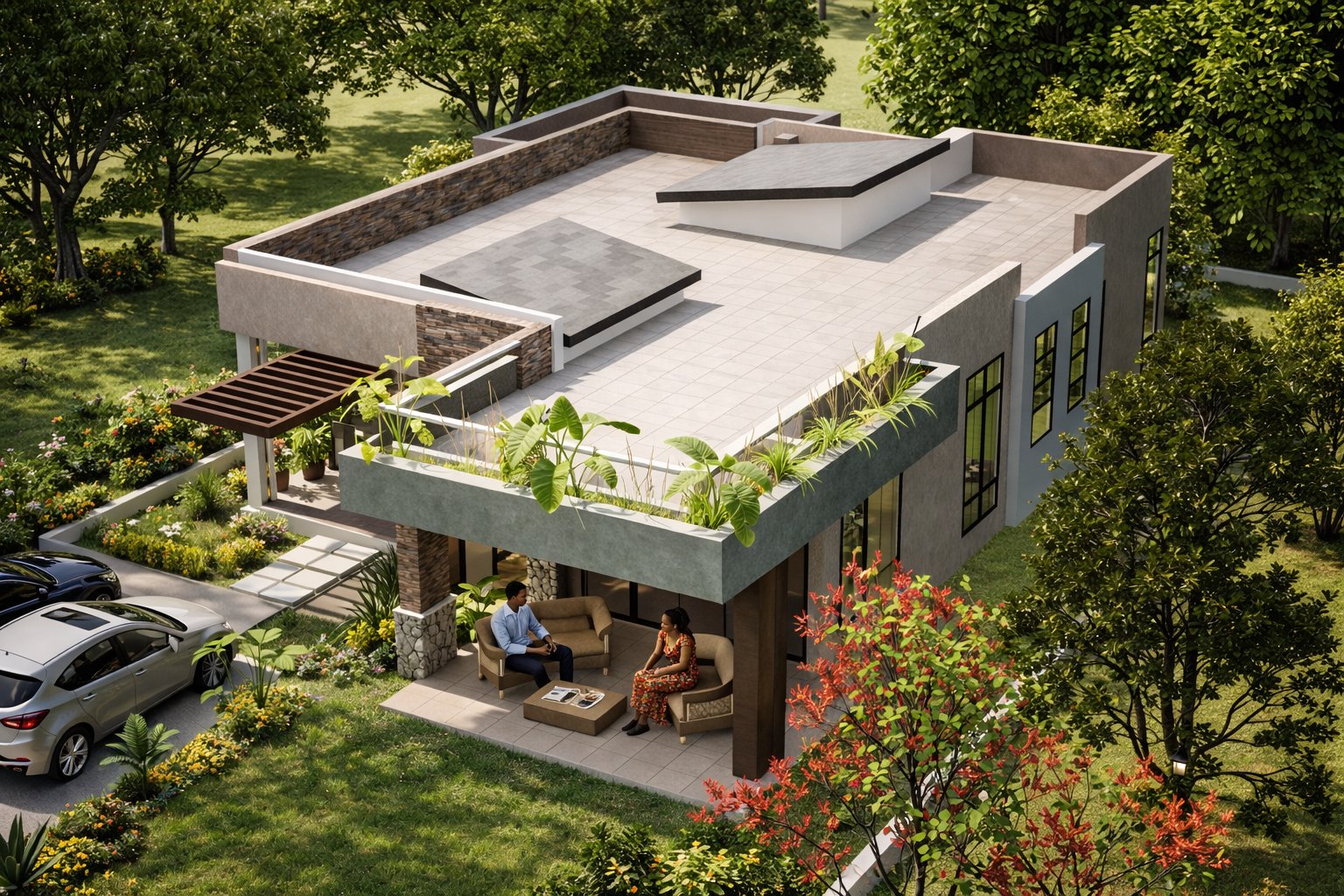
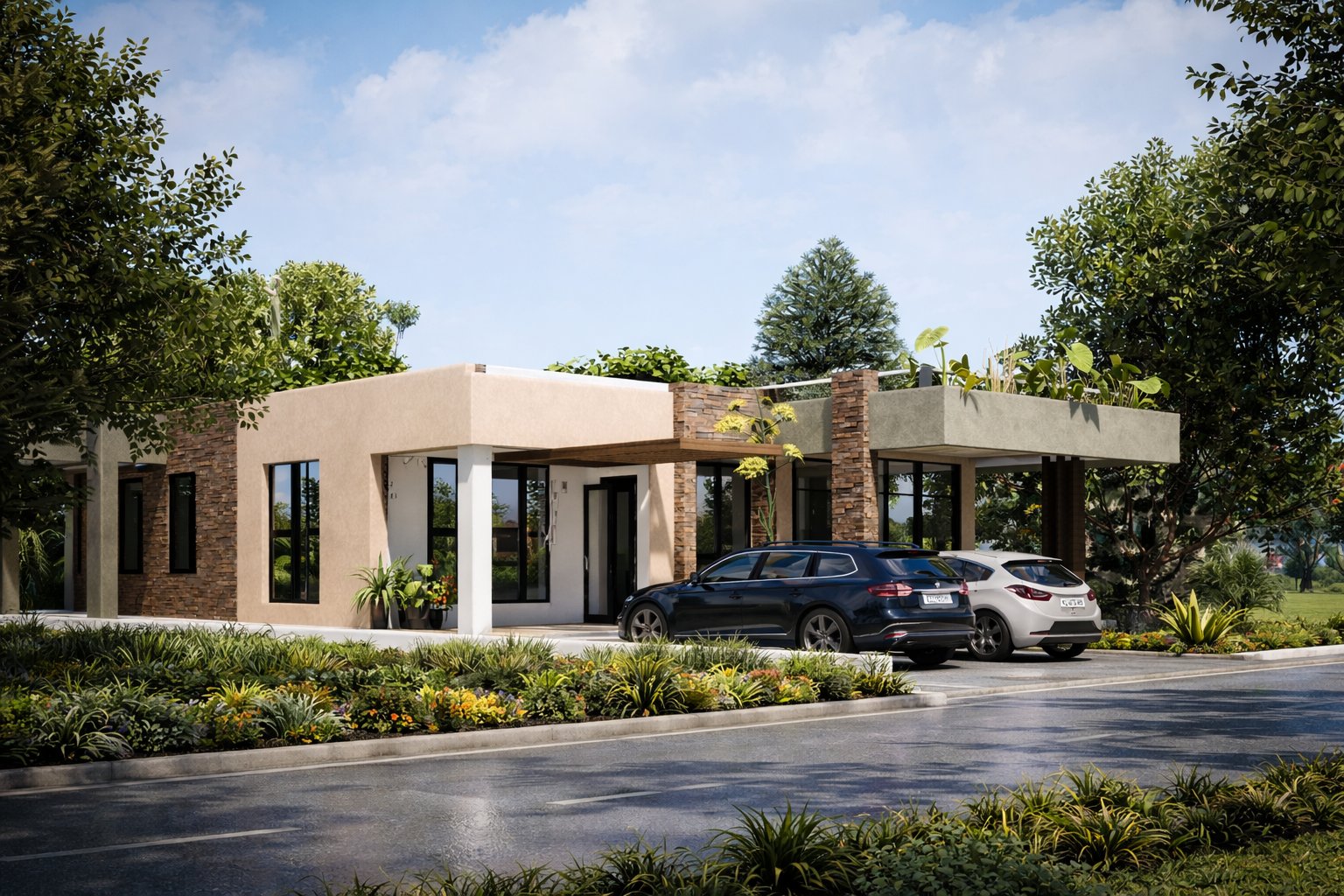
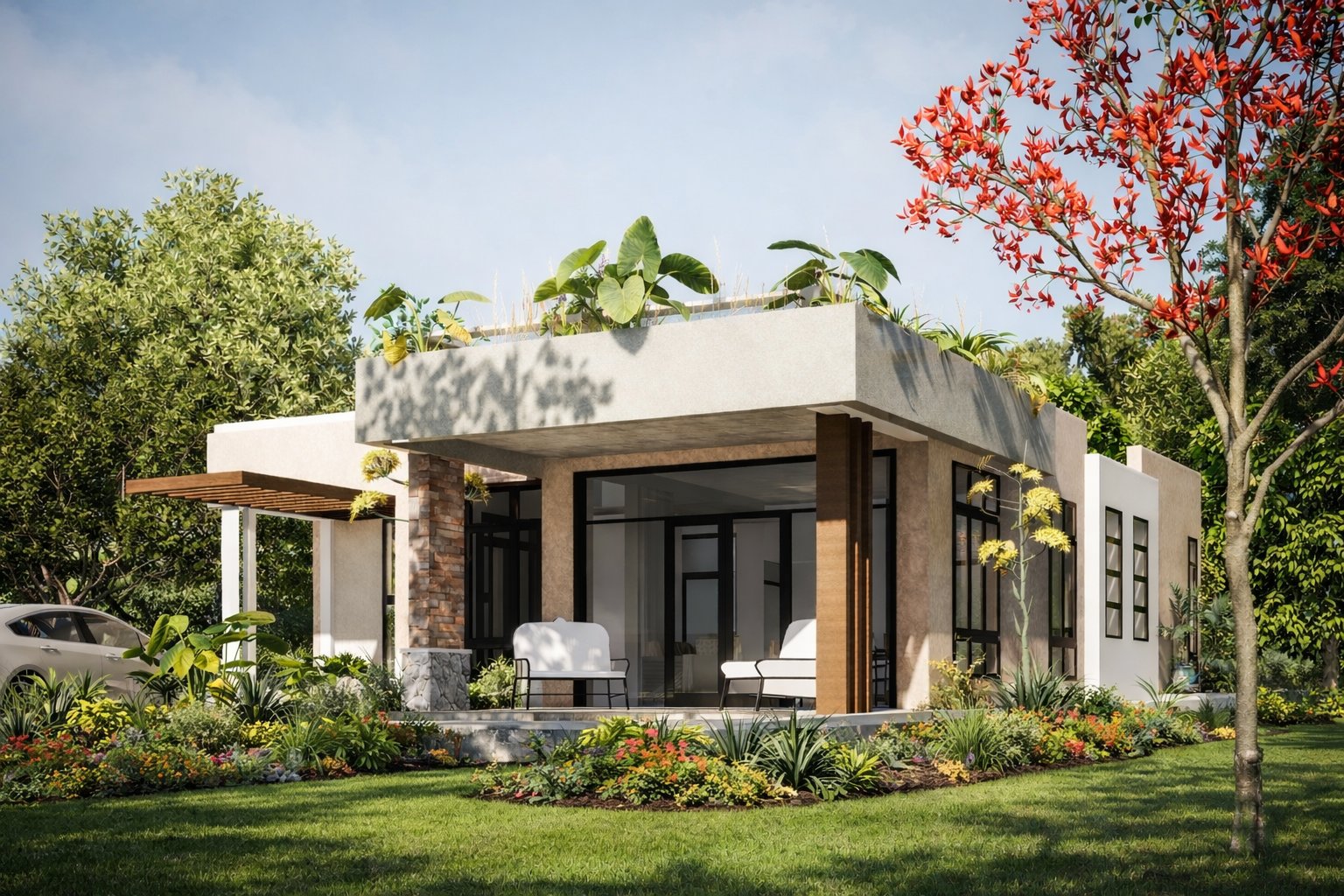
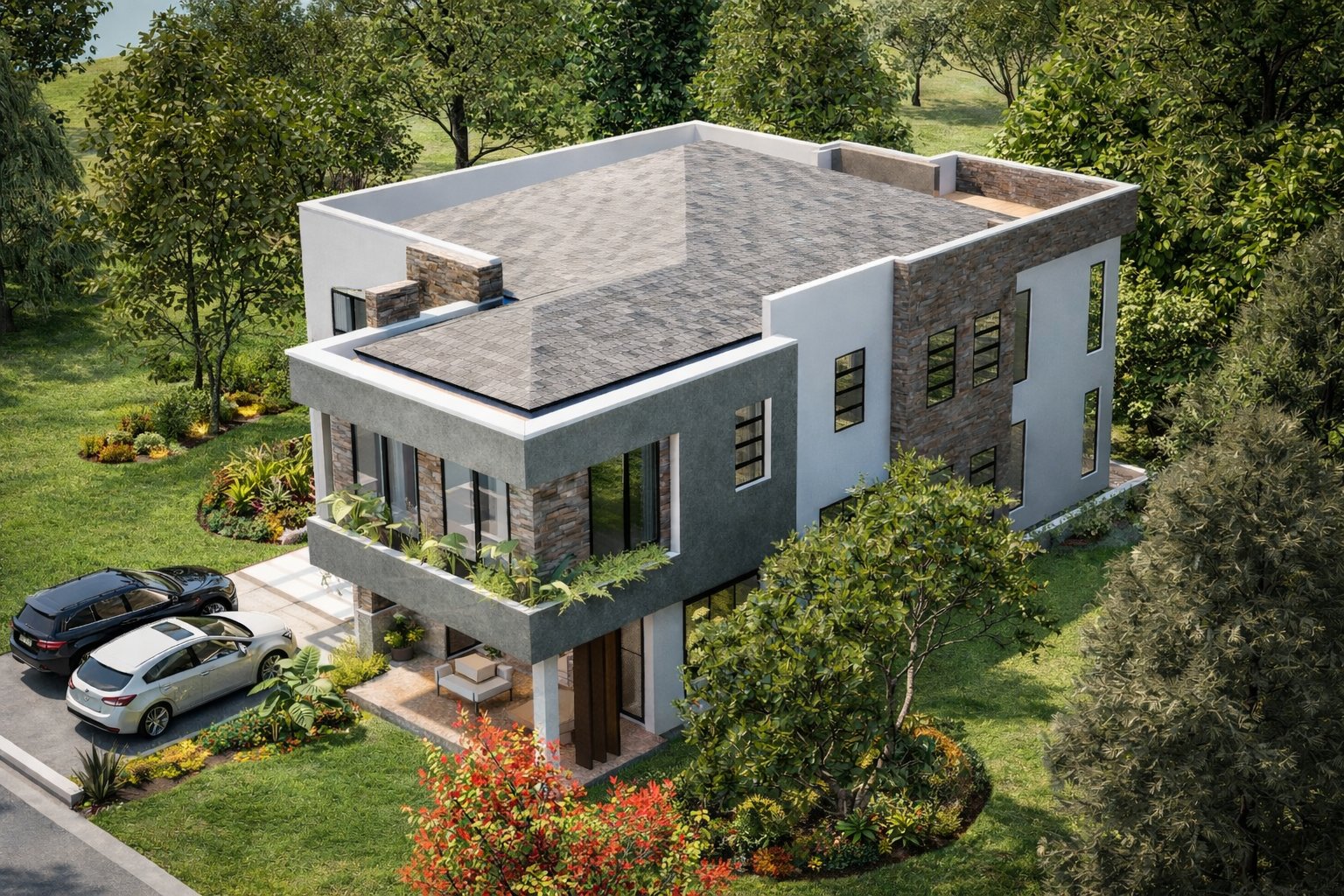
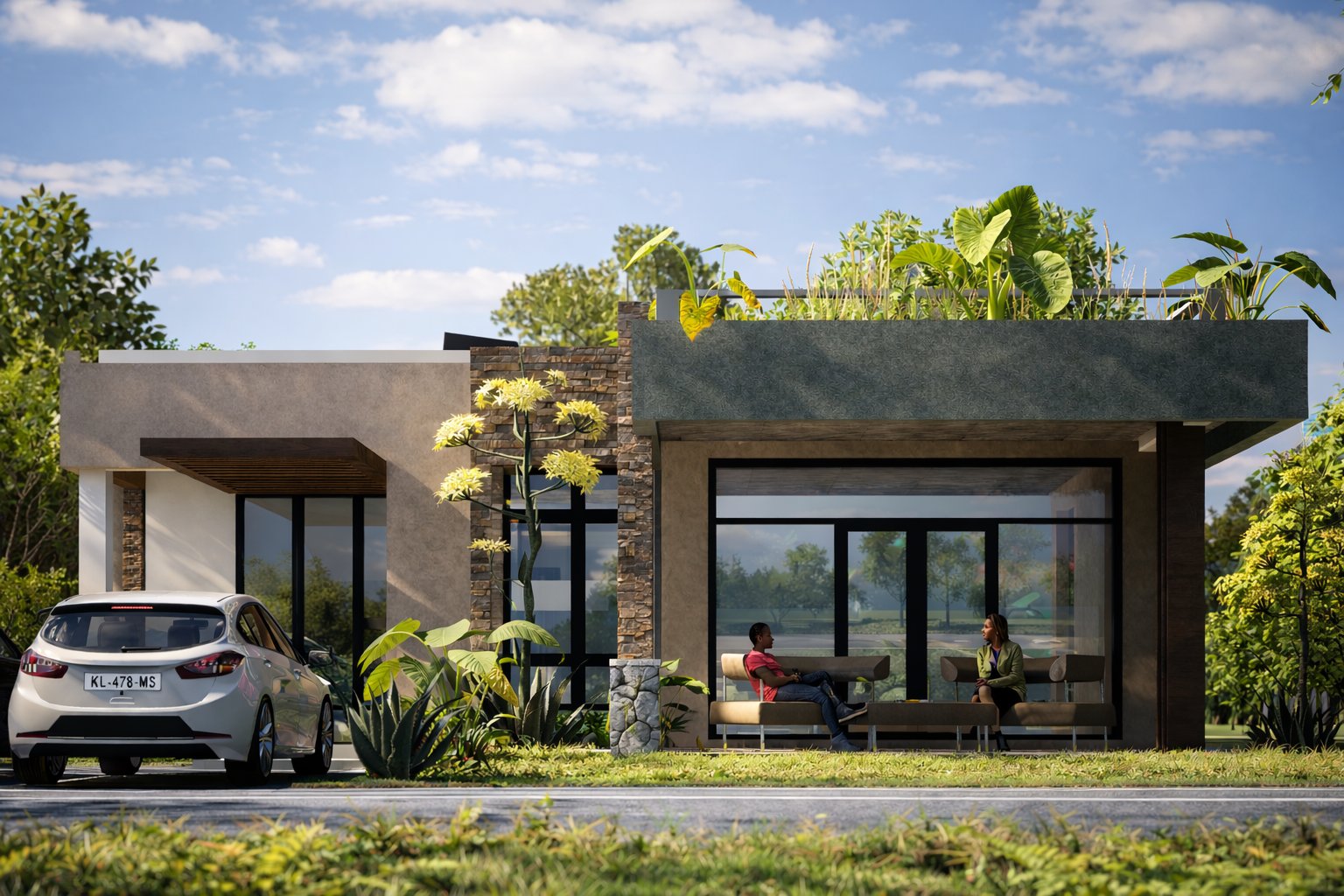
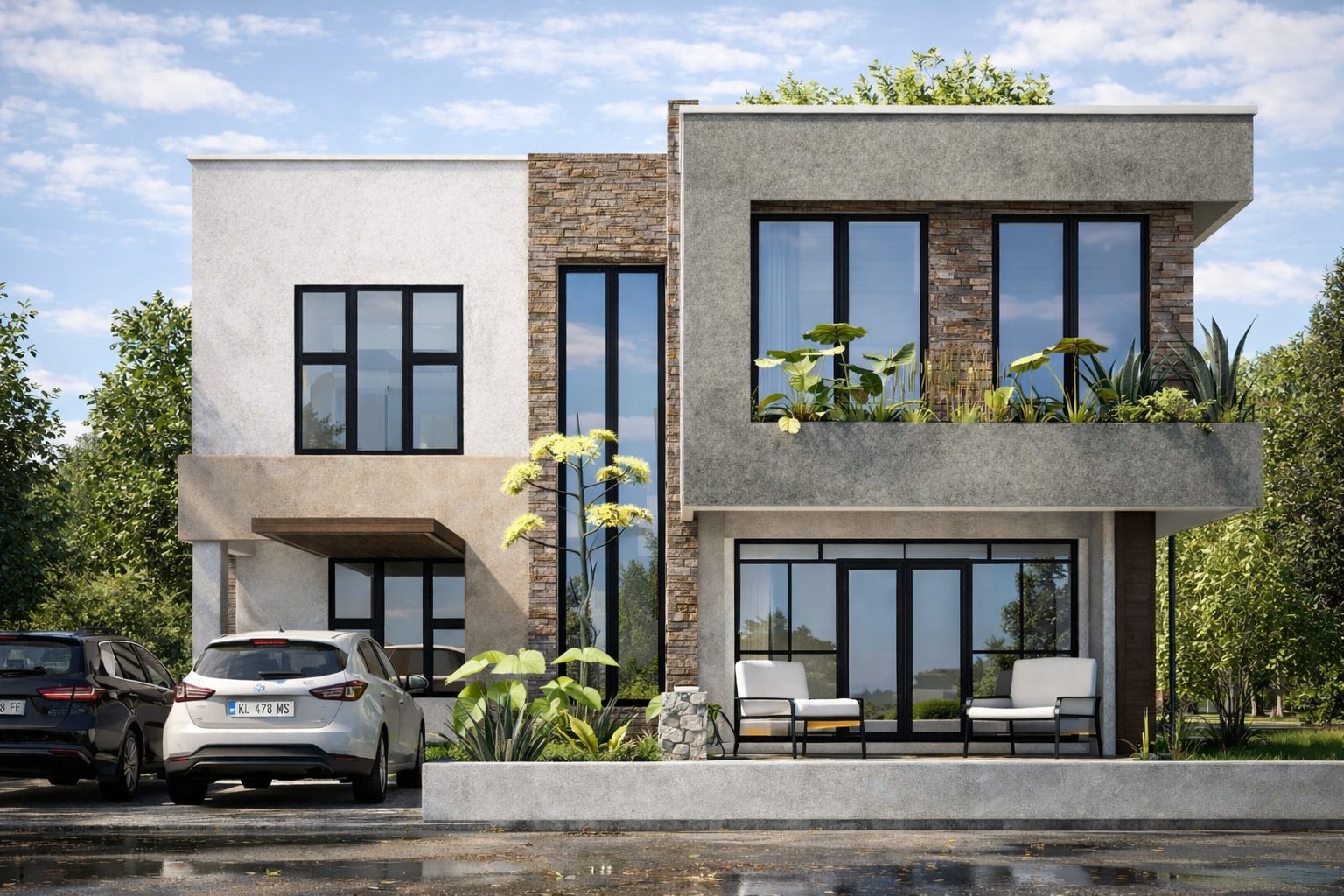
Phase 1 — Aalis Studios phased maisonette. Flat-roof bungalow lower level, fully finished, move-in ready from KES 5.5M. Neighbours see a complete contemporary home.
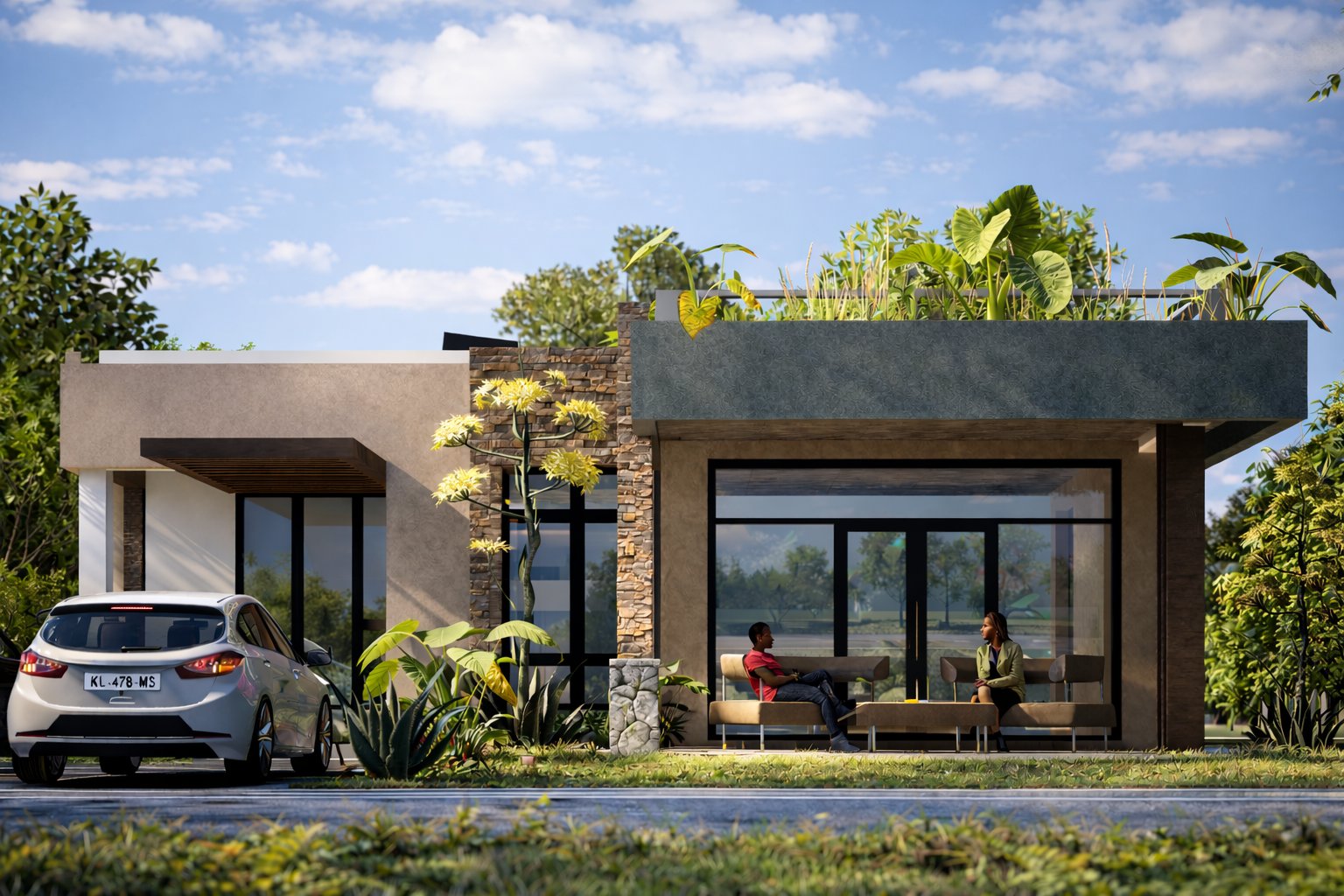
Phase 1 renders — three views of the completed lower level. Open terrace (left), travertine variant with couple (centre), street view with double parking (right).
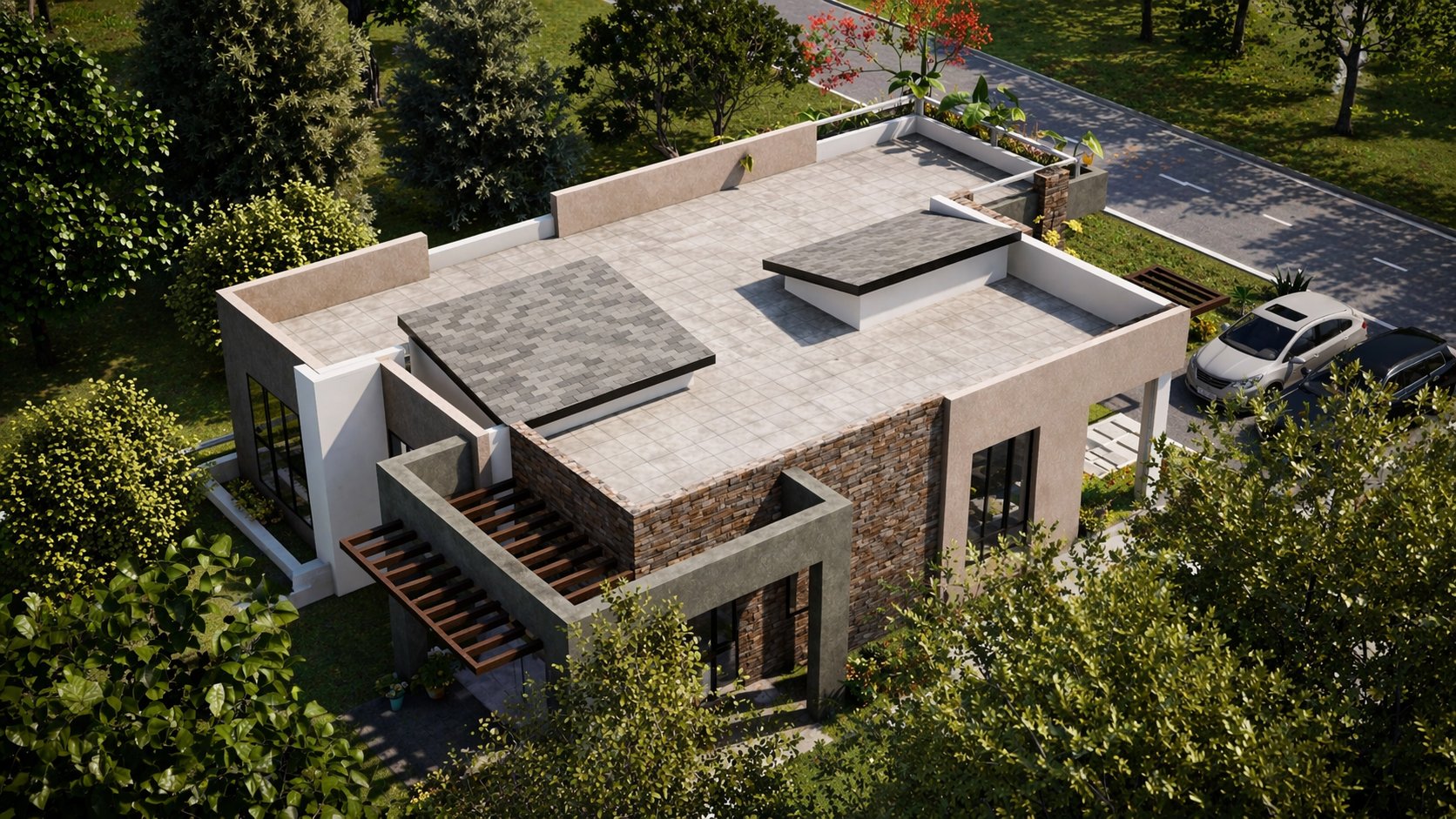
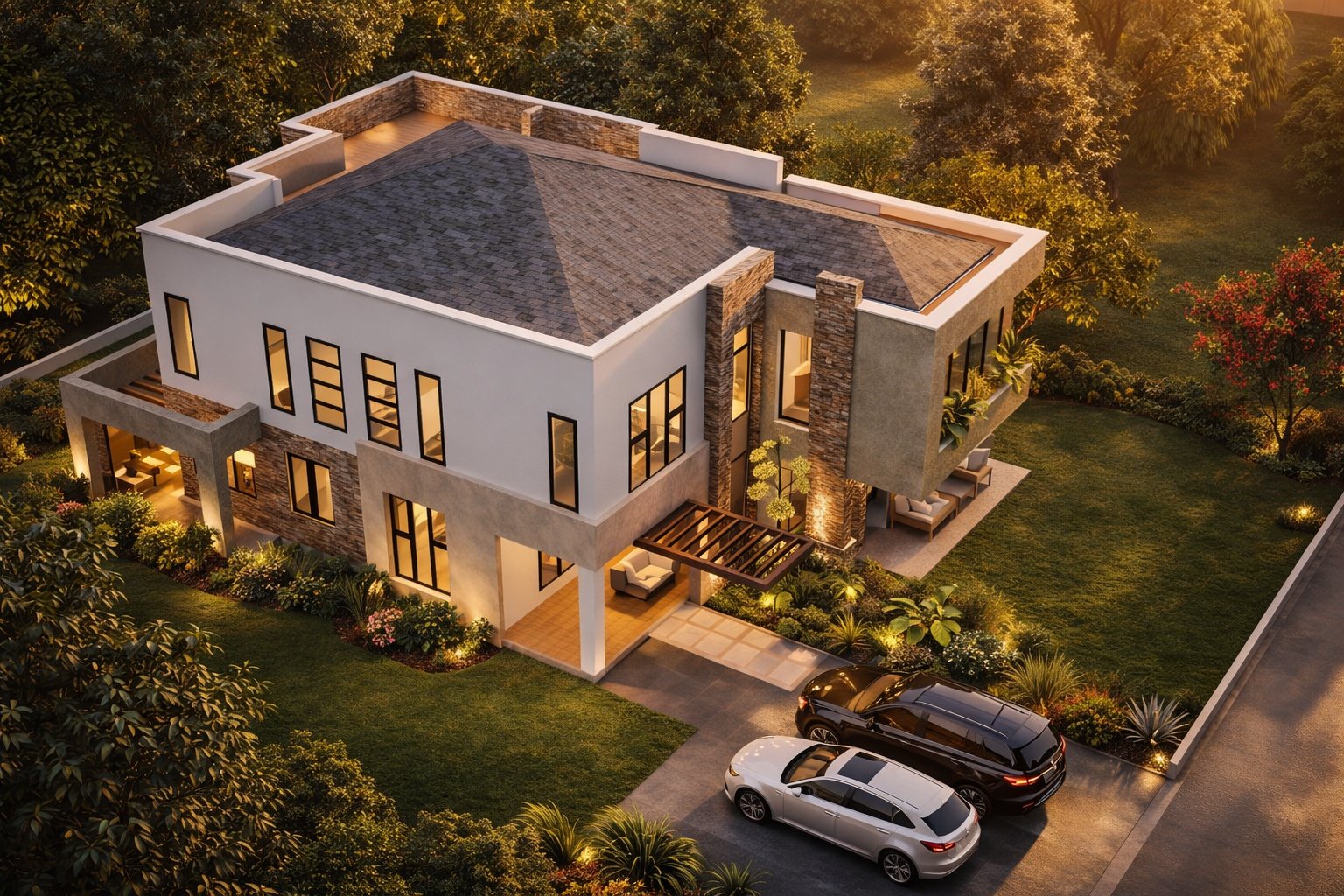
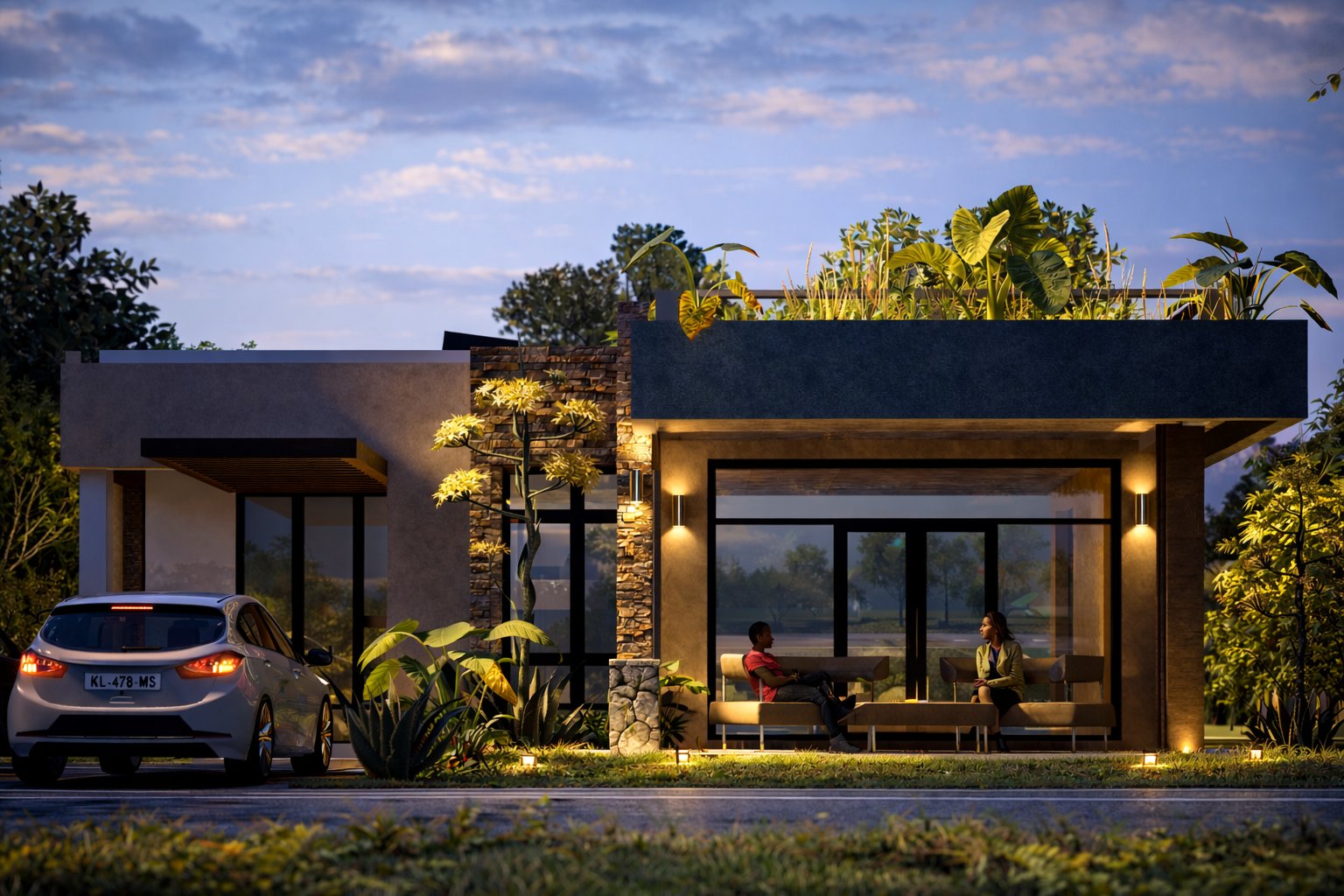
Phase 1 overhead aerial showing the tiled rooftop terrace (left) — the roof slab is engineered as the future Phase 2 floor. Night render with uplighting (right) — Phase 1 looks like a complete, finished home after dark.
Phase 2 — Full Maisonette Complete
Phase 2 — the full two-storey maisonette complete. Upper floor adds 4 bedrooms, master suite, family lounge, pantry, cloak room, and WIC. Zero demolition of Phase 1.
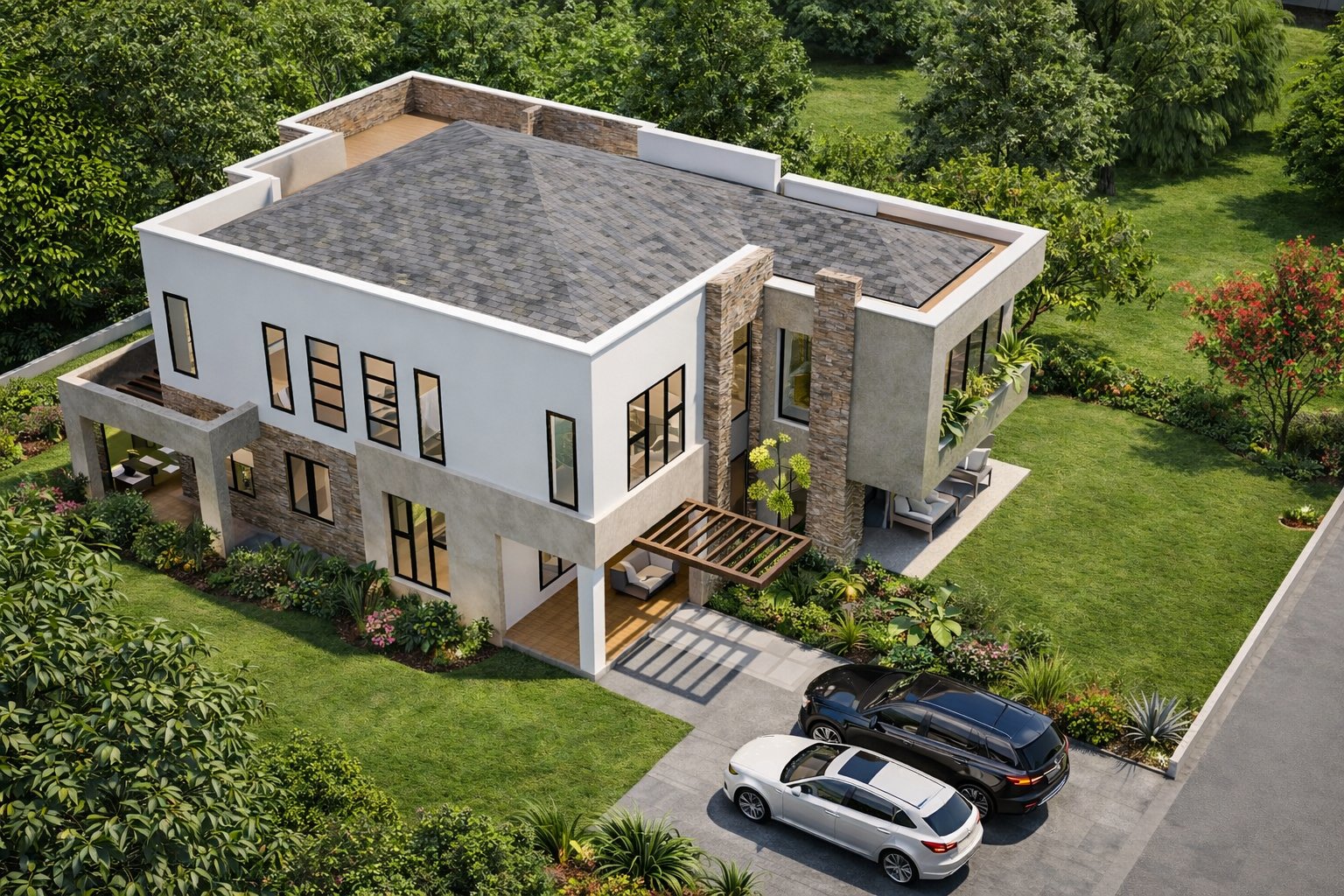
Phase 2 aerial views — overhead at sunset (left) and rear garden aerial in daylight (right). The upper floor is complete, adding 4 bedrooms and master suite above the Phase 1 slab.
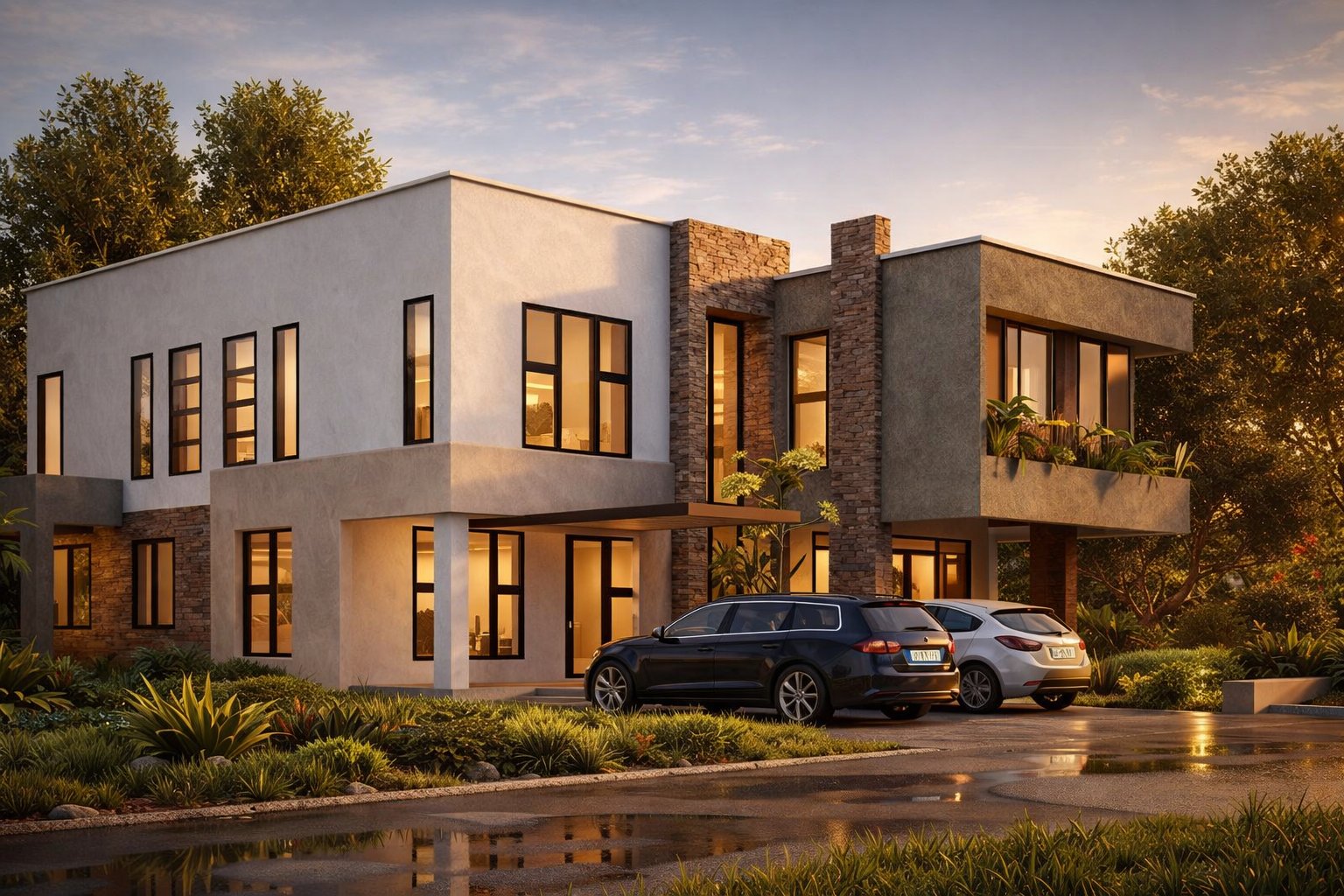
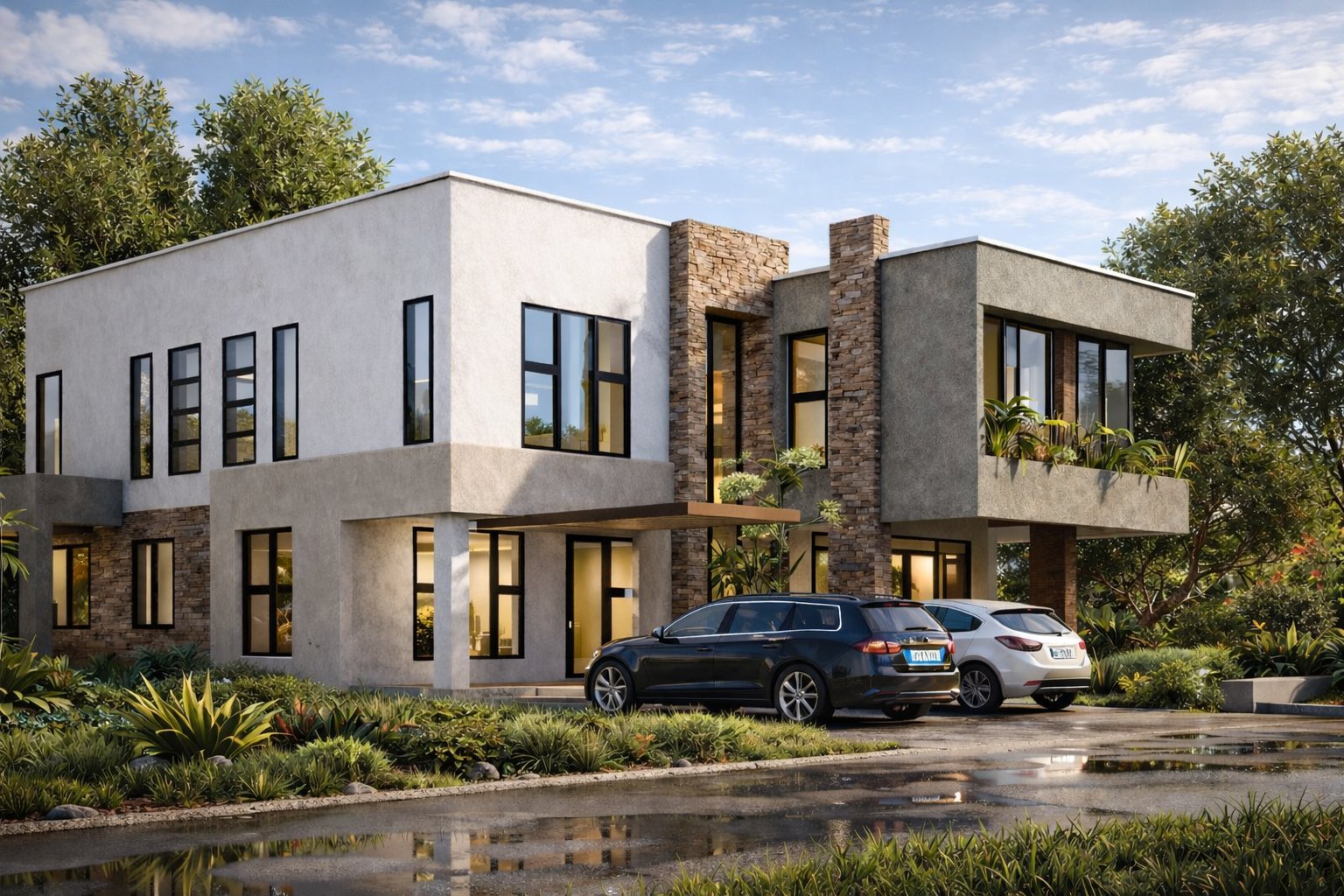
Phase 2 front elevation — warm evening lighting (left) and full daylight (right). The two-storey maisonette with stone cladding, render, large windows and covered ground-floor terrace.
03 — Phase 1 vs Phase 2
Side-by-Side: Phase 1 vs Phase 2 — Build a House in Phases in Kenya
Below are direct side-by-side comparisons of the same house in Phase 1 (lower level complete) and Phase 2 (full maisonette). The exterior in Phase 1 is deliberately designed to look complete — not like a house waiting for an upper floor. The difference is a second storey added invisibly and without demolition.
Front Elevation Comparison — Phase 1 Lower Level vs Phase 2 Full Maisonette
Phase 1 — Lower Level
Move in from KES 5.5M. Looks architecturally complete. Exterior fully finished.
Phase 2 — Full Maisonette
Upper floor added later. Zero demolition. All Phase 1 intact beneath.
Aerial View Comparison — Phase 1 Rooftop vs Phase 2 Full Upper Floor
Phase 1 — Rooftop Terrace
Phase 1 roof — designed as Phase 2 floor slab. Tiled terrace. Waterproofed. Structurally ready for upper floor.
Phase 2 — Upper Floor Complete
Phase 2 from above: Full two-storey maisonette. Built on Phase 1 slab. No demolition.
Phase 1 Street View vs Phase 2 Rear Garden
Phase 1 — Street View
Phase 1 street-facing view. Stone cladding, rooftop planters, glass living room. Reads as a finished home.
Phase 2 — Rear Garden Aerial
Phase 2 rear garden aerial: Upper floor complete, green garden, full maisonette realised.
Phase 1 at Night — Uplighting, Rooftop Planters & Illuminated Glazing
Phase 1 at night — garden uplighting, illuminated glazing, and rooftop planters. Nothing reads as interim or incomplete. A finished home from day one.
04 — The Most Important Rule
The Golden Rule: Design the Final House First
This is the single most important principle in phased construction — and the one most often violated. Do not design Phase 1 as a separate house and then “add more later.” This approach causes undersized foundations, structural columns in the wrong positions, plumbing stacks that block future bathrooms, and rooflines that require demolition when Phase 2 begins.
The correct approach: design the complete final maisonette first. Resolve the final structure, column grid, rooflines, plumbing stacks, and facade logic. Identify which spaces can temporarily change function. Design a Phase 1 layout that works for real family life today. Then define Phase 2 so it adds the upper floor without touching Phase 1 walls, pipes, or columns.
This principle is also central to international incremental housing best practice — UNESCO, UN-Habitat, and KMRC all recognise that a coherent master plan is the prerequisite for successful incremental building. An informal “build now, figure out Phase 2 later” approach creates exponentially more demolition, cost, and disruption.
05 — Phase 1
What Phase 1 Should Include — The Lower Level
A correctly designed Phase 1 should feel like a finished home — not a construction pause. Here is what the Aalis Studios phased maisonette Phase 1 includes, and what every well-designed Phase 1 should contain.
Phase 01 — Move-In Ready
The Complete First Home
✓ Foundation sized for full final maisonette loads
✓ All structural columns for both floors, at final grid
✓ Complete lower floor shell — walls, slab, ring beam
✓ Flat roof slab — designed as Phase 2 floor, waterproofed
✓ Windows and doors — weathertight and secure
✓ Full plumbing rough-in (cold, hot, drainage)
✓ Phase 2 bathroom risers installed and capped at roof
✓ Full electrical rough-in with Phase 2 conduits in slab
✓ All internal plastering, tiling, and painting
✓ Guest bedroom — sized as junior master with ensuite
✓ Staircase zone — enclosed as compact bedroom
✓ Dining room — temporarily functioning as kitchen
✓ Living room — proportioned for lounge + mini-dining
✓ Exterior fully finished — complete-looking from road
✓ Staircase zone reverts from bedroom to circulation
✓ Final kitchen space reverts from bedroom use
✓ All Phase 1 temporary arrangements restored to plan
06 — Phase 2
What Phase 2 Completes — The Full Maisonette Vision
Phase 2 is not a separate project — it is the continuation of the original master plan. Because the foundation, column grid, roof slab, plumbing risers, and electrical conduits were all installed correctly during Phase 1, adding the upper floor is a clean construction exercise with no demolition, no surprises, and no structural conflict with what is already built below.
The intelligence of Phase 2 is also in what changes on the ground floor. Every temporary room arrangement made in Phase 1 now reverts to its original, intended function: the staircase zone opens as proper circulation, the dining room becomes the dining room again, the kitchen moves to its final planned location, and the guest bedroom — which served as a junior master throughout Phase 1 — can be reassigned freely. The full original vision of the maisonette is realised without a single compromise.
Staircase installed
The staircase opening was pre-framed in the Phase 1 slab and covered with a temporary floor finish. In Phase 2, the covering is removed and the staircase is fabricated and installed — connecting both floors cleanly without cutting new slab penetrations.
Upper floor slab, walls and roof
The upper floor structure is built on the Phase 1 slab, which was designed and waterproofed from the start to carry this load. Walls are raised, the final roof is constructed, and the maisonette becomes a two-storey home.
All upper bedrooms and master suite
Bedroom 02, Bedroom 03, Bedroom 04, and the master suite — with walk-in closet, double vanity, and private balcony — are completed on the upper floor. The family lounge, guest bedroom, cloak room, and pantry also take their final positions.
Ground floor rooms revert to original plan
The dining room, previously functioning as a kitchen, reverts to proper dining use. The final kitchen takes its designed location. The living room loses its mini-dining function and becomes a full formal lounge. The staircase zone reverts from bedroom to circulation. Everything resolves exactly as originally designed.
Services connected without hacking
Plumbing connections are made to the pre-installed risers capped at roof level during Phase 1. Electrical circuits are connected to the draw wires already laid in the Phase 1 slab. No walls are hacked. No slabs are cut. The services infrastructure grows seamlessly from what is already in place.
ⓘ
When to begin Phase 2. Most Aalis Studios phased clients begin Phase 2 construction 3–7 years after moving into Phase 1 — once they have accumulated the required savings while living rent-free. The Phase 2 drawings are already approved by the county, the contractor knows the site, and construction picks up exactly where the master plan intended.
07 — Exterior Design
How to Make Phase 1 Look Like a Completed Home
This is one of the most commercially important aspects of Aalis Studios’ phased design. A well-designed Phase 1 should not look like a house waiting for an upper floor. Neighbours, visitors, and passers-by should see a complete, architecturally confident home — not a building site pause.
Parapet and roof edge design
The flat roof termination is detailed as a positive architectural feature — with parapets, coping, and roof-level planting. It reads as intentional, contemporary design rather than an interim slab edge.
Continuous facade material language
Stone cladding panels, textured render, and glazing systems are selected so Phase 2 can match them precisely. Material continuity over time is planned from the design stage — not improvised later.
Window rhythm planned for the full house
Window positions, sizes, and proportions in Phase 1 are resolved for the final full elevation — so Phase 2 upper-floor windows align with lower-floor logic and the facade reads as one composition.
Concealed structural allowances
All Phase 2 structural provisions — column reinforcement projecting above roof, beam pockets, plumbing riser sleeves — are concealed within the roof structure or behind the parapet. Invisible externally.
Complete landscaping and boundary in Phase 1
Gate, boundary wall, driveway, and front garden are all completed as part of Phase 1. A well-landscaped property with finished perimeter communicates completeness immediately.
08 — Zero-Demolition Engineering
How to Avoid Demolition in Phased Construction
The single most avoidable waste in informal phased building is demolition — hacking walls for misdirected plumbing, demolishing columns in the wrong position, or breaking rooflines. All of this is preventable with correct upfront engineering.
01
Foundations sized for the full two-storey load
The structural engineer designs foundations for the complete maisonette from day one. Phase 2 columns bear on the same footings as Phase 1 — no underpinning, no reinforcement upgrades, no surprise groundworks.
02
Structural columns at final grid positions
Columns are positioned for the final house layout — not just Phase 1. If Phase 1 columns are in the wrong position for Phase 2, they must be demolished. Correct grid planning from day one eliminates this.
03
Staircase opening structurally prepared in Phase 1
The staircase opening through the Phase 1 slab is sized and structurally framed in Phase 1 — temporarily finished over. When Phase 2 begins, it is simply opened up. No new slab cutting required.
04
Plumbing risers for upper bathrooms pre-installed
Phase 2 plumbing stacks are installed and capped at roof level in Phase 1. When Phase 2 bathrooms are fitted, connections are made without breaking the Phase 1 slab or walls.
05
Electrical conduits for upper floor embedded in Phase 1
Draw wires for the Phase 2 distribution board and key circuits are installed in the Phase 1 slab and walls. No chasing of walls, no cutting of slabs for cables in Phase 2.
06
Phase 1 roof slab designed as Phase 2 floor
The Phase 1 roof slab is engineered for the upper floor construction loads — not just as a waterproof cover. Its thickness, reinforcement, and surface are all calculated for what Phase 2 will place on top of it.
Aalis Studios Phased Design Service
Want a Home That Looks Complete in Phase 1 and Expands Cleanly in Phase 2?
We design your complete final maisonette, then carefully shape Phase 1 for real family life today. Full master plan, phased BOQ, zero-demolition engineering, county approval covering both phases — and a Phase 1 exterior that already reads as architecturally complete.
Cost of Building a House in Phases in Kenya — 2026 Estimates
Below are realistic cost estimates for the Aalis Studios phased 4-bedroom maisonette (180–220 m² total) in 2026, based on Nairobi mid-range finishes. Rural counties are typically 10–20% lower; coastal Mombasa adds 5–10%.
Phase 1
Lower Level (110–130 m²) Move-In Ready
KES 5.5M–8.5M
Full structural shell for final house. Complete lower level. Exterior finished. Move in.
Add professional fees (architecture, structural, QS): 8–12% of construction cost; permit/approval fees: ~1–2%; and a 10–15% contingency fund. At Kenya’s mortgage rates (13–18%), avoiding a KES 6M loan by funding Phase 1 from savings saves KES 800K–1M+ per year in interest. See: full Kenya building cost guide and cost per m² breakdown.
10 — Phased vs One-Go Build
Phased Construction vs One-Go Build — The Real Comparison
Factor
✓ Phased Build (Aalis Studios)
Conventional One-Go Build
Initial cash required
KES 5.5M–8.5M (Phase 1 only)
KES 12M–18M+ all at once
Time to move in
5–9 months (Phase 1 ready)
12–20 months (full build)
Exterior appearance
Looks fully complete from Phase 1
Looks incomplete during construction
Loan/mortgage dependency
Phase 1 often from savings only
Usually requires full mortgage
Potential interest saved
KES 800K–1.5M/year (avoiding loan)
Full interest on entire build cost
Demolition risk
Zero — if properly designed
N/A
Phase 1 liveability
Dignified and comfortable — designed
N/A
Diaspora suitability
Excellent — aligns with remittances
Requires large single commitment
County approval required
One approval covers both phases
One approval
Final design quality
Full original vision — no compromise
Full original design
BORAQS architect required?
Yes — essential for correct phasing
Yes — required by Kenyan law
11 — Facade Design Options
Phase 2 Full Maisonette — Facade Design Variants
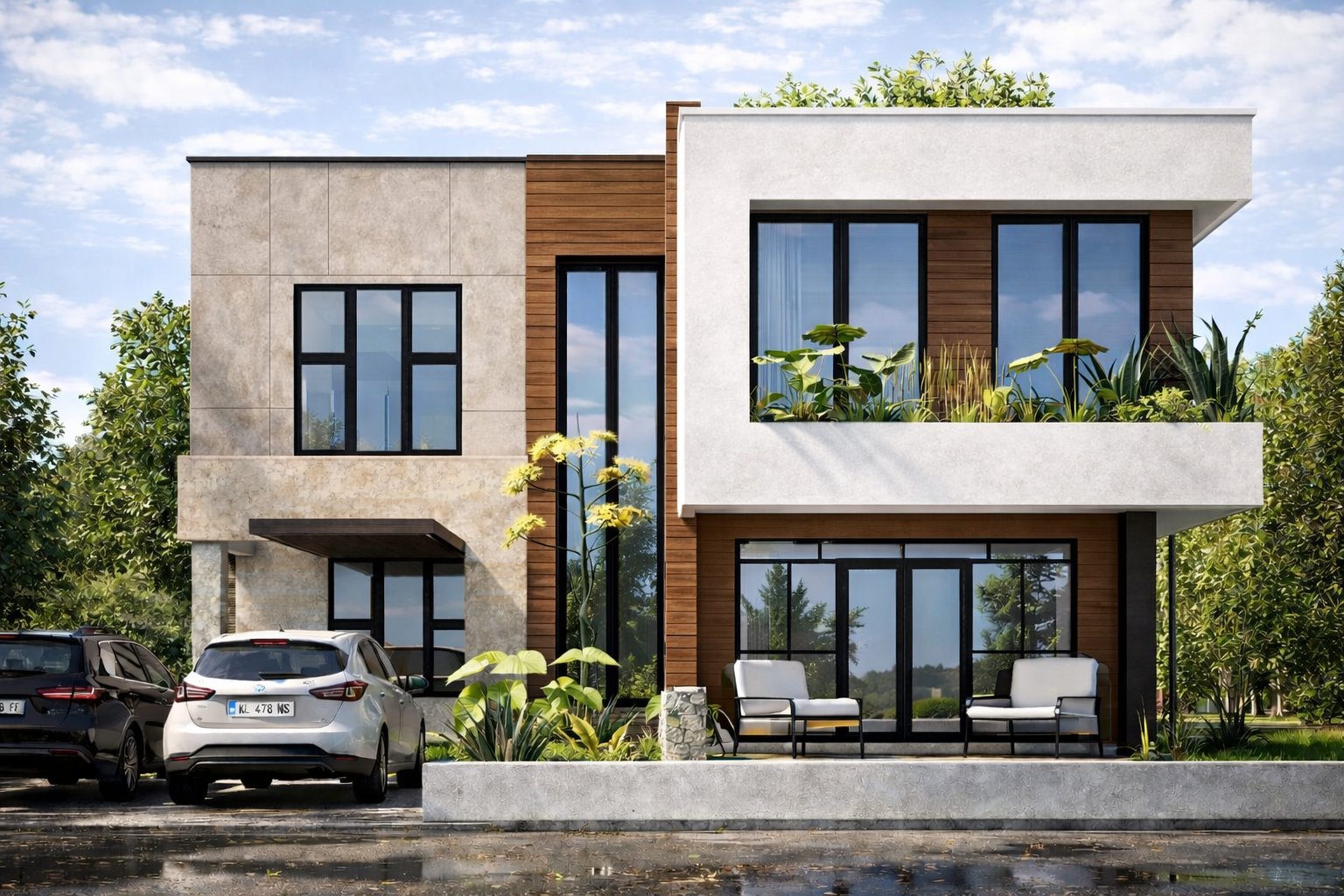
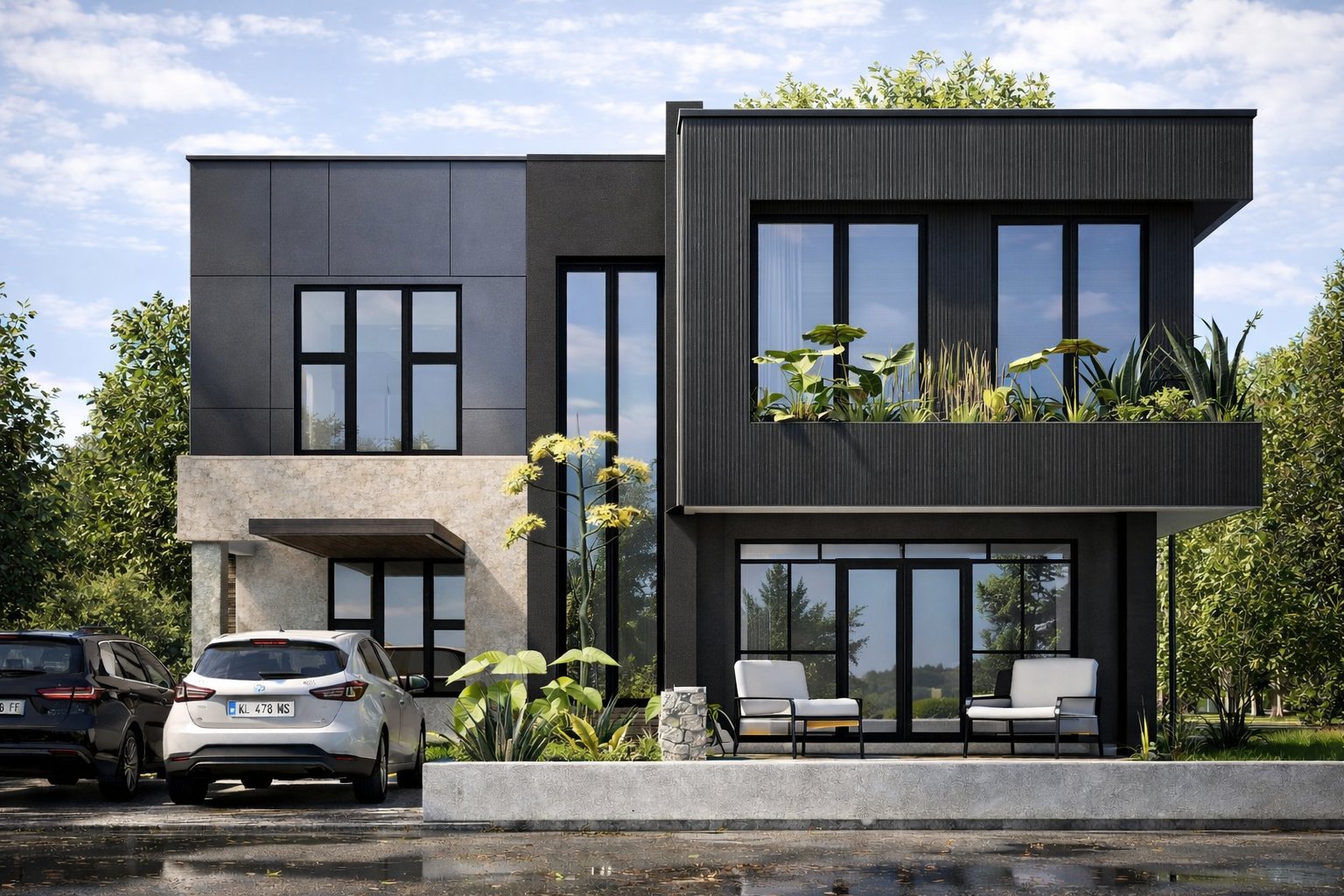
The Aalis Studios phased maisonette is designed with multiple facade finish options for Phase 2. The structural design is identical — only the external material palette changes. Below are three facade variants from the same project, plus the premium travertine option.
Stone Cladding + Grey Render
Dark Charcoal Cladding
Timber Cladding + White Render
Three facade options for the Phase 2 full maisonette — stone cladding + grey render (left), bold dark charcoal (centre), warm timber + white render (right). The structural design is identical across all three. Only the material palette changes.
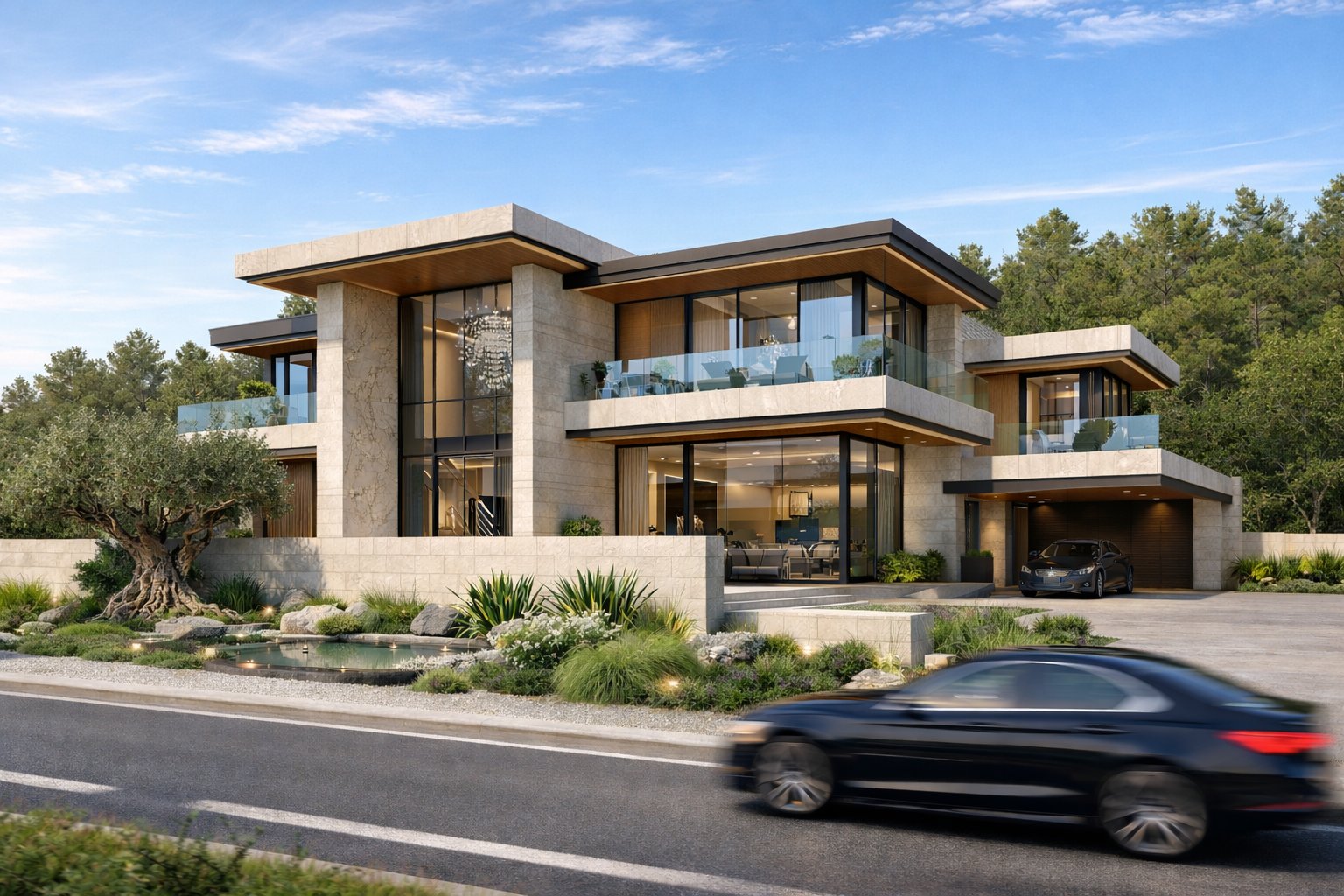
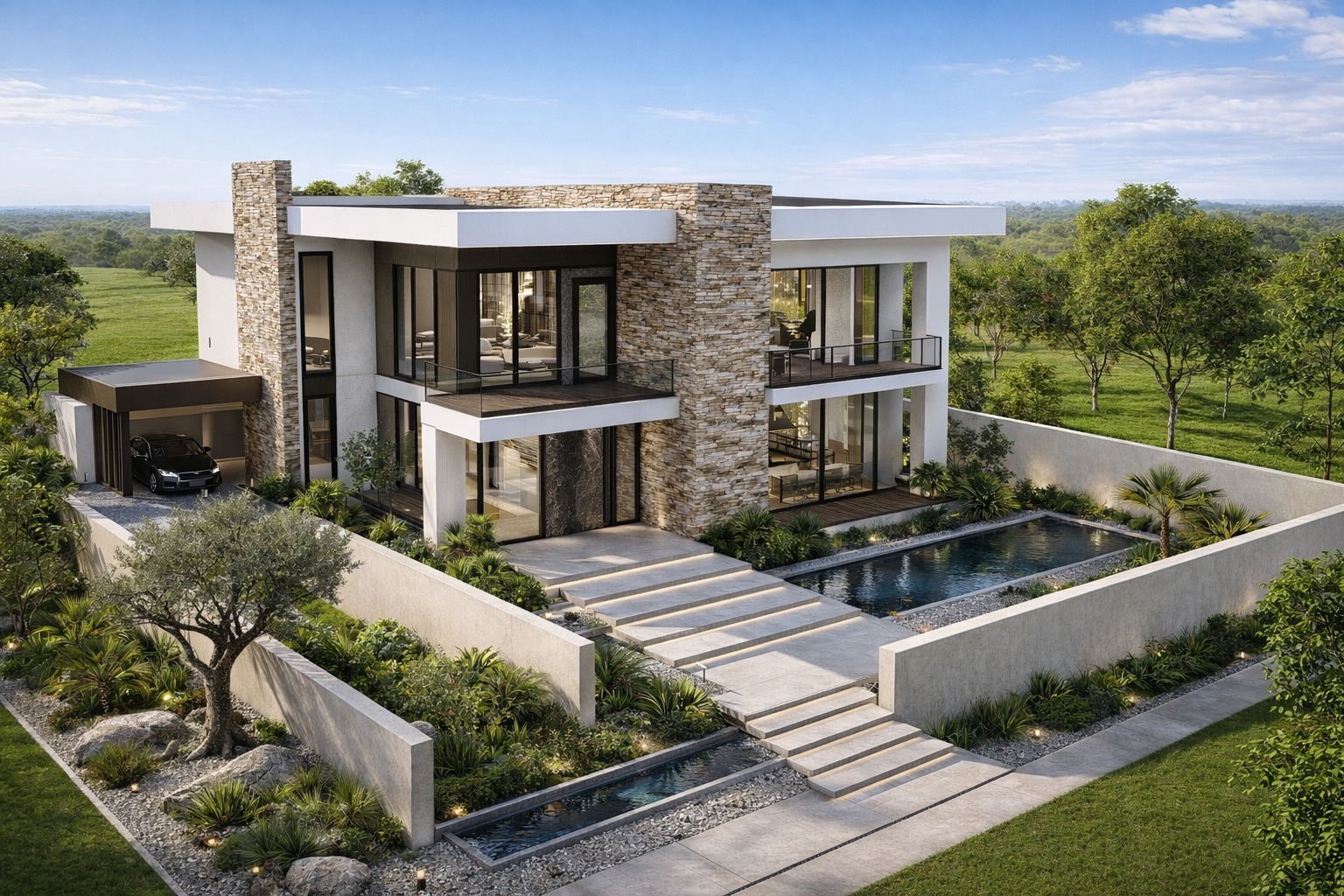
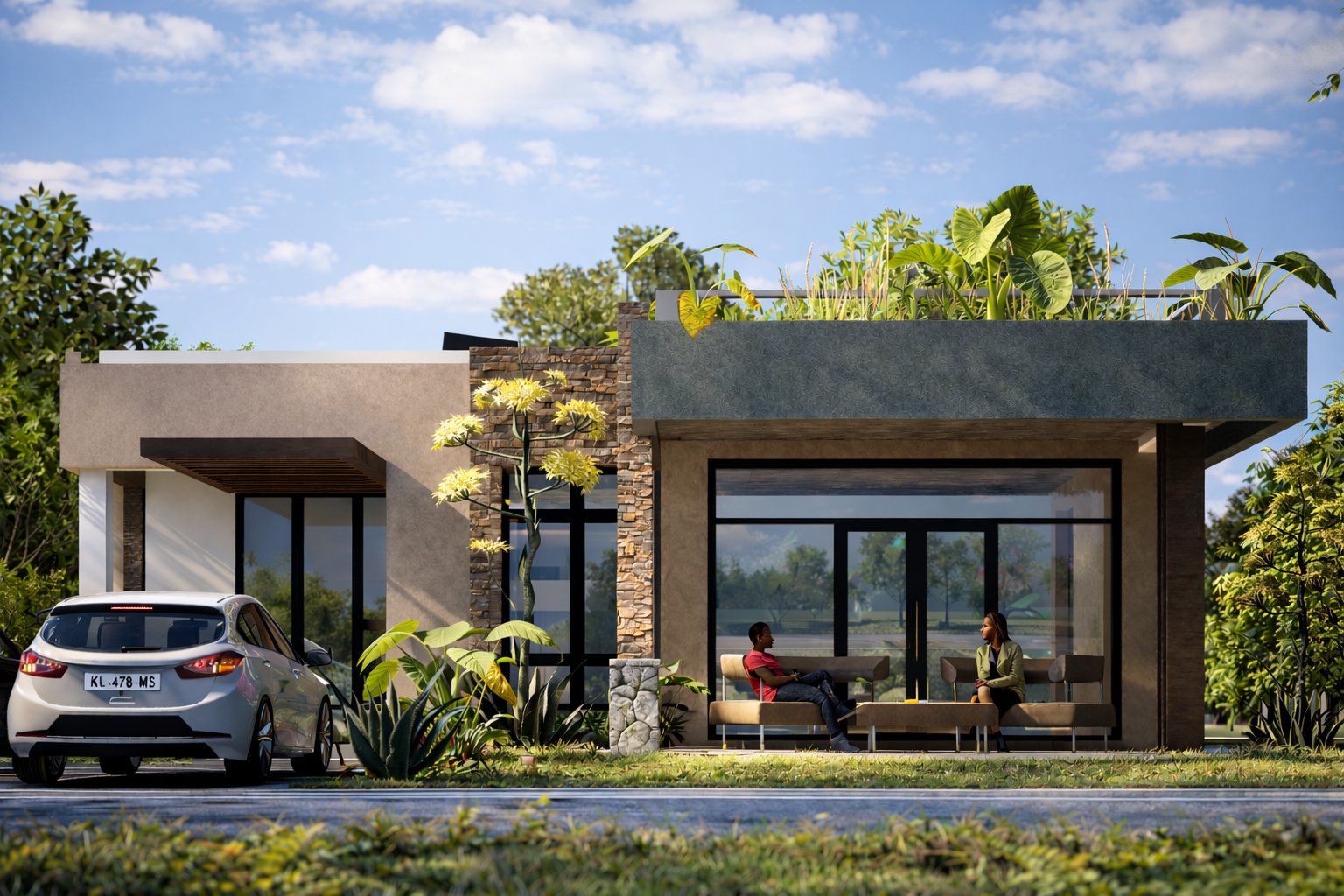
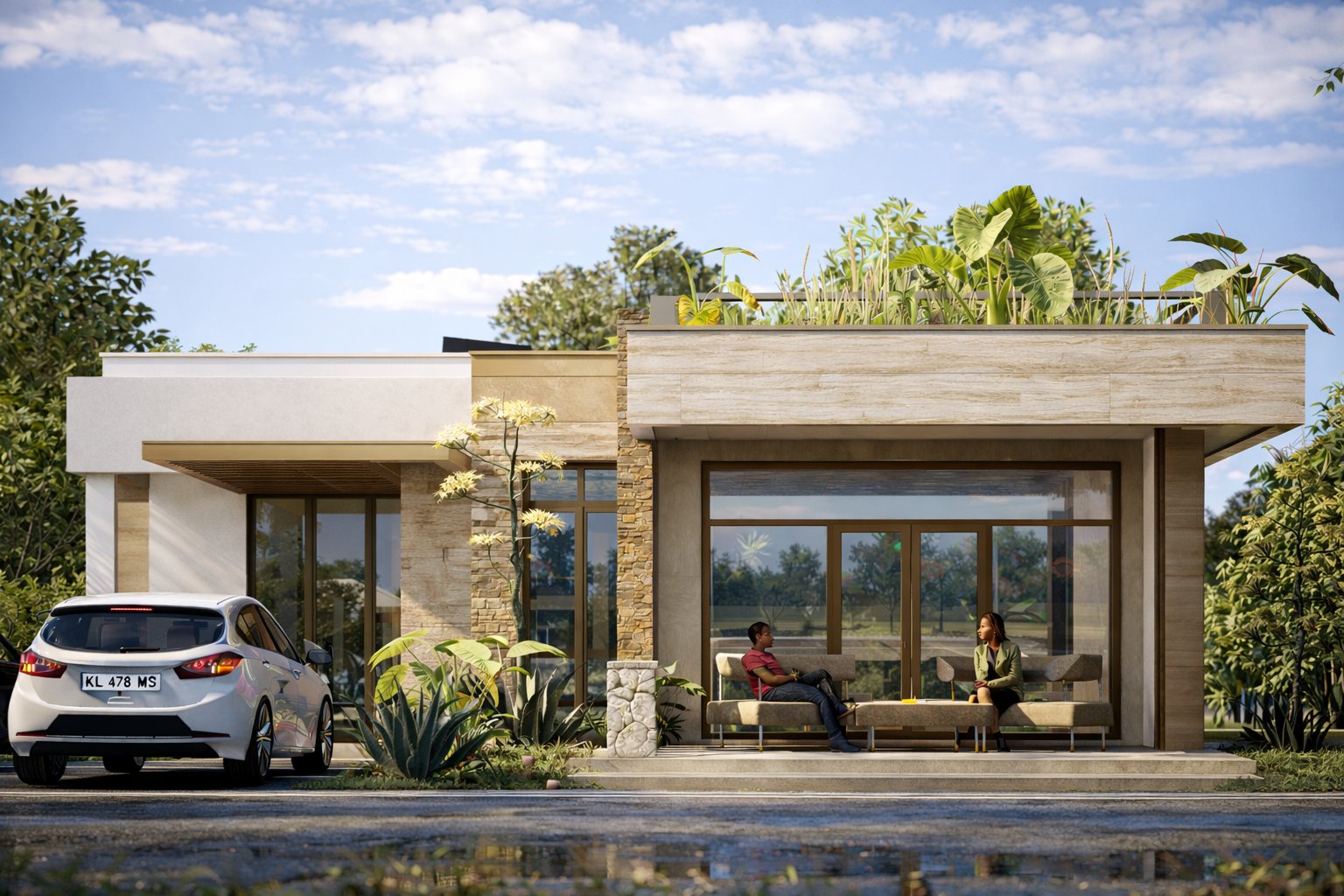
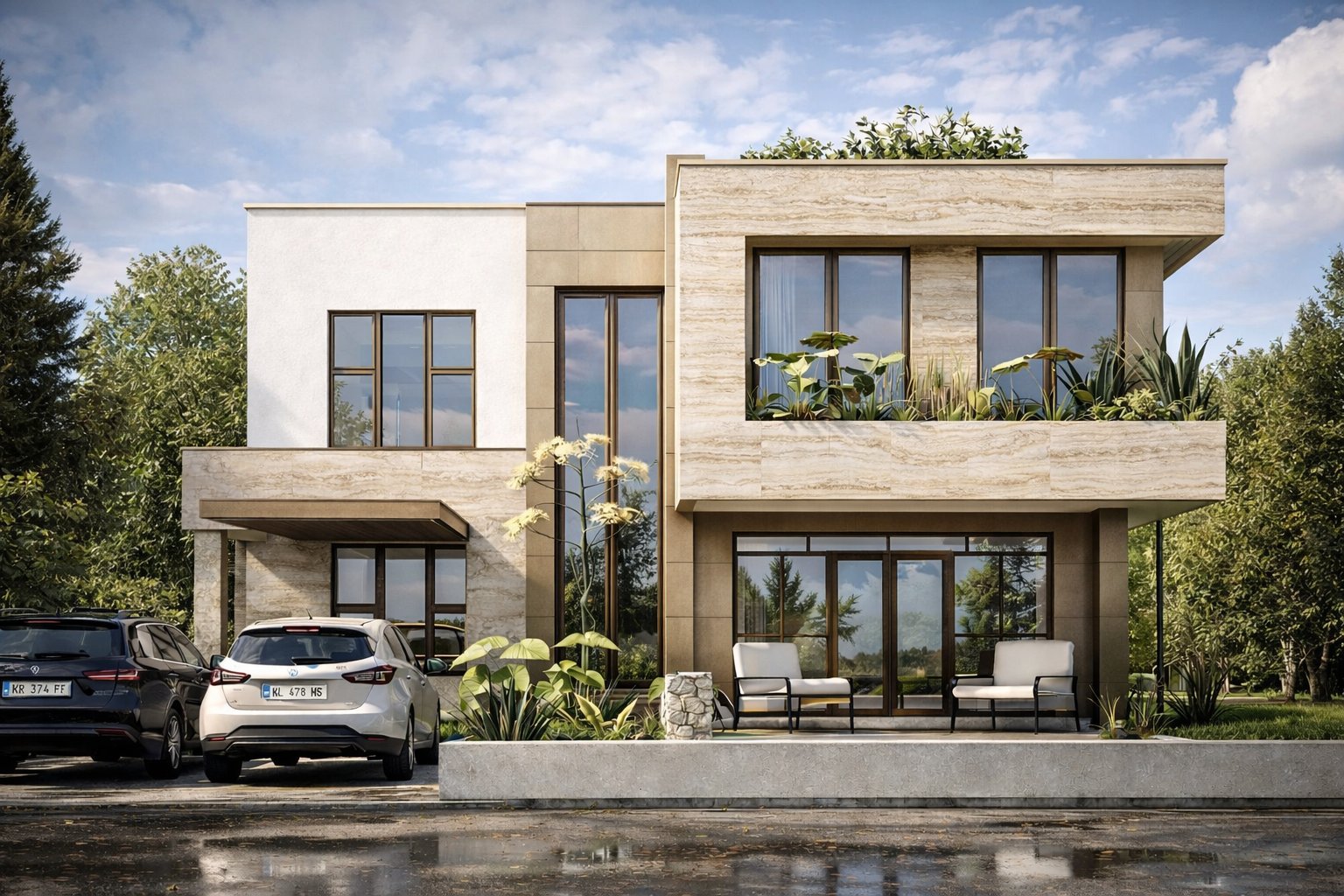
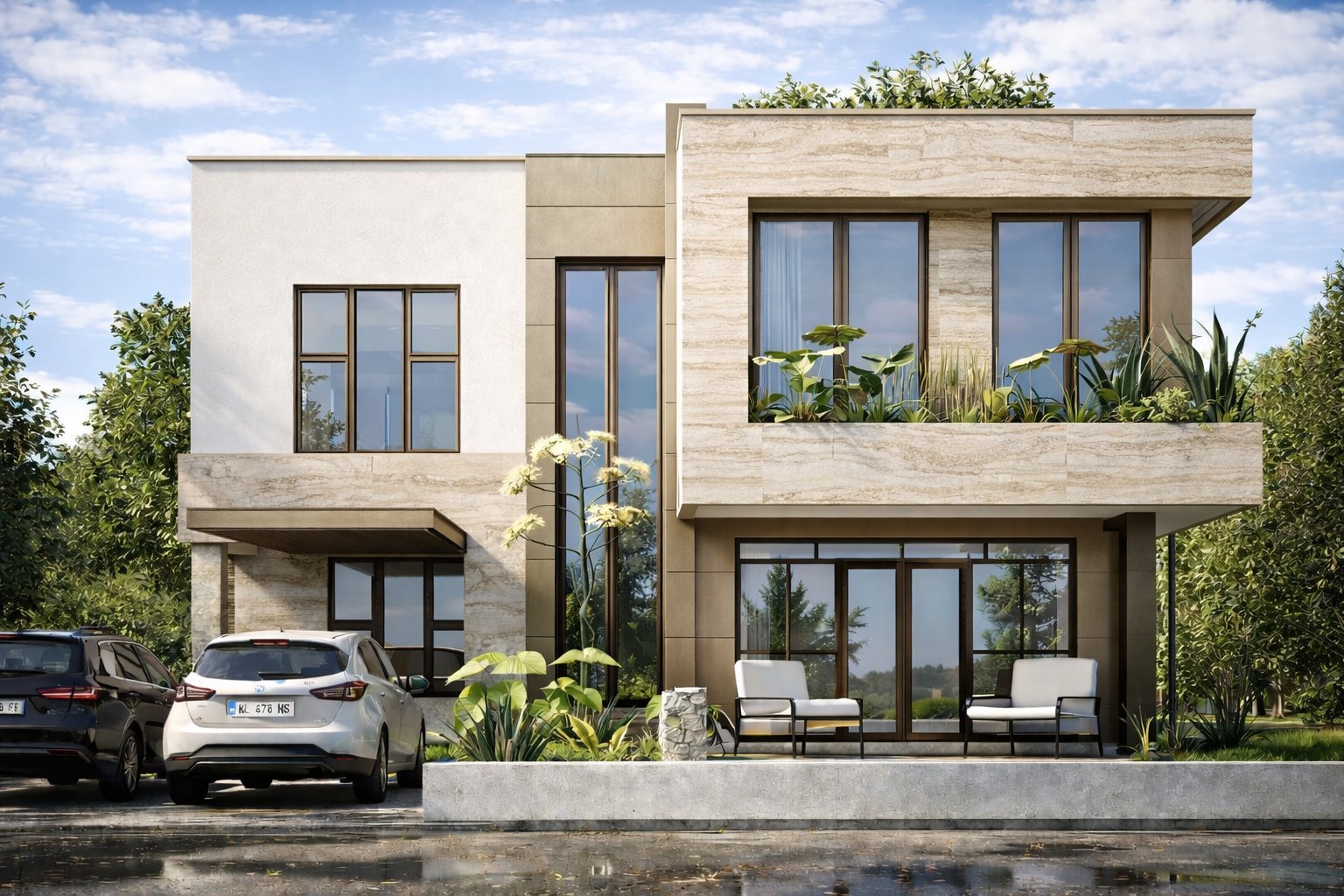
Premium travertine-effect facade option — light stone cladding on both volumes with bronze-tone window frames. The wider frontage view (right) shows the full two-storey profile. Available as a Phase 2 upgrade without structural change.
Phase 1 travertine variant — the same phased bungalow lower level in a premium travertine-effect stone facade. When Phase 2 is built, the upper floor continues the travertine cladding to match.
12 — Who This Is For
Is the Phased Maisonette Right for You in Kenya?
👪
Middle-income families building with savings
Families earning KES 80K–300K/month who cannot comfortably fund the full maisonette at once but refuse to wait 5+ years to start building.
✈️
Diaspora clients building from abroad
Kenyans in the UK, USA, Canada, Australia, and UAE whose remittance patterns suit phased funding — and who want a home without a single massive capital outlay.
🏠
Landowners still paying rent
People who own land and want to stop paying rent as soon as possible — even if the full maisonette is 3–5 years away. Phase 1 gets you off rent now.
📈
Property investors building in stages
Investors who want to build a Phase 1 rental asset — earning income from the lower level — while funding Phase 2 from rental cash flow.
🧠
Homeowners who want quality over speed
Clients who would rather build Phase 1 beautifully and finish Phase 2 properly than rush the whole project and compromise on materials or design quality.
🌿
Environmentally conscious builders
Phased construction eliminates demolition waste, allows better material procurement timing, and avoids the forced compromises that come with financial pressure — one of the most sustainable residential strategies.
13 — Common Mistakes
Common Mistakes in Phased House Construction — And How to Avoid Them
01
Designing only Phase 1 — no master plan
The most expensive mistake. Without a complete final house plan, Phase 2 will require demolition, foundation upgrades, and rerouted services. The master plan must always come first.
02
Undersizing foundations for Phase 1 loads only
If foundations are designed only for the lower level, adding Phase 2 requires costly underpinning or structural risk. Foundation design must account for the full building from day one.
03
Stopping construction before the roof is on
Any house paused with exposed walls and no roof deteriorates rapidly — steel corrodes, walls absorb water, and finishes fail. Never pause construction before the structure is fully weathertight.
04
Not installing Phase 2 services in Phase 1
Plumbing risers and electrical conduits for upper bathrooms and circuits are far cheaper to install during Phase 1 construction than to retrofit later. Always include them — even if Phase 2 is years away.
05
Choosing an unregistered architect or contractor
Phased construction requires precise structural and service coordination that only registered professionals can provide safely. An unregistered architect cannot submit drawings for county approval. An NCA contractor reduces quality risk. Both are non-optional.
06
Not obtaining Phase 1 partial occupation certificate
A partial occupation certificate from the county allows legal occupation of Phase 1 before Phase 2 begins. Without it, you are technically occupying an incomplete building. Aalis Studios manages this as part of the phased service.
14 — Aalis Studios Service
The Aalis Studios Phased Design Service — What You Get
Our phased design service is not a watered-down version of our standard architectural offering. It is a more demanding process — because every design decision must serve both Phase 1 comfort and Phase 2 completeness simultaneously. Here is what we deliver.
Complete final maisonette design first
We design the full two-storey maisonette before any phasing decisions are made — resolving the final structure, column grid, rooflines, staircase, facade, and all services. This master plan is the foundation of everything that follows.
Intelligent Phase 1 room flexibility strategy
We map out the temporary room arrangement: which spaces adapt their function in Phase 1, how they are sized and finished to work properly in their temporary role, and how they revert cleanly to their final planned use in Phase 2.
Zero-demolition engineering strategy
Our structural engineer and M&E consultants design Phase 1 to contain all Phase 2 infrastructure — correctly positioned columns, Phase 2 plumbing risers, electrical conduits, and staircase opening — so Phase 2 begins cleanly.
BORAQS-stamped county approval covering both phases
We submit the complete final maisonette drawings for county approval from the outset — one submission covering Phase 1 and Phase 2. No re-approval required when Phase 2 begins.
Phased Bill of Quantities (BOQ)
Our quantity surveyor produces a BOQ clearly split by Phase 1 and Phase 2, giving precise cost control at every stage. You know exactly what Phase 1 costs before breaking ground — no surprises.
Design-only or full Design+Build
We can provide phased drawings for your own contractor, or manage the full design-and-build under one contract — including county approval, NCA contractor procurement, site supervision, and occupation certificate.
Build Smart Now. Complete Beautifully Later.
Your Phased Maisonette Starts with a Conversation.
Whether you want phased drawings only, or a full design-and-build service from first sketch to occupation certificate — Aalis Studios has the BORAQS-registered expertise to make phased construction work properly. Book a consultation and let us design your home for Phase 1 comfort and Phase 2 completion.
Frequently Asked Questions — Building a House in Phases in Kenya
Yes — a maisonette is the most suitable house type for phased construction in Kenya. The lower floor functions as a complete, comfortable home while the upper level is deferred. The key is that the full final house must be designed first, then the phasing planned. Aalis Studios specialises in intelligent phased maisonette design: Phase 1 is move-in ready, looks complete externally, and Phase 2 adds the upper floor with zero demolition. From KES 5.5M for Phase 1.
Phase 1 (lower level, move-in ready): KES 5.5M–8.5M. Phase 2 (upper floor + room reinstatement): KES 4M–7M. Total for a 4-bedroom maisonette: KES 9.5M–15.5M with mid-range Nairobi finishes. This compares to KES 12M–18M for a conventional one-go build of the same specification. Add professional fees (8–12%), permits (1–2%), and a 10–15% contingency on top. See our Kenya construction cost guide.
Not with Aalis Studios’ approach. We design the Phase 1 exterior specifically to appear architecturally complete — with a properly detailed flat roof, parapet walls, stone cladding panels, consistent wall finishes, and complete landscaping, boundary wall, gate, and driveway. Neighbours and passers-by will not know the house is a phased project unless you tell them. All Phase 2 structural provisions (reinforced columns, plumbing risers, conduits) are hidden internally.
Designing only Phase 1 without a complete master plan for the final house. This is the single most expensive mistake in phased construction, and the most common. Without a complete final design, Phase 2 will require foundation upgrades, column relocation, plumbing hacking, and roofline demolition. The golden rule: design the complete final house first, then plan the phasing — never the other way around.
Not if you follow the Aalis Studios approach. We submit BORAQS-stamped drawings for the complete final maisonette to the county for approval at the start, covering both phases under one submission. When Phase 2 begins years later, the approval is already in place — saving significant time and avoiding the risk of regulatory changes affecting your Phase 2 project.
Phase 1 construction (groundbreaking to move-in ready) takes approximately 5–9 months for the lower level of a maisonette. Including design and county approval (2–4 months before construction), the complete Phase 1 process — first meeting to moving in — takes approximately 7–13 months. Phase 2 construction typically takes 4–8 months.
Yes — this is the core financial advantage of the phased model. Many Aalis Studios clients fund Phase 1 entirely from personal savings or SACCO financing, avoiding bank mortgage interest entirely. At Kenya’s mortgage rates (13–18%), avoiding a KES 6M loan saves KES 800K–1M+ per year in interest. Phase 2 can then be funded from savings accumulated while living rent-free in Phase 1.
Yes, completely. Phased construction is legally permissible in Kenya provided: (1) BORAQS-registered architectural drawings for the complete final building are submitted and approved by the county; (2) the NCA project is registered before works begin; (3) each phase complies with the approved drawings; and (4) a partial occupation certificate is obtained for Phase 1 before occupation. Aalis Studios manages all regulatory compliance as part of the phased service.
Yes — though the most popular phased format in Kenya is the 4-bedroom maisonette. A bungalow can be built in phases by constructing a compact 2-bedroom section initially (e.g. the bedroom wing), then adding the living wing or a separate DSQ later. However, the maisonette format is the most efficient for phased construction because it naturally separates public and private zones — Phase 1 ground floor, Phase 2 upper floor — without room-function compromise. Contact us to discuss your specific site and budget.
Architectural fees for a phased maisonette design in Kenya are typically 3–8% of the estimated construction cost. For a Phase 1 build of KES 6M, expect architectural, structural engineering, and QS fees of KES 480K–720K. Aalis Studios charges a transparent consultation fee of KES 5,000 (credited to your project), followed by a custom project fee quoted per scope. The Design+Build package absorbs the design fee into the construction contract — meaning you pay nothing separately for design when you build with Aalis Studios. Get a quote →
Phased construction and incremental housing describe the same concept — building a home in deliberate stages over time. "Incremental housing" is the technical term used by organisations like UN-Habitat and the KMRC, referring to homes designed from the start for staged completion. "Phased construction" or "build in phases" is the more common everyday term in Kenya. The critical distinction Aalis Studios makes is between intelligent phased design (complete final house designed first, then phased) and informal incremental building (starting without a plan and adding later), which frequently causes demolition and structural problems.
VA
Arch. Vincent Abuya — Principal Architect, Aalis Studios
BORAQS RegisteredNCA RegisteredEDGE CertifiedLexus Design Award 2020
Arch. Vincent Abuya is the Principal Architect and founder of Aalis Studios, Nairobi’s award-winning architecture and construction management firm. He designed the real phased maisonette project documented on this page, and the Aalis Studios phased design service is built on that experience. For diaspora clients, consultations are available by video call.
 Phase 1 — Rooftop Terrace
 Phase 1 — Street View