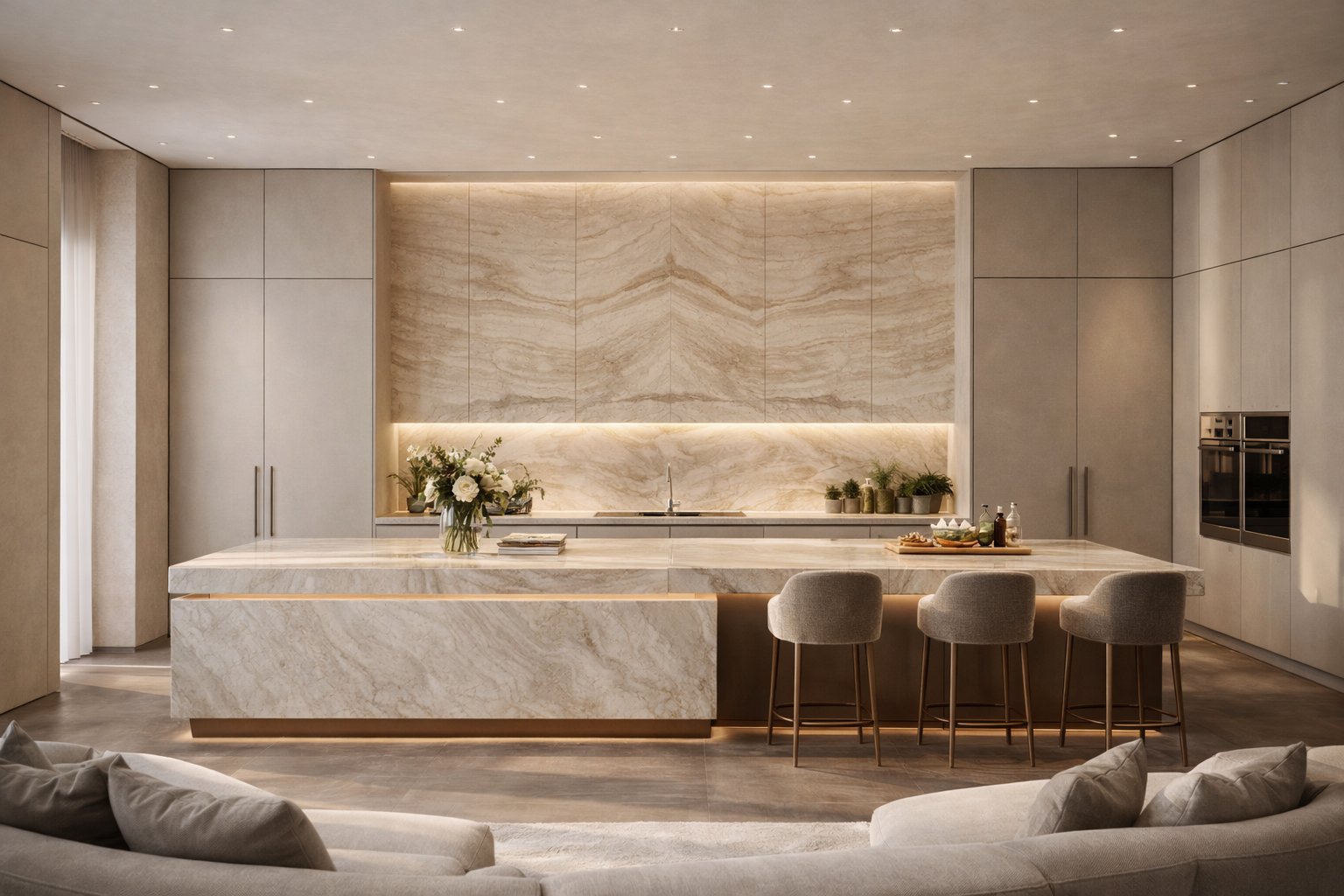
Choosing between quartz and granite countertops is one of the most consequential decisions in any kitchen interior design project. In Nairobi's evolving luxury residential and apartment market, both materials are widely specified — but they differ significantly in cost, durability, heat resistance, maintenance demands, and the kind of aesthetic they bring to a kitchen. This guide, written by Aalis Studios' interior design team in Nairobi, gives you the full picture so you can make the right choice for your specific kitchen, lifestyle, and budget.
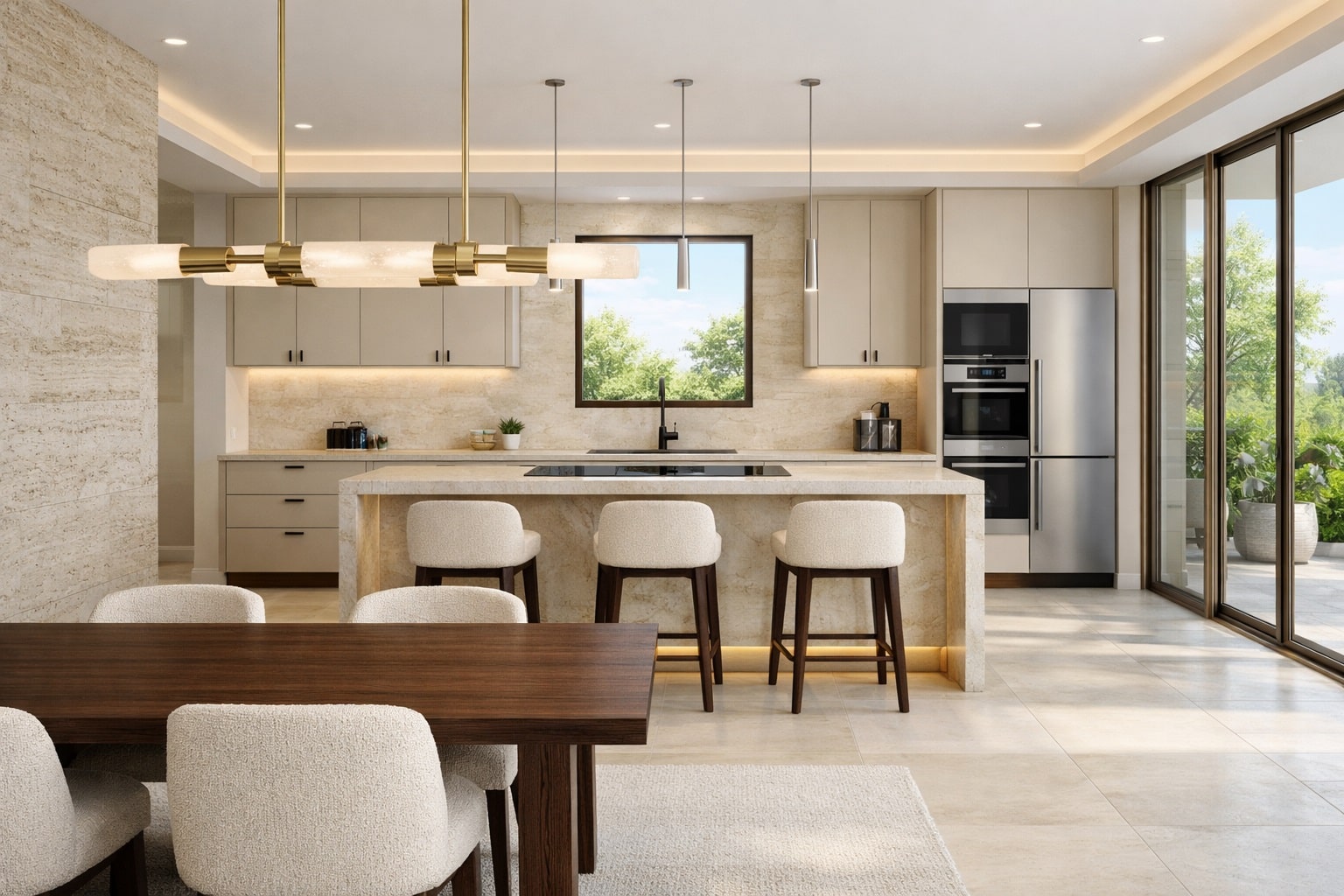
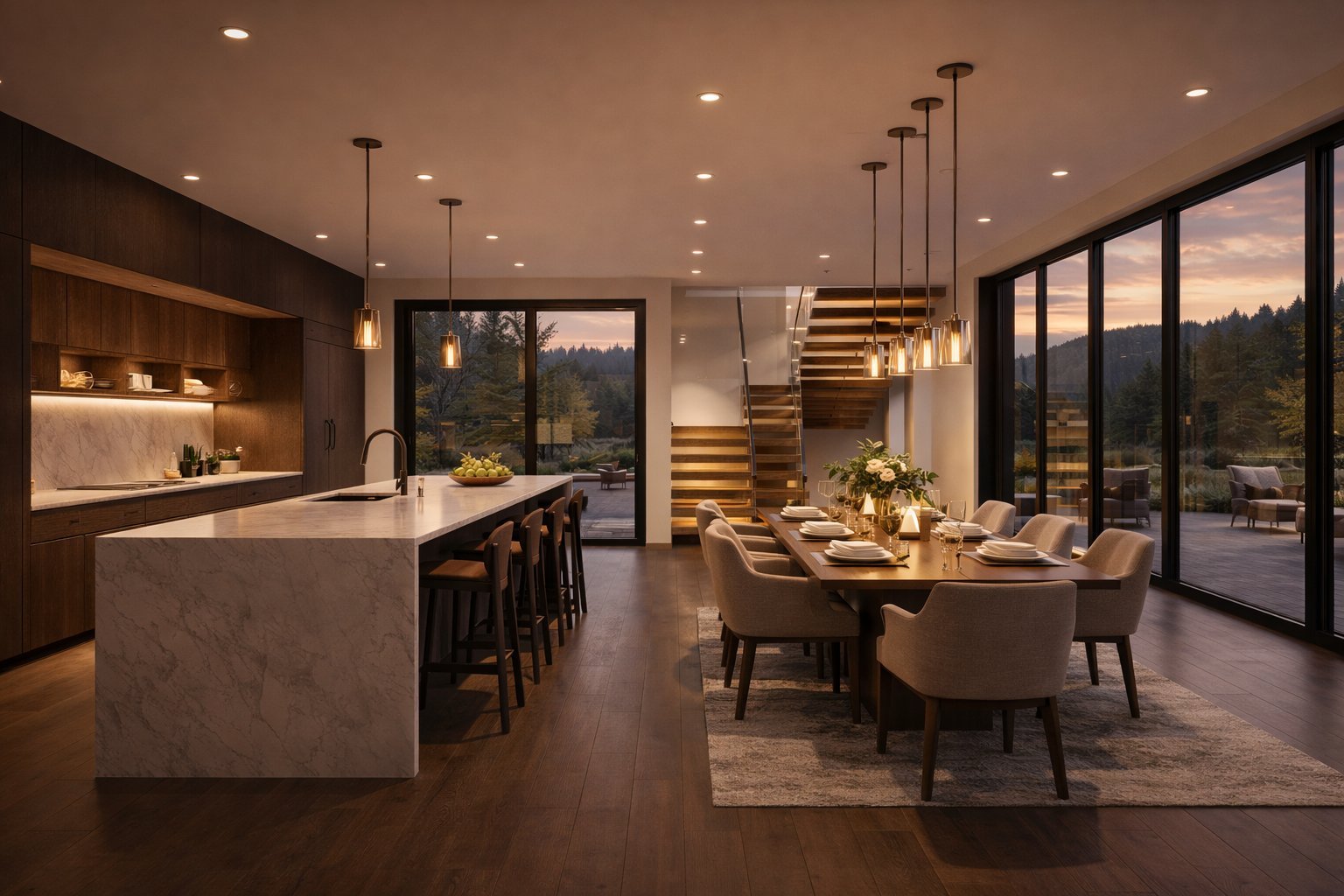
Aalis Studios — Nairobi: Luxury open-plan kitchen with travertine marble island, brass pendant lighting, and boucle bar stools. Island countertop: honed travertine. A premium natural stone specification increasingly requested in Nairobi's luxury residences.
What Is Granite?
Granite is a natural igneous stone — quarried from the earth, cut into slabs, and polished or honed for use as a kitchen countertop. Each granite slab is entirely unique, with its own pattern of mineral crystals, veining, and colour variation. It has been the dominant countertop material in Kenyan kitchens for decades, and remains widely available and competitively priced.
In kitchen interior design in Nairobi, granite is most frequently specified in traditional, classic, and heritage-style kitchens — where its natural character and warmth complement dark timber cabinetry and traditional ironmongery. It performs exceptionally well under heat, tolerating direct contact with hot pots better than any engineered stone.
- Extremely durable under heavy daily use
- Superior heat resistance — tolerates hot pots directly
- Scratch resistant surface
- Natural stone character — unique per slab
- Widely available from Kenyan suppliers
- Lower cost than quartz (KES 8,000–18,000/m²)
- Requires sealing every 1–2 years
- Can stain if unsealed or poorly maintained
- Pattern inconsistency between slabs
- Heavier — requires strong cabinet support
- Less uniform look — not suited to minimalist interiors
What Is Quartz?
Quartz countertops are engineered stone — manufactured from natural quartz crystals (93–95%) bound with polymer resins and pigments. Unlike granite, they are produced to consistent patterns and colours, making them predictable and easy to specify across large kitchen surfaces and island formats. Quartz is non-porous — it cannot absorb liquids, bacteria, or stains without sealing, which gives it a significant maintenance advantage in high-use Nairobi kitchen environments.
In luxury kitchen design and fit-out in Nairobi, quartz has become the dominant choice for contemporary kitchens — particularly in high-rise apartments, penthouses, and modern villas in Karen, Lavington, Kileleshwa, and Westlands, where clean lines, low maintenance, and a refined aesthetic are the brief.
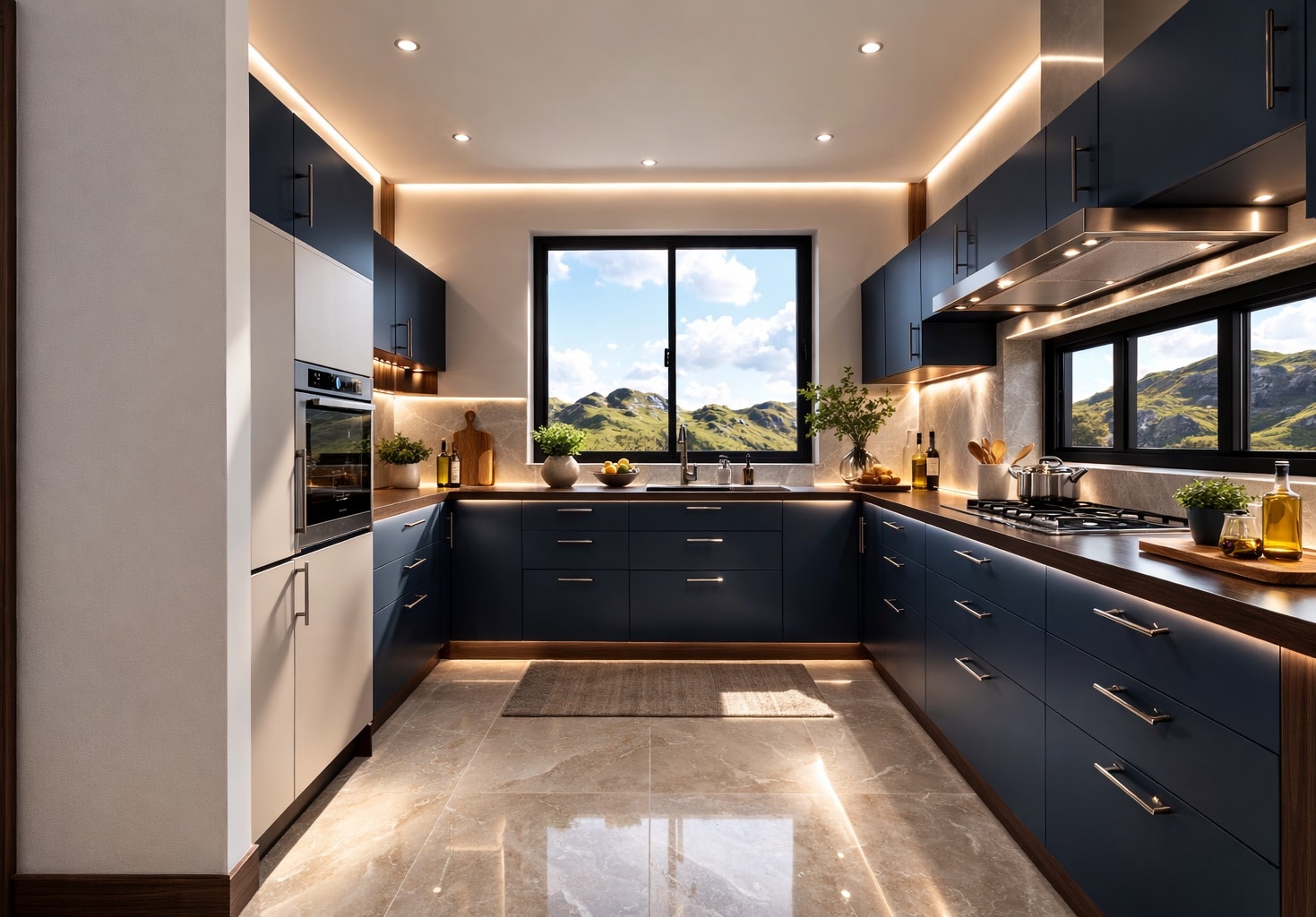
Aalis Studios — Karatina Project: Navy blue U-shaped kitchen with marble countertop and backsplash, LED cove and under-cabinet lighting. A strong example of dark cabinetry with light stone countertop — a combination that works for both quartz and marble specification.
- Non-porous — no sealing required, ever
- Highly stain resistant — ideal for Kenyan cooking
- Consistent pattern and colour across large surfaces
- Low maintenance — soap and water only
- Modern luxury aesthetic suits contemporary interiors
- Wide range of finishes: polished, honed, textured
- Less heat resistant than granite — resin can discolour
- Higher cost than granite (KES 18,000–35,000/m²)
- Engineered appearance — not natural stone character
- Can look artificial with lower-quality products
Quartz vs Granite — Full Comparison Table
| Feature | Granite | Quartz |
|---|---|---|
| Material Type | Natural stone (quarried) | Engineered stone (manufactured) |
| Sealing Required | Yes — every 1–2 years | No — non-porous |
| Heat Resistance | Excellent — direct pot contact | Moderate — use trivets |
| Stain Resistance | Moderate (if sealed) | Excellent |
| Scratch Resistance | Excellent | Very good |
| Maintenance Level | Medium | Low |
| Pattern Consistency | Natural variation (unique) | Uniform and predictable |
| Cost in Kenya (2026) | KES 8,000–18,000/m² | KES 18,000–35,000/m² |
| Best Aesthetic | Traditional / Classic kitchens | Contemporary / Luxury modern |
| Hygiene (Porous?) | Porous (if unsealed) | Non-porous always |
| Property Value Appeal | Traditional buyers | Modern buyers — Nairobi 2026 |
Cost of Countertops in Kenya — 2026 Pricing Guide
Countertop costs in Kenya vary significantly based on material origin, colour, thickness, and finish. The figures below are current 2026 market rates for supply and installation in Nairobi by Aalis Studios' kitchen fit-out team.
| Material | Origin | Finish | Price per m² |
|---|---|---|---|
| Granite — Entry | India / China | Polished | KES 8,000 – 12,000 |
| Granite — Premium | Brazil / Italy | Polished / Honed | KES 12,000 – 18,000 |
| Quartz — Standard | Local / Regional | Polished | KES 18,000 – 24,000 |
| Quartz — Premium | Silestone / Caesarstone | Polished / Honed / Textured | KES 24,000 – 35,000 |
| Marble | Italy / Turkey | Polished / Honed | KES 22,000 – 48,000 |
| Quartzite (Ultra-Luxury) | Brazil / Italy | Honed / Leathered | KES 35,000 – 80,000 |
"For luxury kitchen design in Nairobi, countertop selection is never just about the surface — it determines the entire feel of the kitchen. We specify the countertop first, then build the cabinetry, lighting, and hardware choices around it."
— Aalis Studios Interior Design Team, Nairobi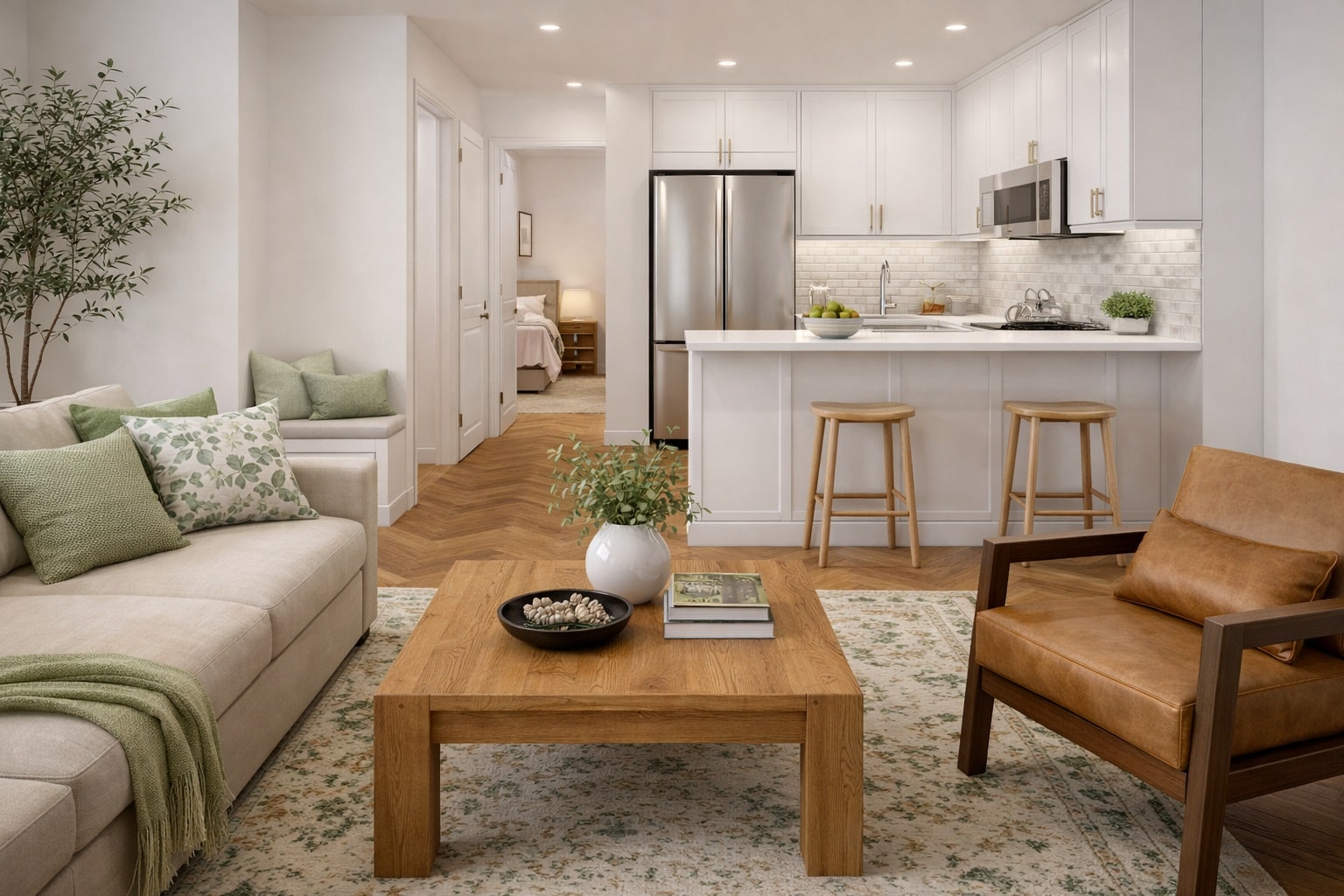
Left: Modern apartment kitchen — white quartz countertop. Right: Luxury villa kitchen — marble waterfall island. Both designed and fitted by Aalis Studios, Nairobi.
Heat Resistance — Critical for Kenyan Kitchens
Heat resistance is particularly important in Kenyan kitchen design, where cooking often involves sustained high heat — direct flames, heavy cast iron pots, and prolonged stove use. Granite tolerates direct contact with hot pots and pans without risk of damage. Quartz, by contrast, contains polymer resin that can discolour or crack under sustained extreme heat — trivets should always be used.
This gives granite a meaningful practical advantage in working kitchens with heavy cooking. However, for kitchen islands primarily used for food preparation and entertaining — not direct cooking — this distinction matters less, and quartz's non-porous surface and zero-maintenance specification become the deciding factors.
Which Is Better for Luxury Kitchen Design in Nairobi?
In Nairobi's luxury residential market in 2026, quartz dominates contemporary kitchen design — in high-end apartments in Westlands, Kileleshwa, and Kilimani; in luxury villas in Karen, Lavington, and Muthaiga; and in premium developments across Ruaka, Thindigua, and Upper Kabete. The reasons are consistent: uniformity of pattern suits large-format islands, zero maintenance suits busy urban households, and the clean matte or polished surface pairs perfectly with contemporary cabinetry finishes.
The highest-specification Nairobi kitchens — including those designed by Aalis Studios — are increasingly moving to book-matched marble or quartzite for both the island and a full-height backsplash panel, creating a dramatic mirrored stone feature that no engineered product can replicate. This specification — seen in Aalis Studios projects like the image above — represents the current pinnacle of kitchen interior design in Kenya.
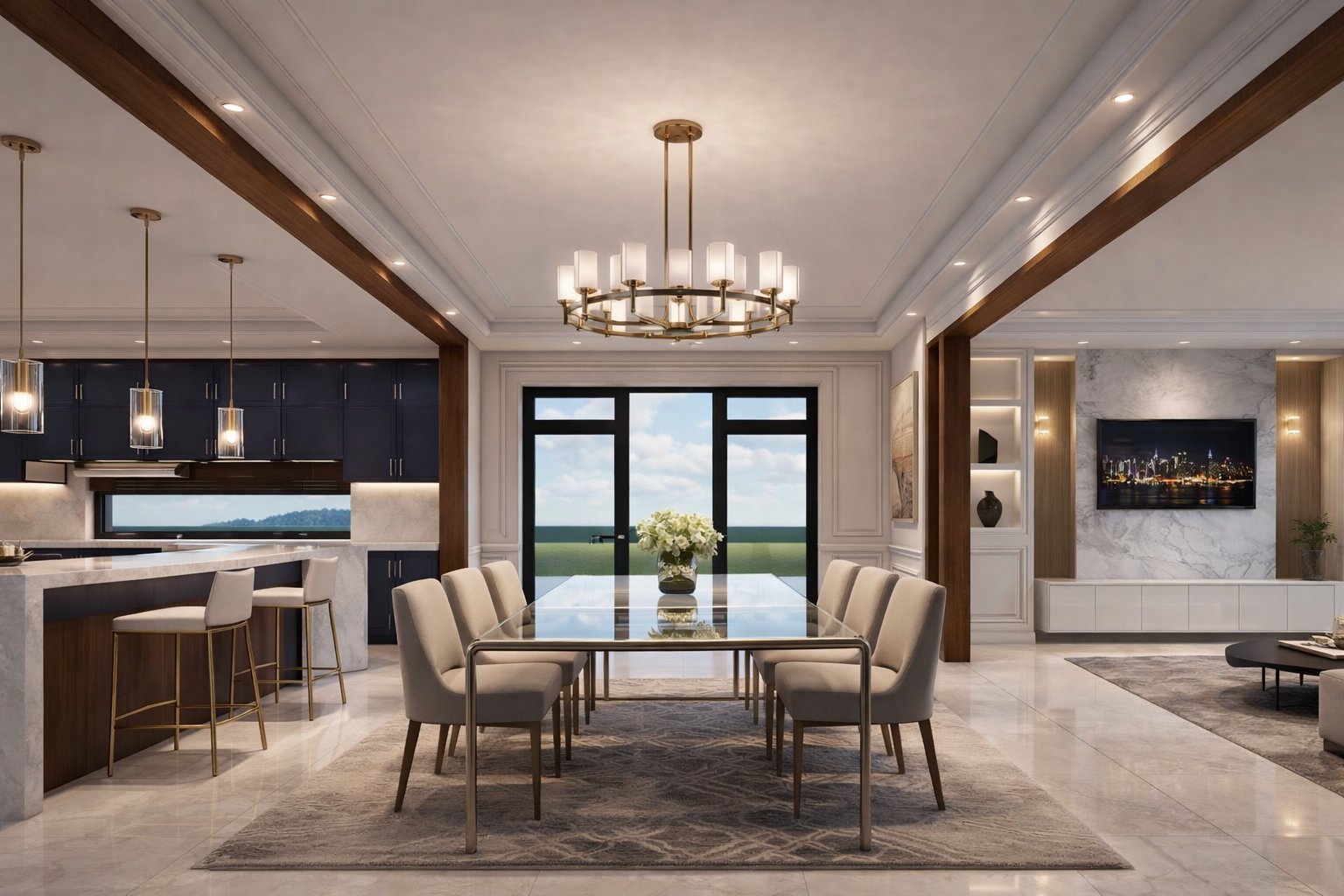
Aalis Studios — Nairobi: Luxury open-plan kitchen and dining room. Marble island countertop, navy blue cabinets, gold chandelier, glass doors opening to the garden. A premium kitchen and dining fit-out integrating architecture, interior design, and cabinetry specification.
Which Countertop Suits Your Nairobi Kitchen?
Common Mistakes When Choosing Countertops in Kenya
In Aalis Studios' kitchen interior design practice in Nairobi, these are the most frequent mistakes we see clients make when choosing countertop materials — and how to avoid them:
1. Choosing on price alone — A cheaper granite countertop that requires sealing every year and stains within 18 months is more expensive long-term than a premium quartz installation. Total cost of ownership matters more than unit price per square metre.
2. Ignoring cabinet support structure — Granite is heavier than quartz. Your kitchen cabinetry needs to be designed with the right support structure to carry the weight correctly. This is a design decision, not a site decision — it must be resolved at drawing stage.
3. Not coordinating countertop with backsplash — The countertop and backsplash must be specified together. Using a busy granite pattern with a busy tile backsplash creates visual chaos. Aalis Studios always specifies these as a single decision in every kitchen fit-out.
4. Selecting thin slabs for large islands — A kitchen island looks most resolved with a 20mm or 30mm thick slab. Thin slabs (12mm) look insubstantial at island scale. In ultra-luxury kitchens, a full waterfall edge with a bookmatched panel on both sides requires careful stone selection and joinery planning.
5. Ignoring edge detailing — The edge profile of your countertop — square, bevelled, bullnose, or mitered waterfall — significantly affects the overall kitchen aesthetic. This decision should align with your cabinetry door profile, kitchen style, and material specification.
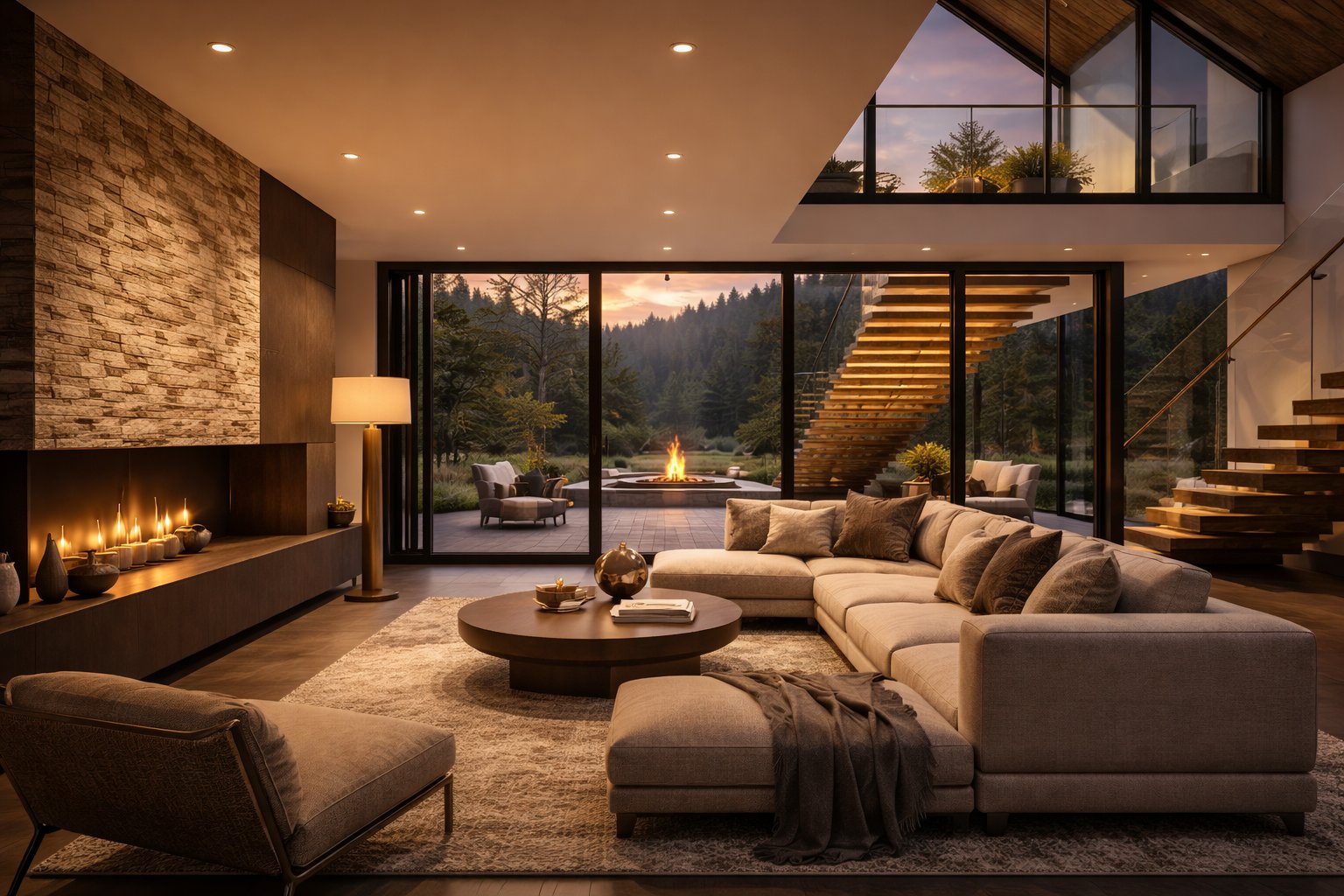
Aalis Studios — Nairobi: Luxury open-plan interior design integrating living room, kitchen, and stone fireplace. A complete interior fit-out where kitchen design, countertop specification, and living space are conceived as a single brief.