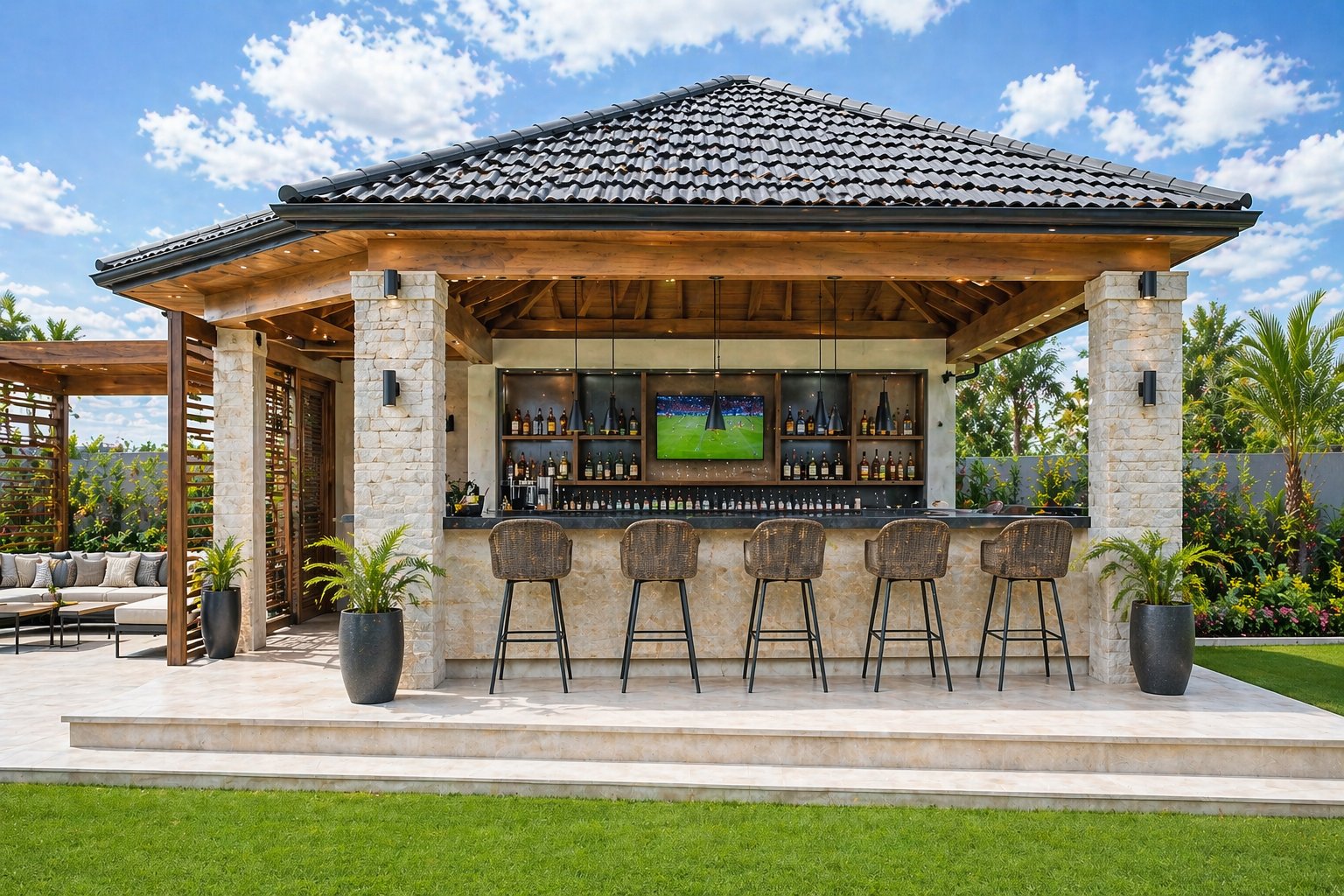
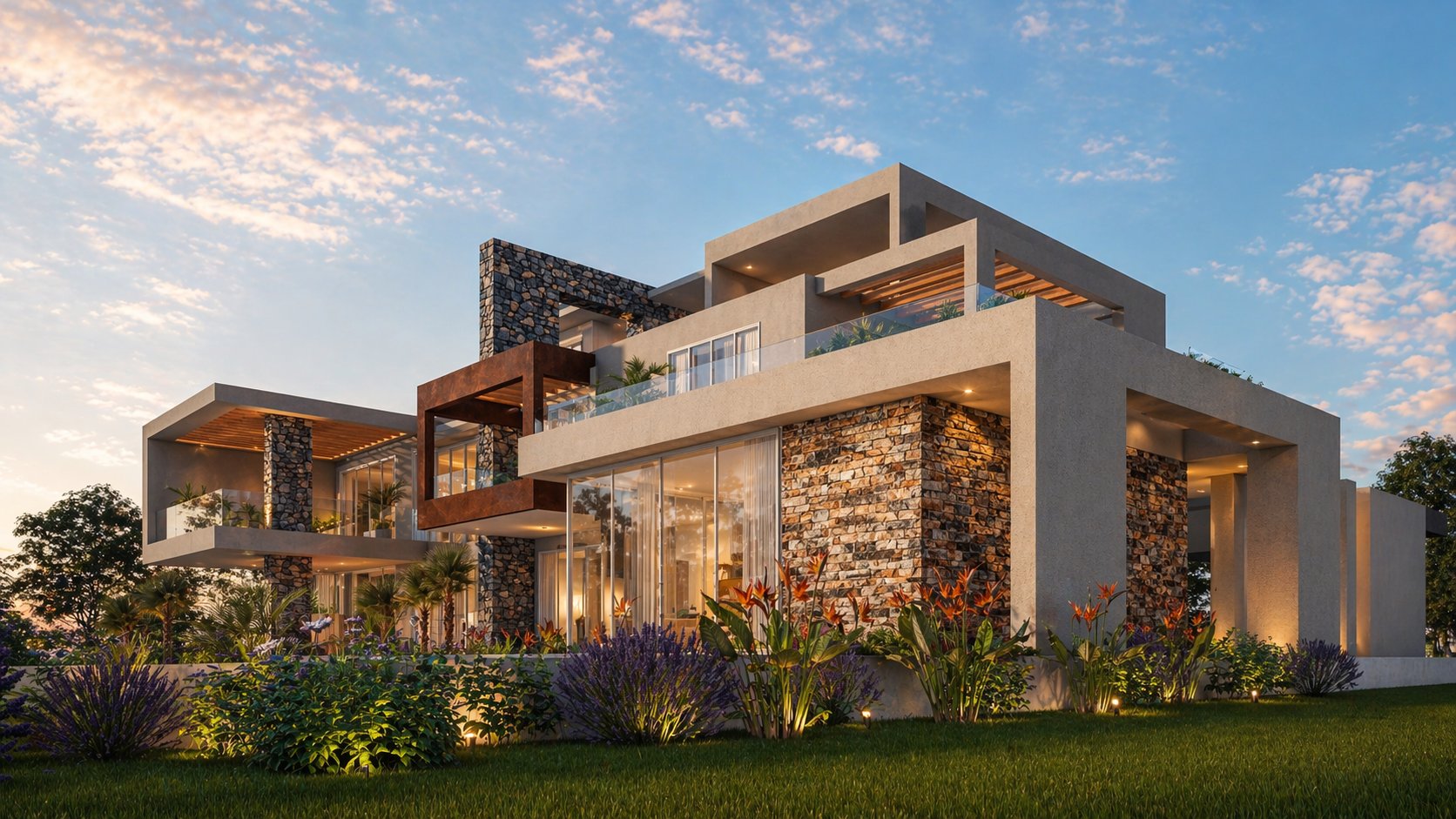
A gazebo is Kenya's most versatile outdoor structure — a fully roofed, freestanding room that makes your compound usable for entertaining, dining, and relaxing regardless of rain or sun. Unlike a pergola, which provides partial shade, a gazebo delivers complete all-weather protection while remaining open to breeze and garden views. It is the single outdoor addition that transforms an average Kenyan compound into a home that people actually live in outside.
Demand for well-designed gazebos across Nairobi, Kiambu, Laikipia, and coastal Kenya has grown sharply since 2023, driven by Airbnb investment, rising property values, and a genuine cultural shift towards outdoor living. This guide gives you everything: the six types of gazebos popular in Kenya, a real itemised 2026 cost breakdown, roof material comparisons, plot-size guidance, the three AALIS design packages, and honest answers to every question clients ask before they build.
This page is part of the Aalis Studios Outdoor Living series. For the complete outdoor landscaping guide covering lawns, pergolas, cabro paving, and kitchen gardens, see our Outdoor Spaces Kenya 2026 guide. For pergola-specific guidance, see our Pergola Designs Kenya 2026 guide.
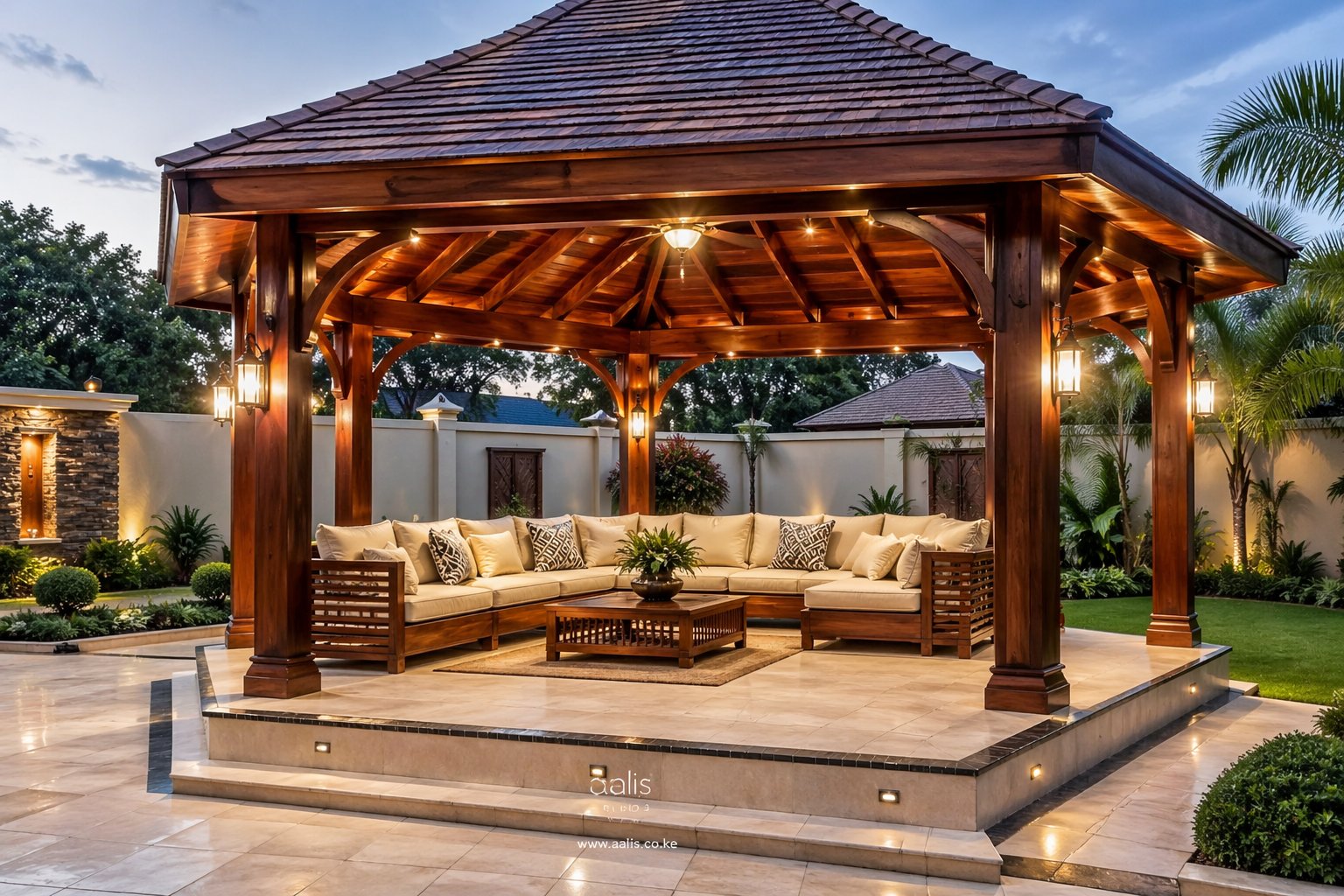
Why Gazebos Are the Most Popular Outdoor Structure in Kenya
Of all the outdoor living structures available — pergolas, shade sails, verandas, decks — the gazebo consistently tops the wishlist of Kenyan homeowners. The reason is practical: Kenya's climate demands full overhead protection, and a gazebo delivers it without sacrificing the open-air feel that makes outdoor living enjoyable.
A properly roofed gazebo is usable during Kenya's two rainy seasons and shielded from the harsh midday sun. This makes it genuinely functional year-round — something an open pergola or shade sail cannot deliver. In Nairobi's unpredictable afternoon showers, a gazebo means the difference between a ruined gathering and an uninterrupted one.
A gazebo creates a room with presence — defined edges, a solid overhead structure, and a clear floor area. This psychological definition transforms an open compound into a destination. Family members and guests naturally gravitate to a gazebo in a way they do not gravitate to an undefined outdoor area, making it the social hub of the home.
A well-designed gazebo adds 10–20% to the perceived value and marketability of a residential property. For rental and Airbnb properties, a gazebo is a booking-driver — it appears prominently in listing photos and is cited frequently in guest reviews. For resale properties, it distinguishes a home from neighbours at the same price point.
Compared to adding a built room, sunroom, or veranda to the main house structure — which requires full county approvals, structural engineering, and construction timelines of months — a gazebo delivers comparable lifestyle benefit at a fraction of the cost and time. A mid-range gazebo can be complete in 2–3 weeks and costs 5–10× less than an equivalent built extension.
From a KES 80,000 simple timber structure to a KES 1.5M+ architectural-grade stone and steel build, gazebos scale with budget and aspiration like few other outdoor investments. The same fundamental structure accommodates every finish level — rustic thatch, modern polycarbonate, premium ceramic tile — making it accessible across the full spectrum of Kenyan homeowners.
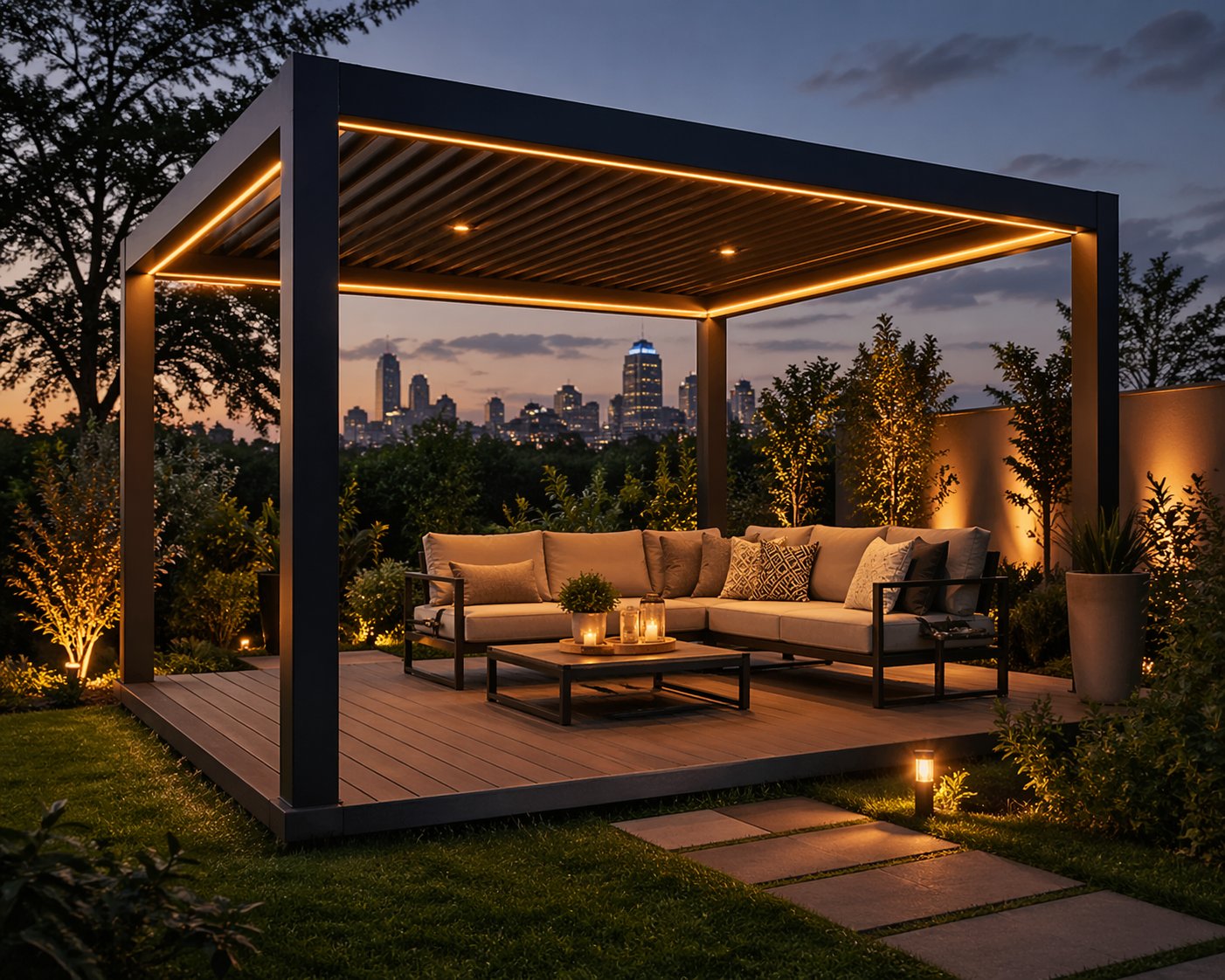
6 Types of Gazebo Designs Popular in Kenya (2026)
Gazebo design in Kenya spans a wide range of styles, materials, and budgets. In 2026, these six types account for the majority of builds across Nairobi and beyond — each suited to a different compound size, aesthetic, and use case.
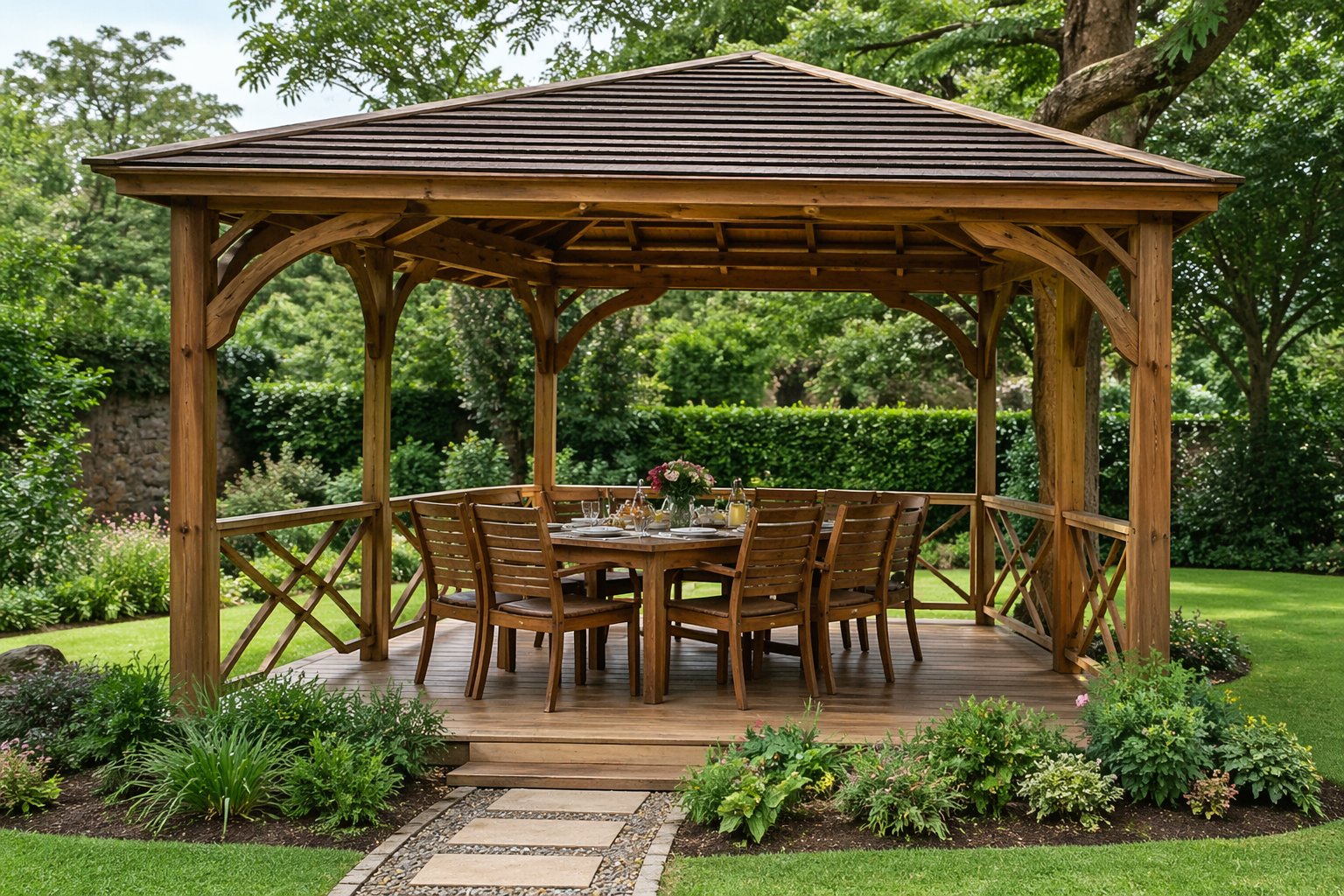
Most Popular
The most widely built gazebo type in Kenya — a four-post or six-post treated hardwood structure with a hipped or gabled iron sheet or tile roof. Warm, natural, and highly customisable. Cypress and mahogany are the most common timber choices. Works beautifully in gardens, large compounds, and upcountry highland properties. Can be left in natural wood tone or painted to match the house.
KES 100,000 – 350,000
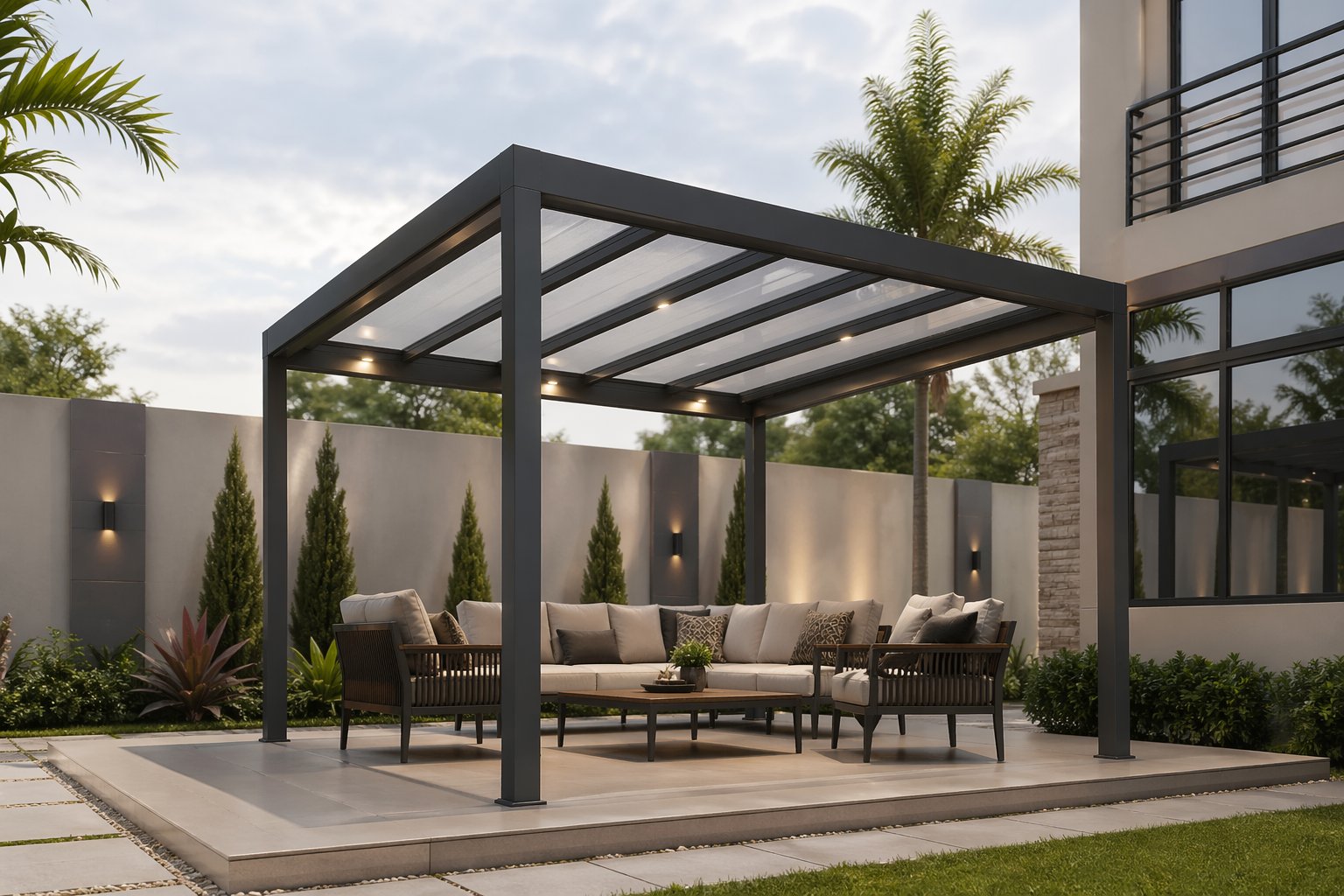 Modern Choice
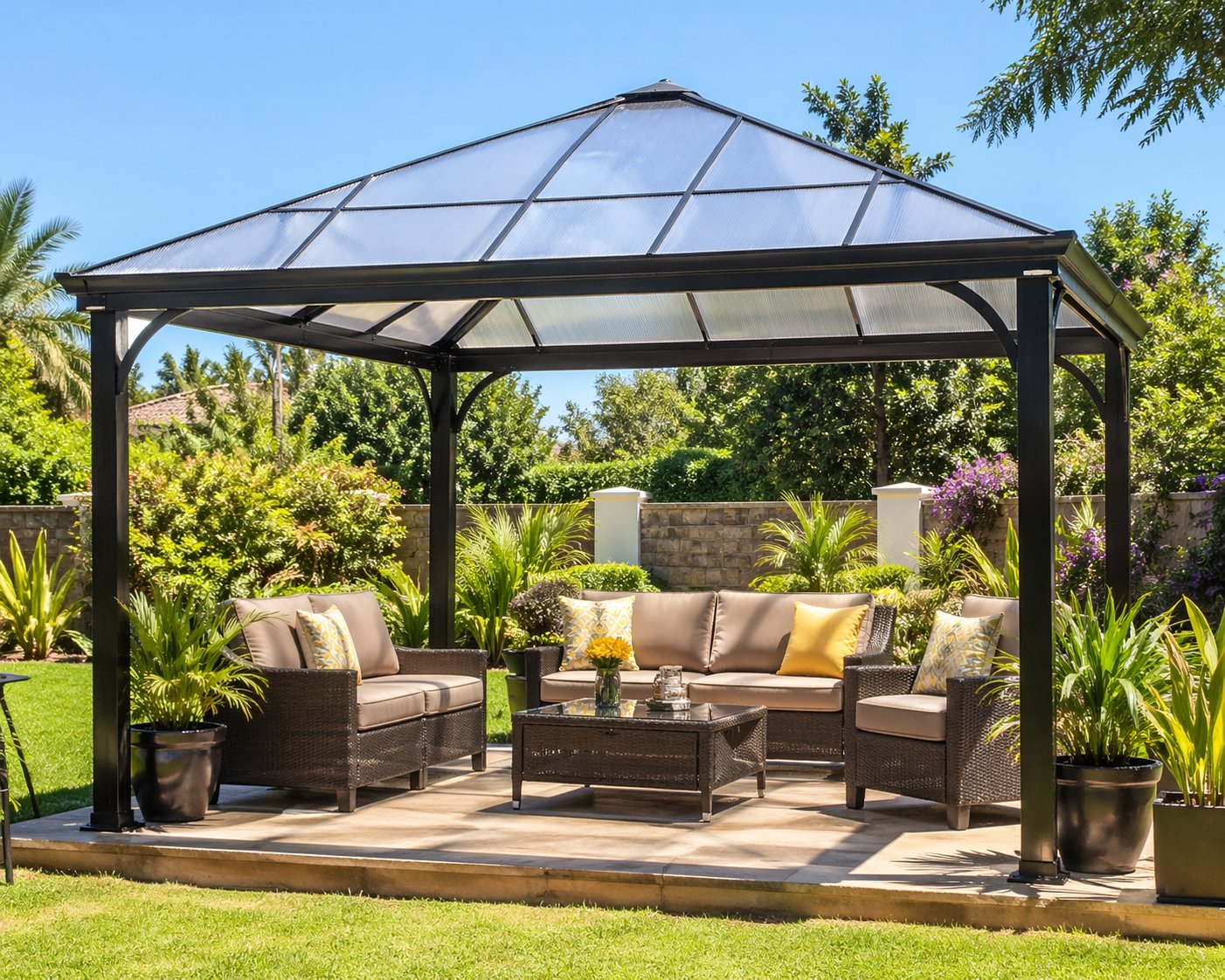
A fabricated mild steel frame with a flat, monopitch, or hipped polycarbonate or stone-coated tile roof. Favoured for modern homes, maisonettes, and urban compounds in Kilimani, Westlands, Lavington, and Syokimau. The frame is powder-coated in matte black, charcoal, or custom colour. Steel gazebos have a longer structural lifespan (25–35 years) than timber when properly treated and painted.
KES 180,000 – 550,000
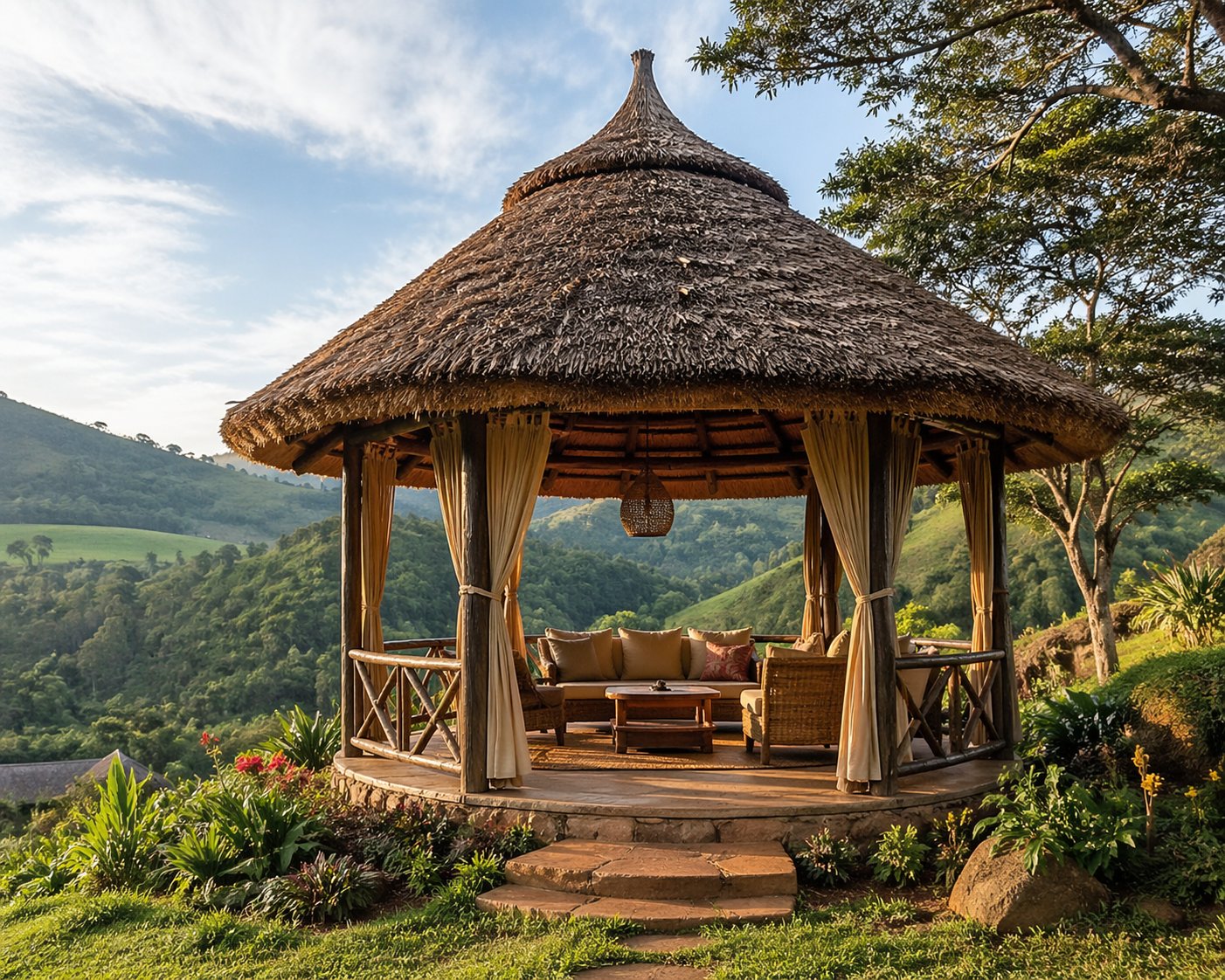 Highland Favourite
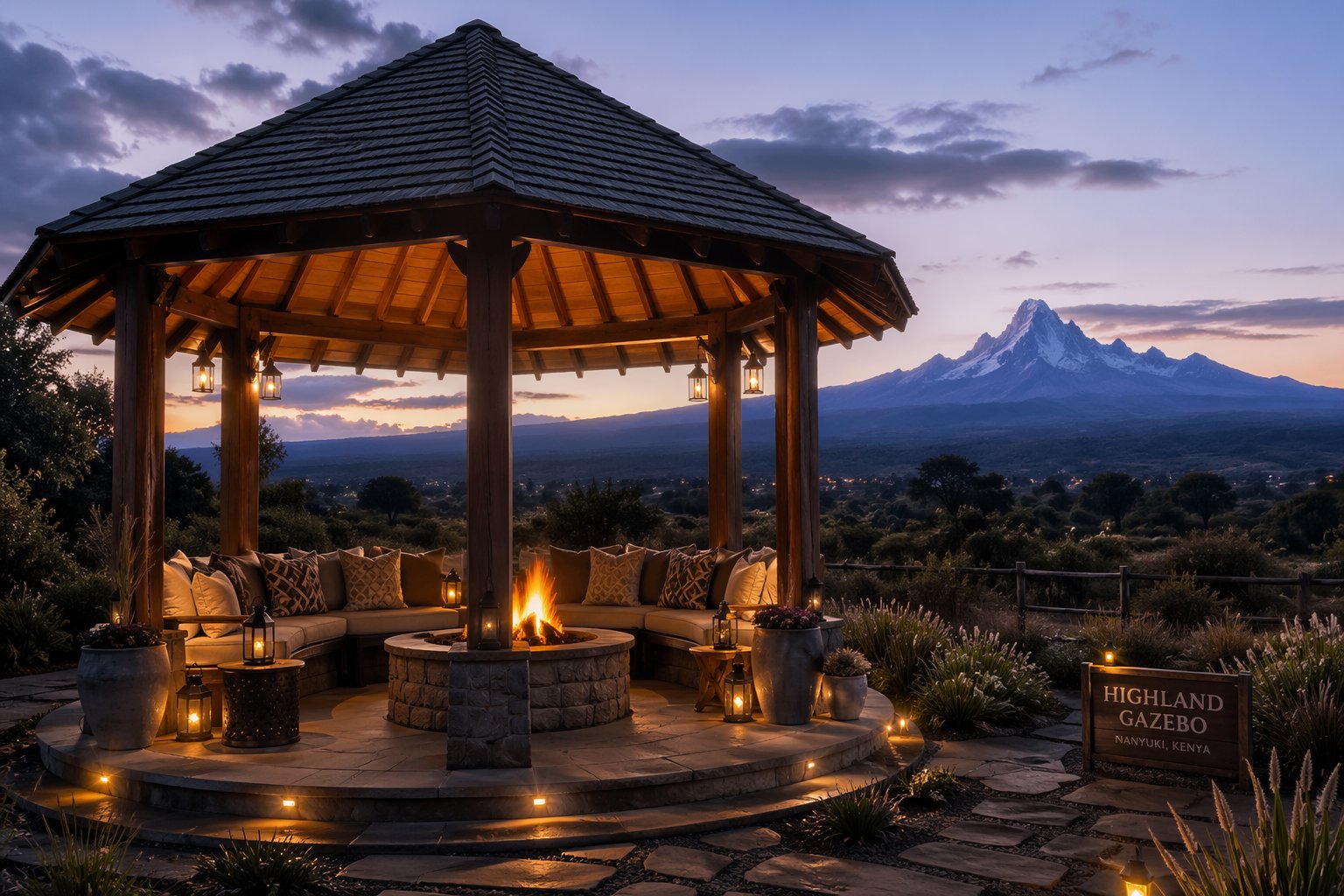
A timber or steel-frame structure topped with a traditional thatched roof — using makauti, grass, or synthetic thatch. The most distinctive and atmospheric gazebo style, deeply associated with Kenya's tourism lodges and highland retreats. Increasingly popular in residential highland compounds in Tigoni, Limuru, Kijabe, Nanyuki, and Naivasha as a design statement. Synthetic thatch requires no maintenance and lasts 15–20 years.
KES 150,000 – 500,000
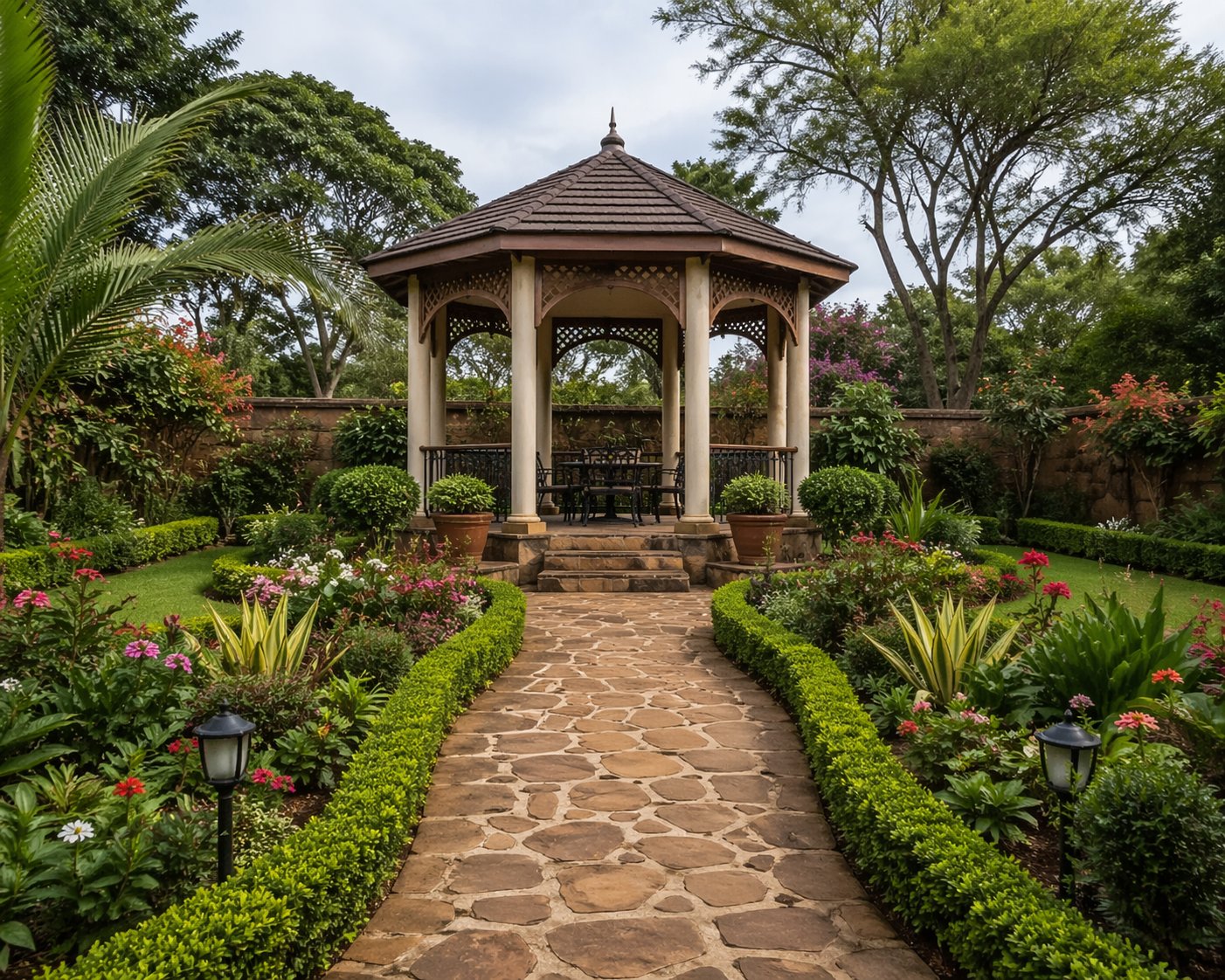 Trending 2026
A six or eight-sided gazebo with a conical or pyramid roof — the classic "pavilion" form. More visually dramatic than a rectangular gazebo and creates a natural gathering focal point in the garden. The octagonal plan allows seating on all sides, maximising capacity within the same footprint. Popular as a feature centrepiece in larger compound gardens and especially suited to Airbnb properties where photographic impact matters.
KES 200,000 – 600,000
 Coastal Style
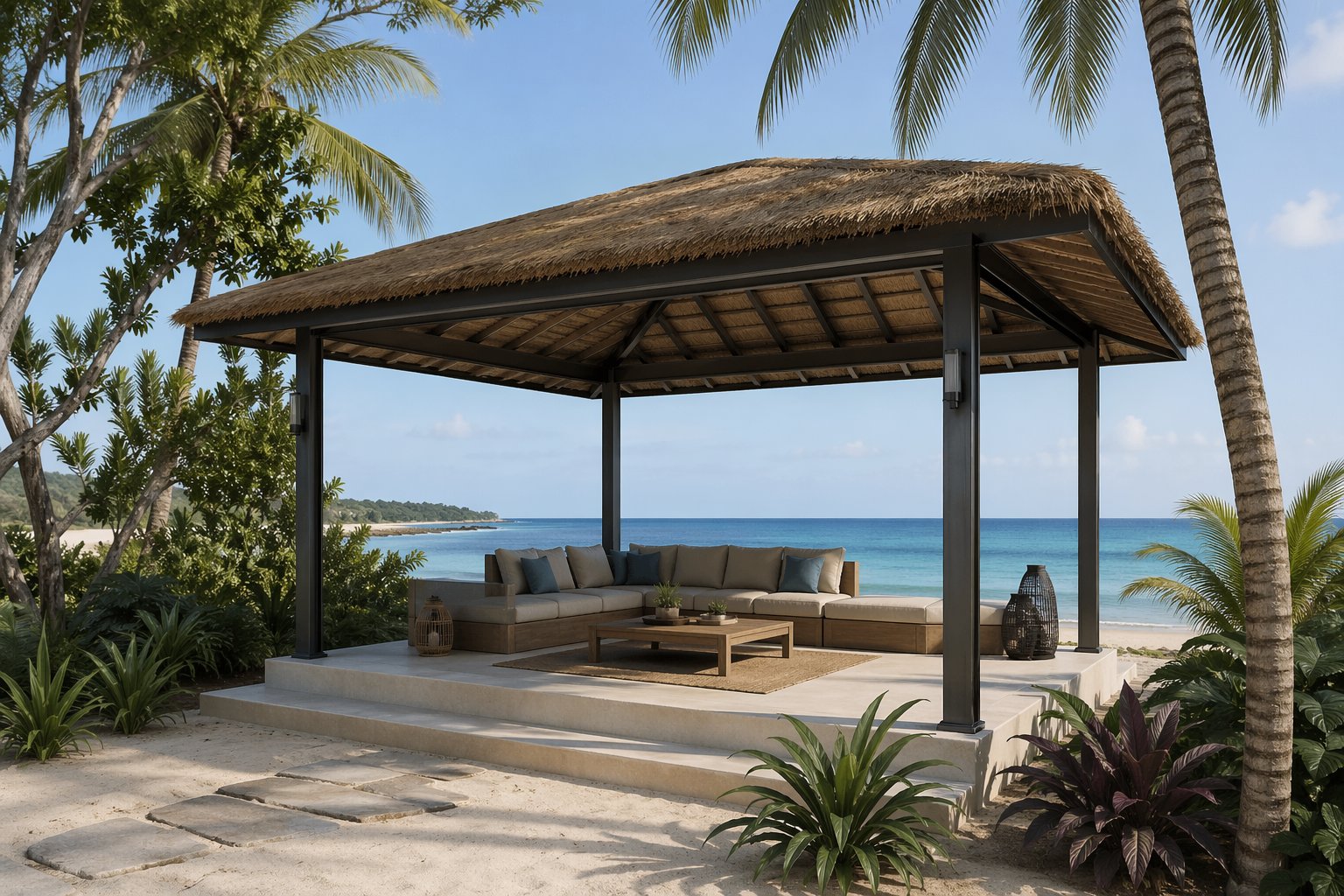
A wide, low-profile structure with a flat or slightly pitched roof and open sides — designed to maximise air circulation and views. Originally a coastal design, now increasingly popular for Nairobi poolside installations and Airbnb developments in Diani, Kilifi, and Malindi. Often finished with fabric curtains on the sides for flexible privacy control. Aluminum or galvanised steel frame is essential in coastal salt-air environments.
KES 180,000 – 650,000
AALIS Luxury
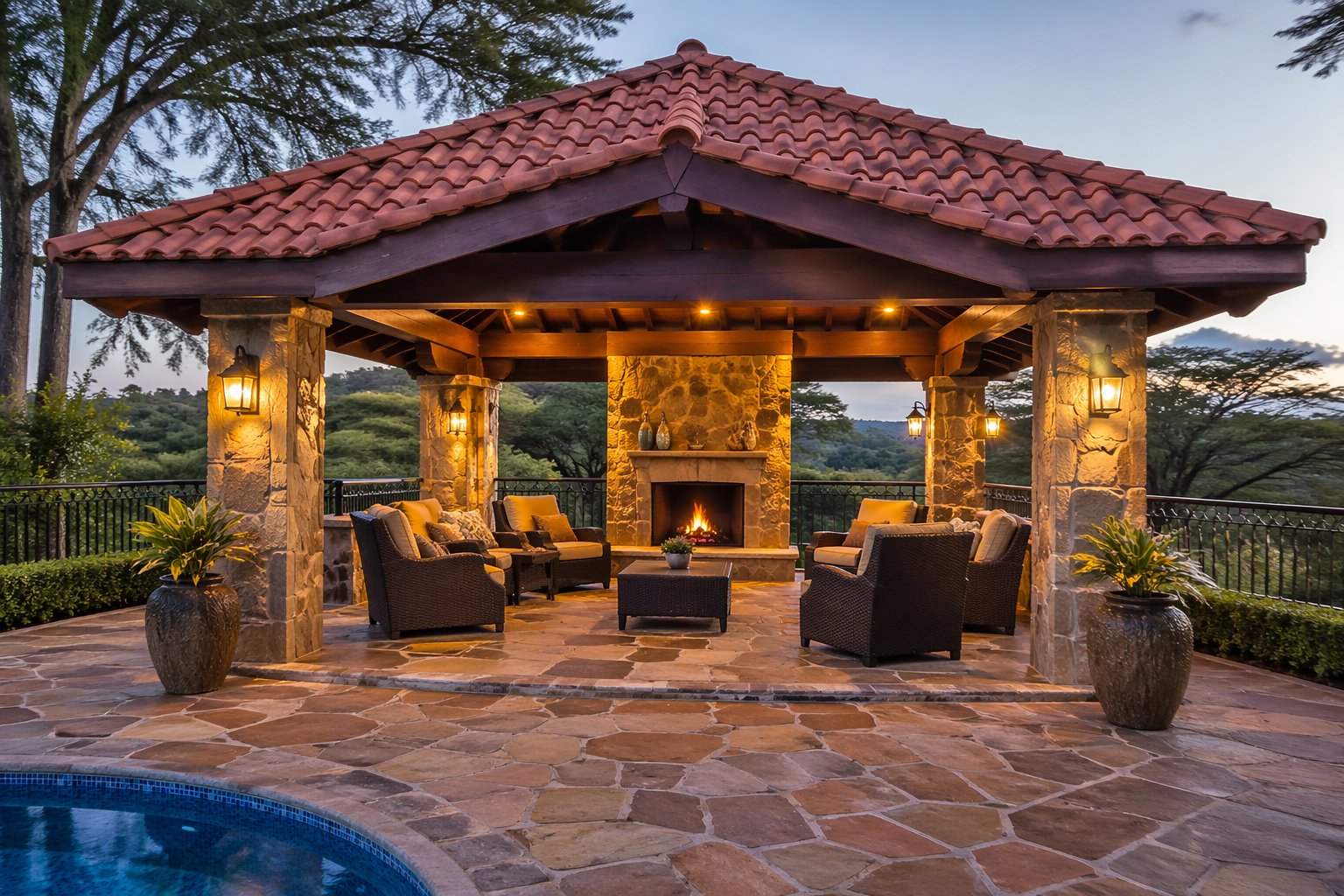
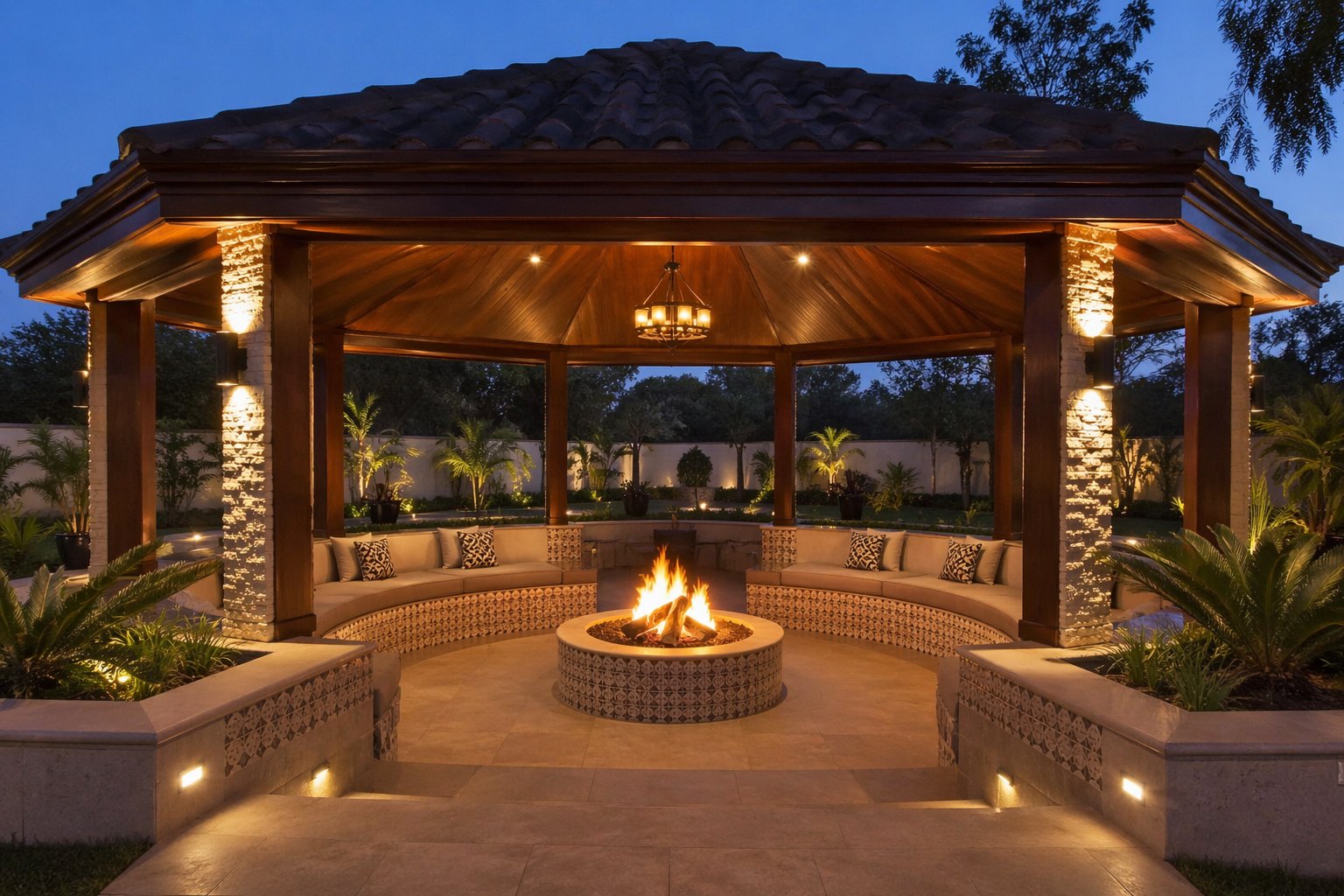
An AALIS-designed gazebo treated as a full architectural element of the compound — with stone or travertine-clad columns, custom-fabricated steel or aluminum roof structure, ceramic or natural stone flooring, built-in seating, integrated LED lighting and electrical points, fire pit, and complete surrounding landscape design. These gazebos become the signature feature of the property, appearing in every sales and rental photo and commanding premium pricing in the Airbnb market.
KES 600,000 – 1,500,000+
foundations are even dug
Aalis Studios produces a photorealistic 3D visualisation of your gazebo in context with your house, garden, and compound — before a single post is set. You approve the design. Then we build it.
What Gazebo Size Is Right for Your Plot in Kenya?
The most common question we receive at Aalis Studios is: "What size gazebo fits my plot?" The answer depends on your plot size, house footprint, remaining outdoor space, and how you intend to use the gazebo. Here is a practical guide by the most common Kenyan residential plot dimensions.
| Plot Size | Recommended Gazebo | Seating Capacity | Ideal Position | Budget Range |
|---|---|---|---|---|
| 30×60 ft ~167 m² |
3×3m or 3×4m | 4–6 people | Rear corner, against boundary wall | KES 80K – 200K |
| 40×80 ft ~297 m² |
3×4m or 4×4m | 6–8 people | Rear garden, offset from house | KES 120K – 300K |
| 50×100 ft ~465 m² |
4×5m or 4×6m | 8–12 people | Rear of compound, centred or cornered | KES 200K – 500K |
| ¼ acre ~1,012 m² |
5×6m or octagonal 5m dia. | 12–18 people | Garden centrepiece or rear entertainment zone | KES 350K – 900K |
| ½ acre+ Estate / Airbnb |
Custom 6×8m or multi-structure | 20+ people | Designed as compound centrepiece with landscaping | KES 700K – 1.5M+ |
Rule of thumb: The gazebo should occupy no more than 15–20% of your total usable outdoor area. On a 50×100 plot with ~200 m² of usable outdoor space after setbacks, a 4×5m gazebo (20 m²) sits at exactly 10% — leaving ample room for a lawn, pathway, kitchen garden, and planting borders.
Gazebo Roof Types in Kenya — Comparison Guide
Roof selection is one of the most impactful choices in a gazebo build — it determines the aesthetic, the functionality in rain, how much natural light enters, and how much ongoing maintenance the structure requires. These are the five most common roof types used in Kenyan gazebos in 2026.
- ✓ Allows natural daylight through
- ✓ Full rain protection
- ✓ Lightweight — suits timber and steel
- ✓ Available clear, tinted, or opal
- ✗ Can be noisy during heavy rain
- ✗ May yellow over 8–12 years without UV coat
- ✓ Most affordable roofing option
- ✓ Extremely durable (20–30 years)
- ✓ Available corrugated or box profile
- ✓ Full rain protection
- ✗ Hot in direct sun (needs ceiling insulation)
- ✗ Can be very noisy during heavy rain
- ✓ Premium finished appearance
- ✓ Excellent thermal performance (stays cool)
- ✓ Long lifespan (30–50 years)
- ✓ Quiet during rain
- ✗ Requires stronger, heavier frame
- ✗ Higher installation cost
- ✓ Unique, distinctive Kenyan aesthetic
- ✓ Naturally cool — excellent insulation
- ✓ Silent in rain
- ✓ Synthetic thatch: 15–20 year lifespan
- ✗ Natural thatch needs re-thatching every 5–8 years
- ✗ Fire risk with natural thatch (treat with retardant)
material and design decision
Our free consultation covers roof type, frame material, floor finish, and positioning — all tailored to your specific plot, climate zone, and budget. You leave the consultation with a clear picture, not more confusion.
Gazebo Cost in Kenya 2026 — Full BOQ Breakdown
The most useful cost information for a gazebo project is not a single number — it is an itemised breakdown that shows exactly where your money goes. Below is a real-world Bill of Quantities for a 4×5m gazebo (20 m²) — Kenya's most requested size — across three tiers. Rates reflect Nairobi and Kiambu market pricing in April 2026.
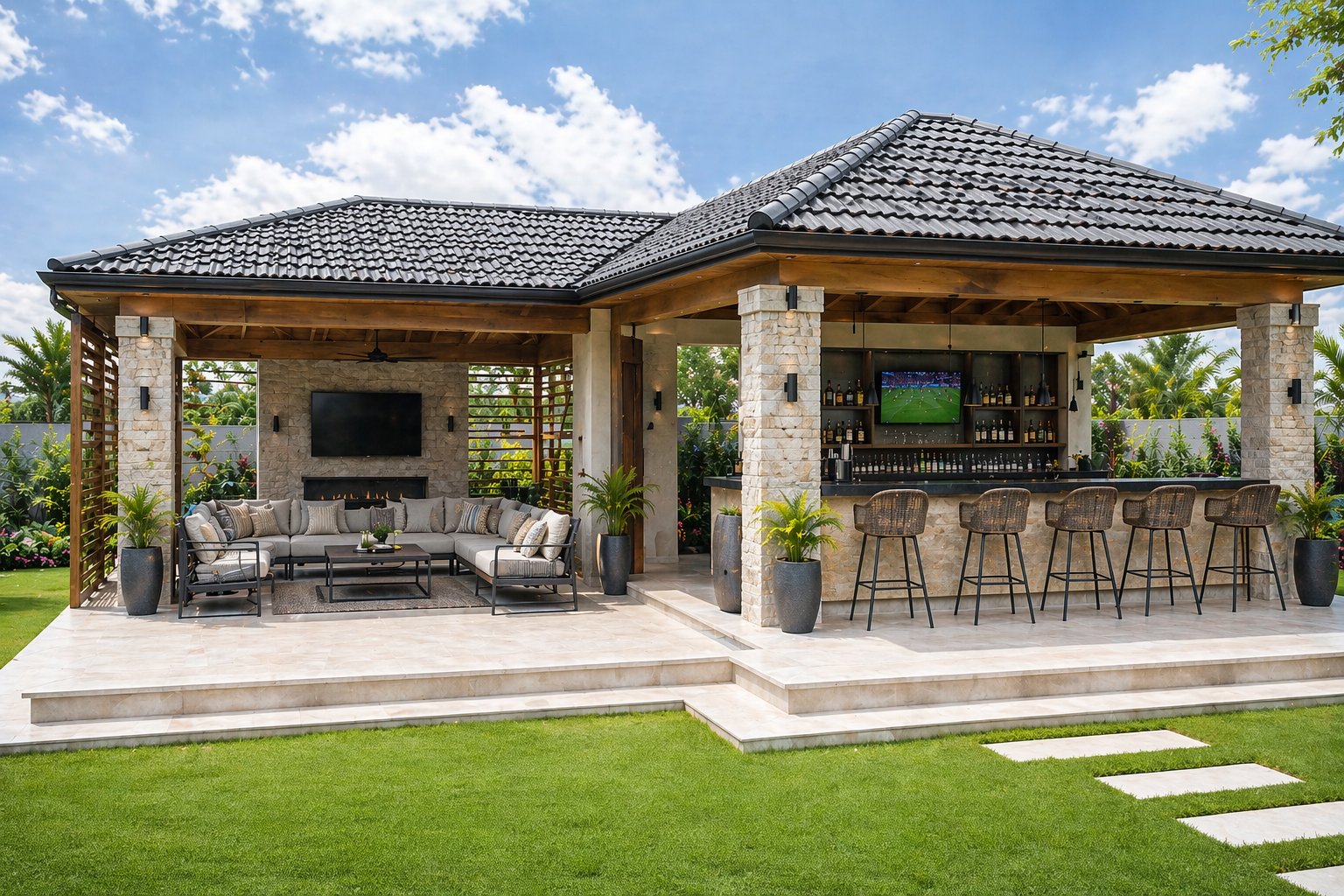
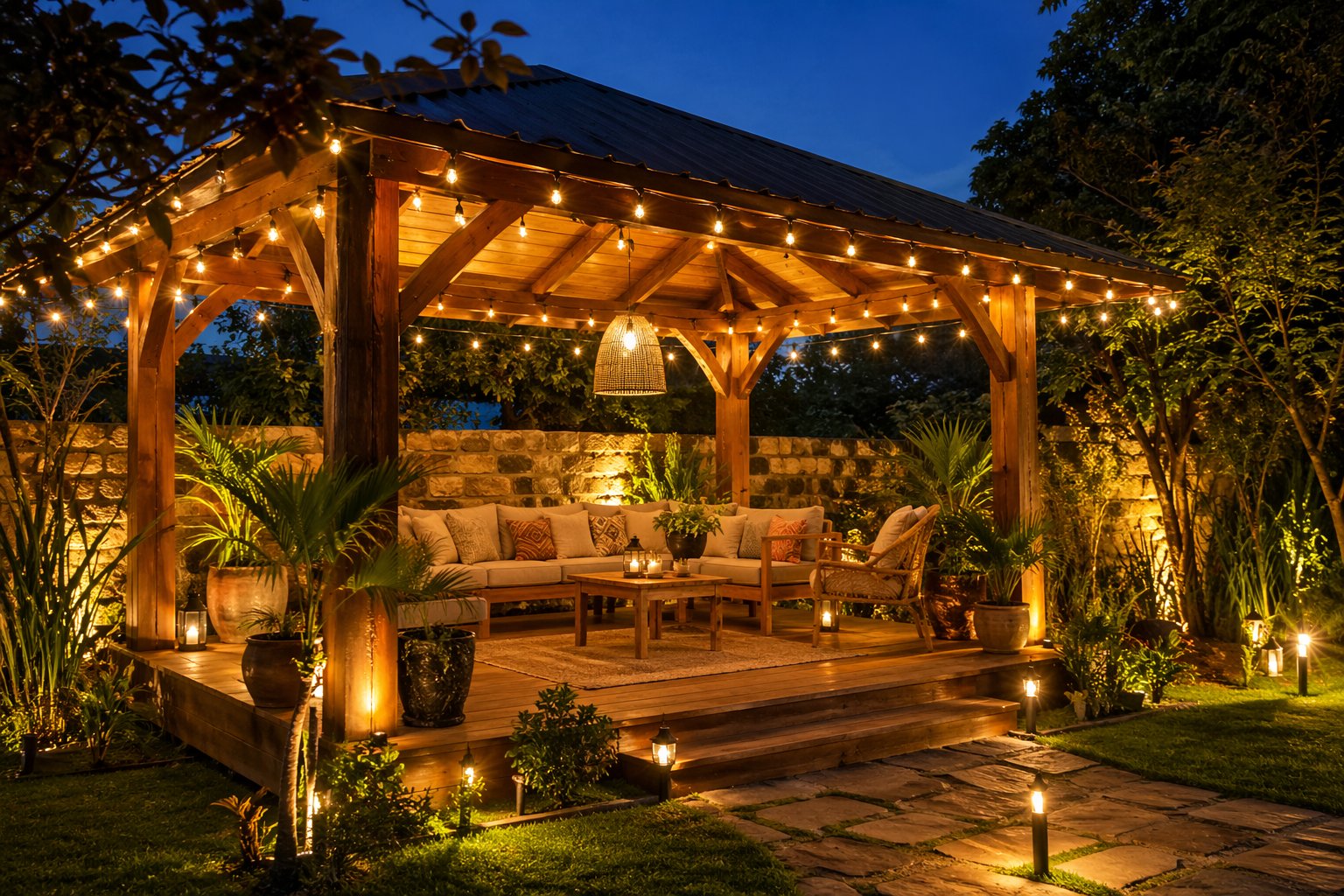
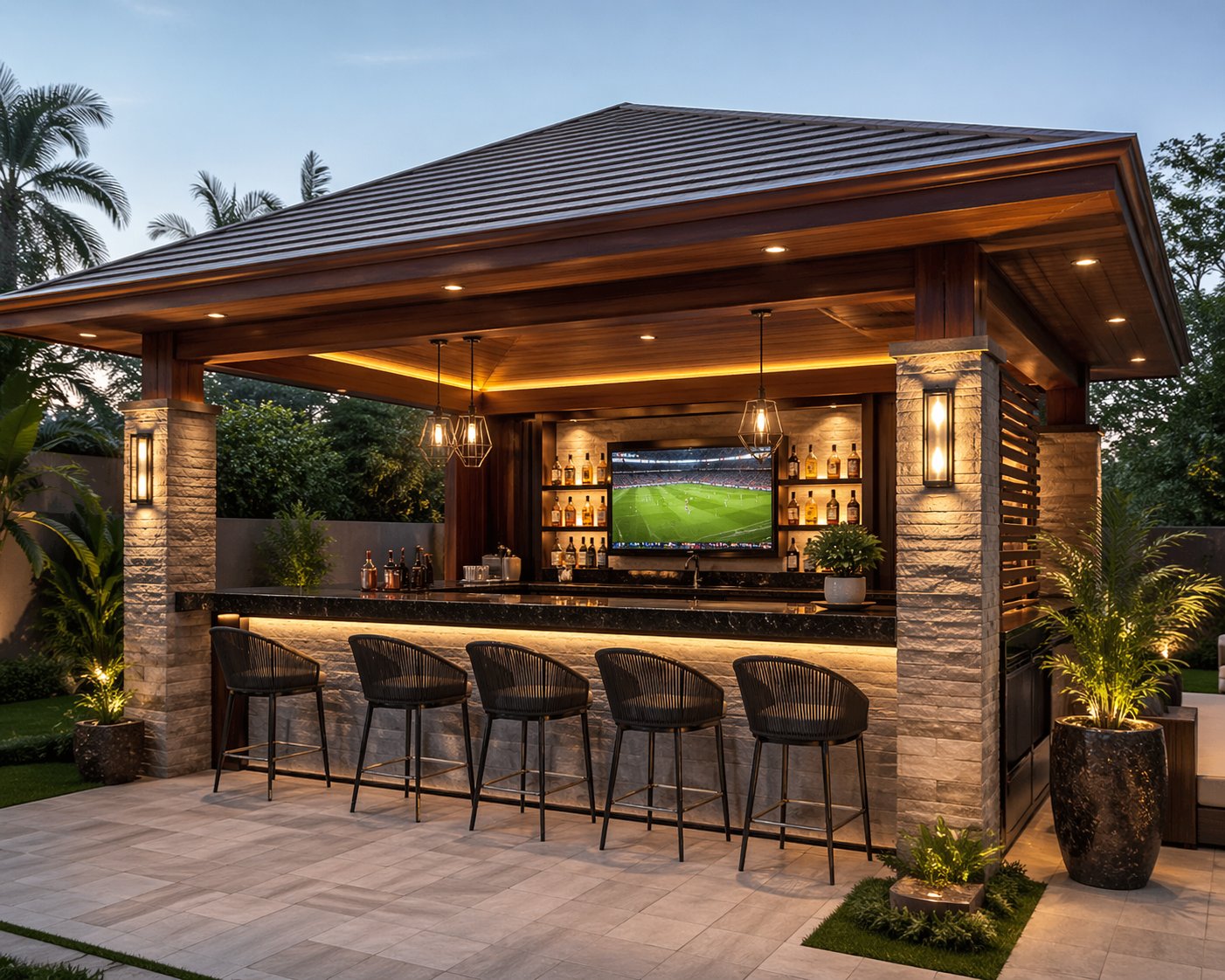
The BOQ below is based on a 4m × 5m (20 m²) rectangular gazebo — comfortably seats 8–10 people, the most popular size for a 50×100 plot. Add 10–15% for remote or upcountry locations due to transport costs. Contact Aalis Studios for a custom BOQ for your specific project.
| Item | Unit | Rate (KES) | Total (KES) |
|---|---|---|---|
| Site clearing & setting out | L.S | 5,000 | 5,000 |
| Excavation for footings (× 6 posts) | L.S | 8,000 | 8,000 |
| Concrete pad footings (300mm × 300mm × 600mm) | L.S | 18,000 | 18,000 |
| Steel post base plates & anchor bolts | L.S | 9,000 | 9,000 |
| Substructure Subtotal | KES 40,000 | ||
| Item | Unit | Rate (KES) | Total (KES) |
|---|---|---|---|
| Treated hardwood posts (150×150mm × 6 no.) | L.S | 35,000 | 35,000 |
| Beams, rafters & purlins | L.S | 30,000 | 30,000 |
| Joinery, bolts & metal connectors | L.S | 12,000 | 12,000 |
| Wood sanding + exterior stain / sealer | L.S | 12,000 | 12,000 |
| Timber Frame Subtotal | KES 89,000 | ||
| Item | Unit | Rate (KES) | Total (KES) |
|---|---|---|---|
| Steel post fabrication & welding (× 6) | L.S | 65,000 | 65,000 |
| Steel beams, rafters & frame assembly | L.S | 45,000 | 45,000 |
| Anti-rust treatment + powder coat finish | L.S | 22,000 | 22,000 |
| On-site installation, final welding & fixing | L.S | 20,000 | 20,000 |
| Steel Frame Subtotal | KES 152,000 | ||
| Roof Type | Coverage | Rate per m² | 20 m² Total (KES) |
|---|---|---|---|
| Iron sheet (box profile, colour-coated) | 20 m² | KES 1,200 | ~30,000 |
| Twin-wall polycarbonate sheeting | 20 m² | KES 3,500 | ~80,000 |
| Ceramic / clay roof tiles | 20 m² | KES 5,000 | ~115,000 |
| Synthetic thatch roofing | 20 m² | KES 4,500 | ~100,000 |
| Stone-coated steel tiles (premium) | 20 m² | KES 6,500 | ~145,000 |
| Floor Type | Coverage | Rate per m² | 20 m² Total (KES) |
|---|---|---|---|
| Plain concrete screed (sealed) | 20 m² | KES 800 | ~16,000 |
| Ceramic floor tiles (standard) | 20 m² | KES 2,200 | ~50,000 |
| Porcelain floor tiles (premium) | 20 m² | KES 3,800 | ~85,000 |
| Timber decking (treated hardwood) | 20 m² | KES 4,500 | ~100,000 |
| Natural stone / mazeras | 20 m² | KES 5,500 | ~120,000 |
| Add-On | Cost Range (KES) | Notes |
|---|---|---|
| LED lighting (ceiling + perimeter) | 15,000 – 50,000 | IP65 outdoor-rated; wiring + fittings |
| Electrical outlets (2–4 points) | 8,000 – 20,000 | For TV, fans, appliances |
| Built-in seating / concrete benches | 25,000 – 80,000 | Tiled or cushioned surface |
| Privacy curtains or fabric panels | 20,000 – 70,000 | UV-treated outdoor fabric |
| Ceiling fan installation | 8,000 – 25,000 | Outdoor-rated; improves comfort |
| Integrated fire pit | 30,000 – 120,000 | Built-in stone or fabricated steel |
| Outdoor bar counter | 40,000 – 150,000 | Tiled or stone-faced concrete base |
| Perimeter planting & landscaping | 20,000 – 100,000 | Completes the outdoor room feel |
| Labour Component | Cost Range (KES) |
|---|---|
| Frame fabrication & erection | 30,000 – 80,000 |
| Roofing installation | 15,000 – 40,000 |
| Floor tiling | 15,000 – 40,000 |
| Electrical wiring & fittings | 12,000 – 35,000 |
Total Cost Summary — 4×5m Gazebo (20 m²)
| Gazebo Type | Inclusions | Total Cost (KES) |
|---|---|---|
| Starter Timber Gazebo | Foundation + timber frame + iron sheet roof + screed floor | KES 100,000 – 200,000 |
| Mid-Range Timber + Poly Roof | Foundation + hardwood frame + polycarbonate roof + ceramic floor | KES 220,000 – 380,000 |
| Premium Steel + Tile Roof | Foundation + steel frame + tile roof + porcelain floor + lighting | KES 380,000 – 650,000 |
| Luxury Custom Gazebo | Full design + premium frame + stone floor + bar + fire pit + landscaping | KES 650,000 – 1,500,000+ |
| Gazebo Type | Cost per m² |
|---|---|
| Starter / budget timber | KES 5,000 – 10,000 |
| Mid-range timber or steel | KES 11,000 – 22,000 |
| Premium steel + tile roof | KES 22,000 – 45,000 |
| Luxury / fully finished | KES 45,000 – 90,000+ |
AALIS Gazebo Design Packages
At Aalis Studios, we do not quote generic structures. We design complete outdoor destinations. Every AALIS gazebo package includes a free 3D concept visualisation, an itemised BOQ, site supervision, and post-build maintenance guidance. Choose the tier that fits your vision and budget.
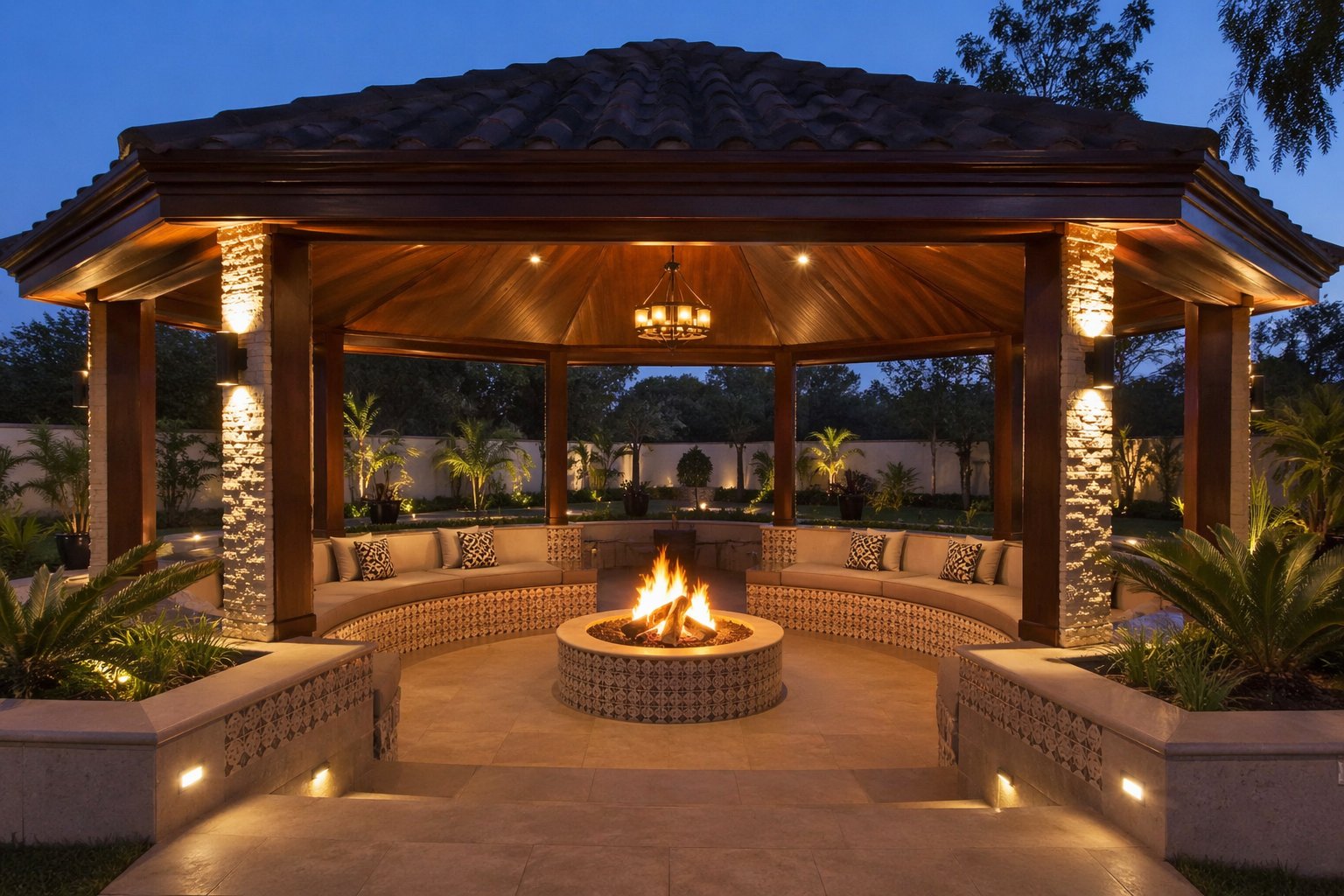
– 250K
- ✓ Treated timber or steel frame
- ✓ Iron sheet or polycarbonate roof
- ✓ Concrete screed or basic tile floor
- ✓ Anti-rust paint or wood sealer
- ✓ Free 3D concept design
- ✓ Site visit + itemised BOQ
- – No built-in seating or lighting
– 650K
- ✓ Hardwood or premium steel frame
- ✓ Polycarbonate or ceramic tile roof
- ✓ Porcelain or natural stone floor
- ✓ Integrated LED lighting system
- ✓ Built-in seating or outdoor bar
- ✓ Privacy curtain rails
- ✓ Perimeter planting integration
- ✓ Full 3D design + site management
+
- ✓ Architectural steel or stone columns
- ✓ Premium tile or thatch roof
- ✓ Natural stone or hardwood floor
- ✓ Integrated fire pit or outdoor kitchen
- ✓ Professional lighting design
- ✓ Full compound landscape integration
- ✓ Electrical + AV points
- ✓ Full 3D + construction supervision
"The Kenyan homeowner has changed. Ten years ago a gazebo was a luxury. Today it is an expectation — because people have realised that a well-designed outdoor space gives them more daily use and more joy per shilling than almost any interior upgrade."
— Arch. Vincent Abuya, Principal Architect, Aalis Studios
How Aalis Studios Delivers Your Gazebo
Every AALIS gazebo project follows a structured, transparent process — from the first site visit to handover and styling. This process is the same whether you are building a KES 150,000 starter gazebo or a KES 1.2M luxury compound feature.
We visit your plot, assess the space, discuss your vision, intended use (dining, lounge, bar, entertainment), and budget. We check drainage, orientation, soil type, and proximity to boundaries. We advise on the best position, size, and structural approach for your specific compound and climate zone.
Our designers produce a photorealistic 3D render of your gazebo in context with your house, garden, and compound. You see the exact proportions, materials, roof style, and floor finish — and we make revisions until you are fully satisfied. No construction begins until you sign off on the design.
We provide a fully itemised Bill of Quantities — foundation, frame, roofing, floor, electrical, finishes, labour — with no hidden costs. Our quotes are fixed-price. We do not adjust mid-construction unless you request a scope change. You know the total cost before we dig a single footing.
We source materials directly from our vetted supplier network. Steel frames are fabricated off-site in a controlled workshop for precision. Timber is sourced kiln-dried and pre-treated. All materials are inspected before delivery to site. For diaspora clients, we send photos of materials before procurement is finalised.
Our team installs the foundation, erects the frame, installs roofing, lays the floor, completes electrical work, and applies all finishes in sequence and to our quality standard. A supervisor is present on site daily. Diaspora and remote clients receive weekly progress photos and updates via WhatsApp.
We complete the outdoor space: integrate perimeter planting, set up lighting, arrange outdoor furniture, and make final styling adjustments. We photograph the finished structure and provide a full maintenance guide — wood treatment schedule, roof cleaning, lighting bulb specs — before handover.
Gazebo Designs by Kenya Region & Climate
Kenya's climate diversity means a gazebo designed for Karen in Nairobi should differ from one built in Diani on the coast or Nanyuki in the highlands. Here is how AALIS adapts gazebo designs for Kenya's main regions.
| Region | Climate | Recommended Frame | Recommended Roof | Special Considerations |
|---|---|---|---|---|
| Nairobi & Kiambu Karen, Runda, Ruiru, Kilimani |
Temperate, two rainy seasons | Steel or hardwood timber | Polycarbonate or tile | Drainage slope critical. Black cotton soil zones need deeper footings. |
| Central Highlands Tigoni, Limuru, Nyeri, Embu |
Cool, fertile, reliable rainfall | Hardwood timber | Thatch or stone-coated tile | Thatch suits aesthetic perfectly. Timber stays in good condition. Good drainage essential. |
| Laikipia / Nanyuki | Cool, dry seasons, cold nights | Timber or steel | Thatch or tile | Fire pit integration highly recommended. Closed side panels for cold evenings. |
| Rift Valley Naivasha, Nakuru, Kijabe |
Variable — highland cool to warm | Timber or steel | Thatch or polycarbonate | Scenic views should inform orientation. Lake-view gazebos face the view, not the sun. |
| Coast Mombasa, Diani, Kilifi, Malindi |
Hot, humid, salt air, heavy rains | Galvanised steel or aluminum | Thatch or polycarbonate | All metal must be galvanised or aluminum — salt air destroys mild steel. Open-sided cabana style ideal. |
| Arid / Semi-arid Machakos, Kajiado, Kitui |
Hot, dry, high UV | Steel (low maintenance) | Iron sheet or tile | Shade is the priority. Insulated ceiling essential to prevent heat buildup. Orient to capture prevailing breeze. |
Anywhere in the World
We manage the full process — 3D design, BOQ, contractor management, and weekly site progress reports — so you can approve every detail and track every stage without being in Kenya. Trusted by clients in the UK, UAE, USA, Canada, and Australia.
Common Gazebo Mistakes in Kenya — And How to Avoid Them
The most common regret in gazebo builds across Kenya. A 2×3m gazebo for a family of five is immediately inadequate — it seats four people in discomfort, has no room for a coffee table, and feels cramped against the furniture. The minimum useful gazebo for family entertaining is 4×4m. If you want to host guests, 4×5m or larger. Build the right size once.
One of the most frustrating and costly afterthoughts. Clients build a beautiful gazebo, then decide they want ceiling lighting, a TV, a fan, or an outdoor refrigerator — and find that running cables after construction means visible conduit, structural penetration, or complete rewiring. All electrical points must be planned before foundations are poured. A simple 4-point electrical provision adds only KES 8,000–15,000 at construction time but KES 40,000–80,000 retrospectively.
Kenya's rainy seasons bring heavy, short-duration downpours — not gentle drizzle. A flat or near-flat roof on a polycarbonate or iron sheet gazebo will pool water, leak at joints, and create a permanently damp floor environment. All gazebo roofs in Kenya require a minimum 15° pitch to shed water effectively, with properly installed guttering directing water away from the floor perimeter.
Untreated timber in Kenya's outdoor environment — alternating wet and dry seasons, high UV — rots, warps, and splits within 2–4 years. All structural timber used in gazebos must be pressure-treated (CCA-treated) and finished with a UV-resistant exterior sealer or stain. This adds KES 10,000–20,000 to the frame cost and saves ten times that in premature replacement.
A gazebo positioned to face the afternoon western sun will be uncomfortably hot from 2pm every day. A gazebo exposed to Nairobi's prevailing northeast wind will be cold and draughty on most evenings. Before finalising position, assess where the sun tracks across your compound in the afternoon, and observe the wind direction. Orient the open sides to face the garden view and prevailing breeze, with the solid roof providing shade from the afternoon sun angle.
Clients who approve a verbal description or a simple sketch frequently end up with a gazebo that is the wrong size for the compound, the wrong scale relative to the house, or positioned awkwardly. A photorealistic 3D render costs nothing with AALIS Studios and prevents every one of these issues. You see exactly what you are building before a single footing is dug.
Frequently Asked Questions — Gazebos in Kenya 2026