● Updated March 2026 · 18 min read · By Arch. Vincent Abuya, BORAQS Registered
The cost of building a 3 bedroom bungalow in Kenya in 2026 ranges from KES 2.5 million for a basic rural unit to KES 7 million or more for a high-specification suburban home. In this guide, Aalis Studios principal architect Arch. Vincent Abuya breaks down exactly where that money goes — stage by stage, material by material — so you can budget accurately before breaking ground.
01 — Average Cost
What Is the Average Cost of Building a 3 Bedroom Bungalow in Kenya?
The average cost of building a standard 3 bedroom bungalow in Kenya in 2026 is approximately KES 4.5 million to KES 5.5 million for a 90–120m² home with mid-range finishes in a suburban location. That figure covers construction only — it excludes land, professional fees, county approval costs, and external works such as a boundary wall and driveway.
ⓘ
All figures are 2026 Kenya estimates. Actual costs depend on location, design complexity, site conditions, materials chosen, and contractor rates. Always commission a Bill of Quantities (BOQ) from a registered Quantity Surveyor before starting construction. These figures do not include land cost.
Basic / Rural
Simple Finish
2.5M–3.5M
KES · 70–90m²
- ✓ Ceramic floor tiles throughout
- ✓ Standard paint finishes
- ✓ Basic plumbing & electrical
- ✓ Standard steel window frames
- ✓ Box profile iron sheet roof
- ✓ Local materials, rural location
Most Common
Standard / Suburban
Mid-Range Finish
4M–6M
KES · 90–120m²
- ✓ Porcelain floor tiles
- ✓ Gypsum ceilings throughout
- ✓ Aluminium window systems
- ✓ Fitted kitchen with cabinets
- ✓ IBR or decra tile roof
- ✓ Nairobi / suburban rates
High-End / Urban
Premium Finish
5M–7M+
KES · 100–130m²
- ✓ Large-format porcelain tiles
- ✓ LED cove gypsum ceilings
- ✓ Custom kitchen & wardrobes
- ✓ Imported fittings & fixtures
- ✓ Premium roofing system
- ✓ Nairobi prime location rates
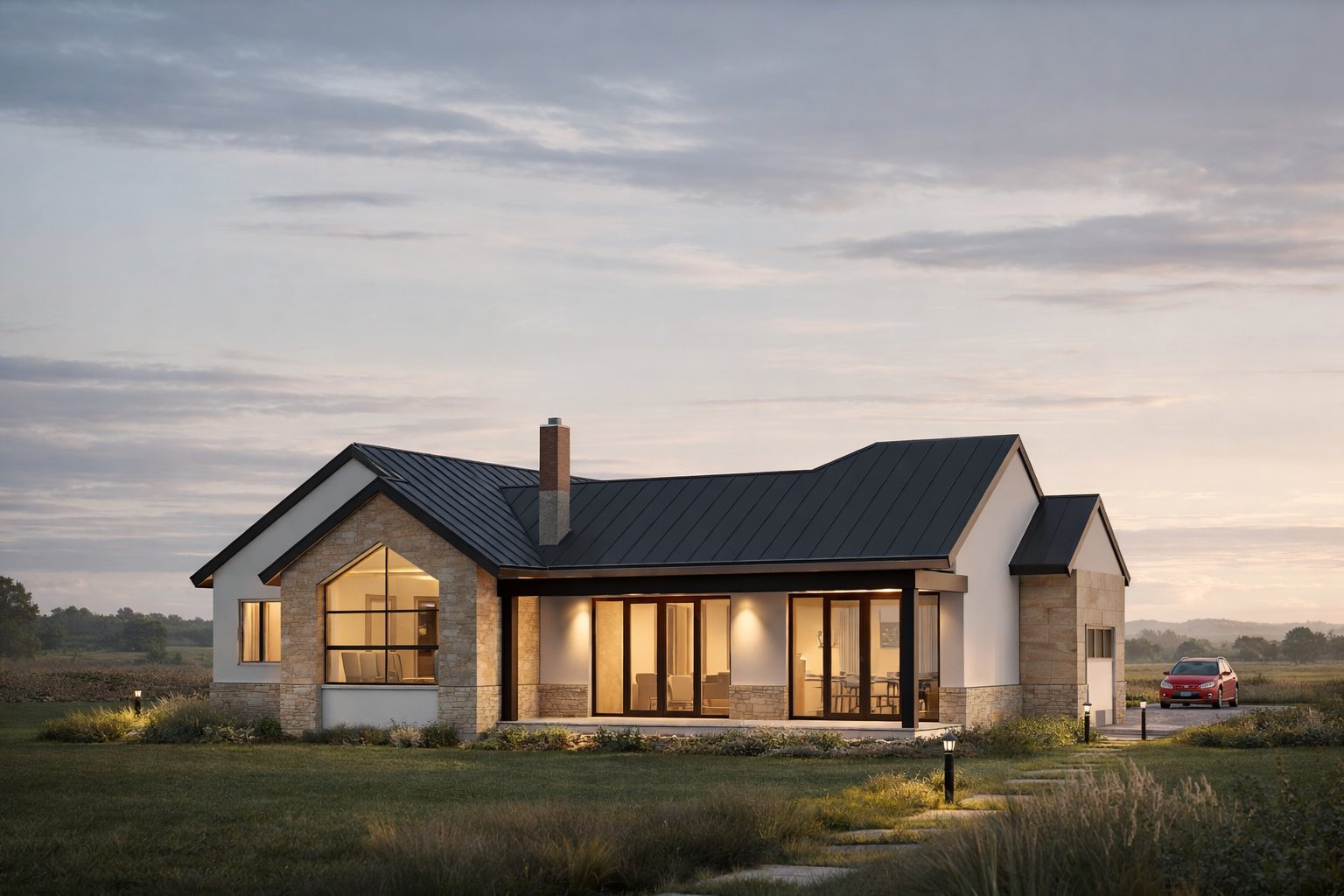
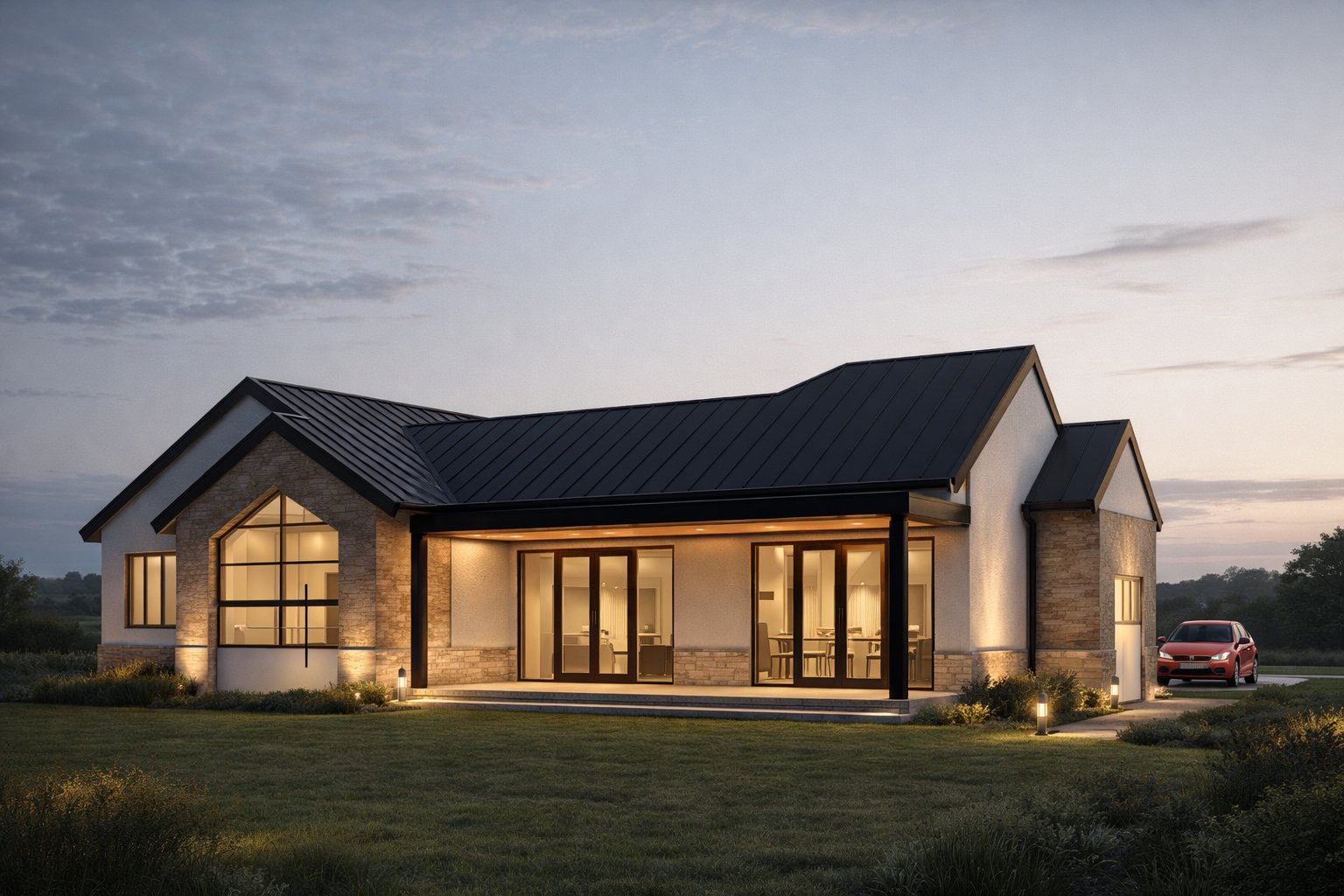
The Karatina — 3 Bedroom Bungalow · Aalis Studios Design
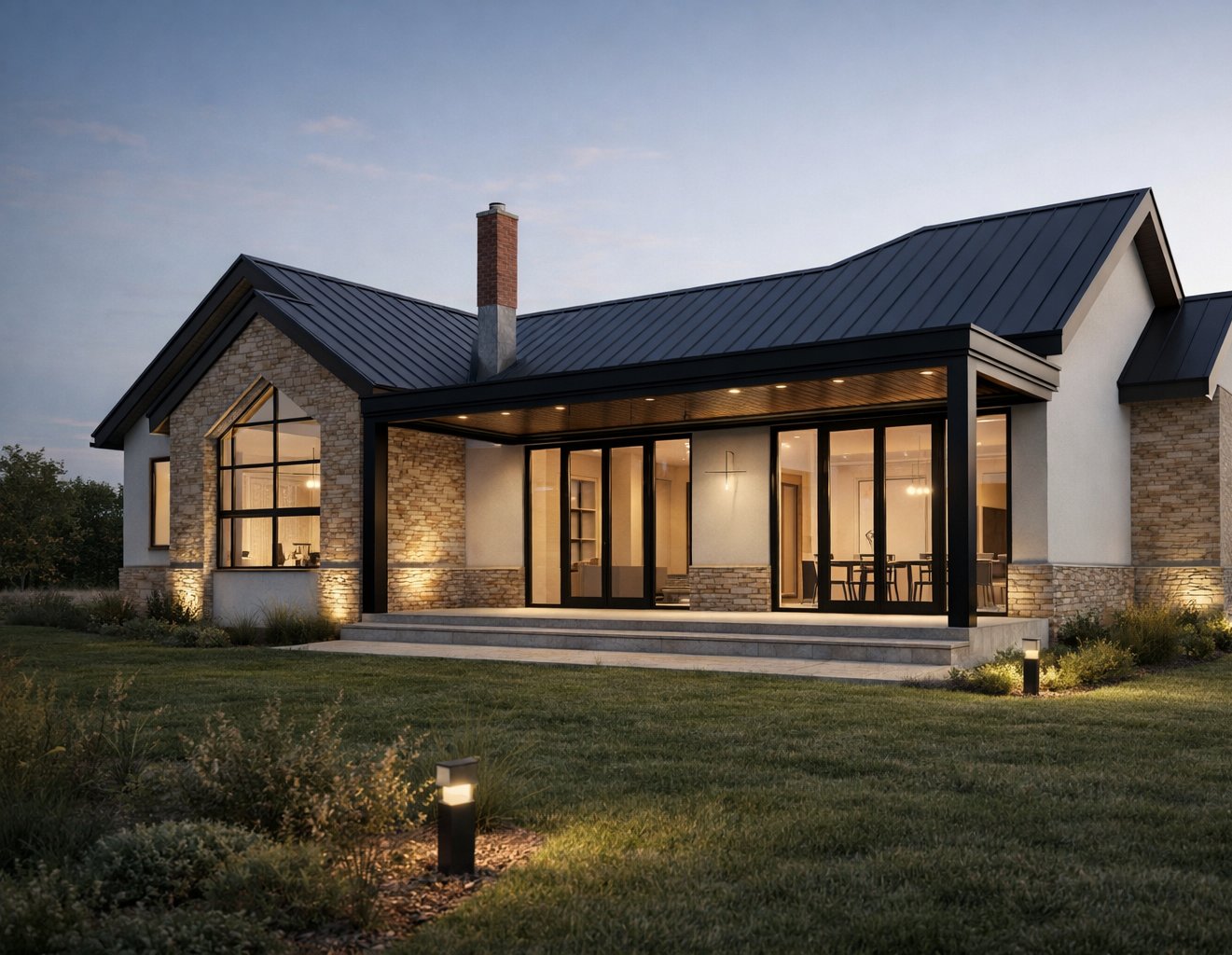
The Karatina — 3 bedroom bungalow design by Aalis Studios · Stone cladding, standing seam roof, covered veranda · Karatina, Nyeri County
02 — Cost by Location & Size
Construction Cost Per m² for a 3 Bedroom Bungalow in Kenya
The cost per square metre is the most reliable way to compare bungalow construction costs across different sizes and locations. In 2026, construction rates for residential bungalows in Kenya range from approximately KES 25,000 per m² for basic rural builds to KES 65,000 per m² for premium finishes in Nairobi.
| Location / Spec Level | Cost per m² (KES) | 100m² Total | 120m² Total |
|---|
| Rural Kenya — Basic Finish | 25,000 – 35,000 | 2.5M – 3.5M | 3M – 4.2M |
| Rural Kenya — Mid-Range | 35,000 – 48,000 | 3.5M – 4.8M | 4.2M – 5.8M |
| Suburban Kenya — Standard | 45,000 – 55,000 | 4.5M – 5.5M | 5.4M – 6.6M |
| Nairobi / Urban — Mid-Range | 50,000 – 62,000 | 5M – 6.2M | 6M – 7.4M |
| Nairobi / Urban — Premium | 60,000 – 80,000+ | 6M – 8M+ | 7.2M – 9.6M+ |
Quick Cost Calculator — 3 Bedroom Bungalow
House size: 100 m² · Standard suburban spec: KES 50,000/m²
100 × 50,000 = KES 5,000,000
Estimated construction cost (excluding land, professional fees & external works): KES 5 million
03 — Stage by Stage Breakdown
Construction Cost Breakdown for a Standard 3 Bedroom Bungalow
Understanding how construction costs are distributed across the main building stages helps you plan your cashflow and avoid surprises at any phase. Below is a realistic breakdown for a standard 100m² 3 bedroom bungalow in suburban Kenya in 2026 at a total estimated cost of KES 5 million.
Stage 01
Foundation & Substructure
10–15%
of total construction cost
Site clearing, excavation, hardcore filling, damp-proof course, and concrete strip or pad foundation. Black cotton soil requires deeper, reinforced foundations — add 30–50% to this stage in such areas.
KES 500K – 750K on a KES 5M build
Stage 02
Ground Floor Slab
5–8%
of total construction cost
Hardcore filling and compaction, DPM membrane, binding concrete, reinforced concrete slab or ground bearing slab with mesh reinforcement. A single 100m² slab is relatively straightforward to price.
KES 250K – 400K on a KES 5M build
Stage 03
Walling & Superstructure
25–35%
of total construction cost
Reinforced concrete columns and beams, block or stone walling to wall-plate level, lintels over all openings. The walling material choice — quarry stone, hollow blocks, burnt bricks — significantly affects both cost and speed.
KES 1.25M – 1.75M on a KES 5M build
Stage 04
Roofing
10–15%
of total construction cost
Wall plate, timber roof trusses, roofing battens, and the roofing material itself — box profile, IBR, decra tiles, or standing seam metal. Simple hip or gable roofs are cheapest; complex multi-gable designs add 15–30%.
KES 500K – 750K on a KES 5M build
Stage 05
Plumbing & Electrical
8–12%
of total construction cost
First fix plumbing and electrical conduit (during walling), second fix installations after plastering. Includes water storage tanks, drainage connection, DB board, wiring, and light fittings.
KES 400K – 600K on a KES 5M build
Stage 06
Finishes
25–35%
of total construction cost
Plastering, floor tiles, wall tiles in wet areas, gypsum ceilings, paint, internal doors, windows, kitchen cabinets, bathroom fittings, and wardrobes. Finishes are the single biggest variable — the choice between ceramic and imported marble can double this stage cost.
KES 1.25M – 1.75M on a KES 5M build
| Construction Stage | % of Total | KES (on KES 5M build) |
|---|
| Foundation & substructure | 10–15% | KES 500K – 750K |
| Ground floor slab | 5–8% | KES 250K – 400K |
| Walling & superstructure | 25–35% | KES 1.25M – 1.75M |
| Roofing | 10–15% | KES 500K – 750K |
| Plumbing & electrical | 8–12% | KES 400K – 600K |
| Internal finishes | 25–35% | KES 1.25M – 1.75M |
| Total Construction | 100% | KES 4.15M – 5.75M |
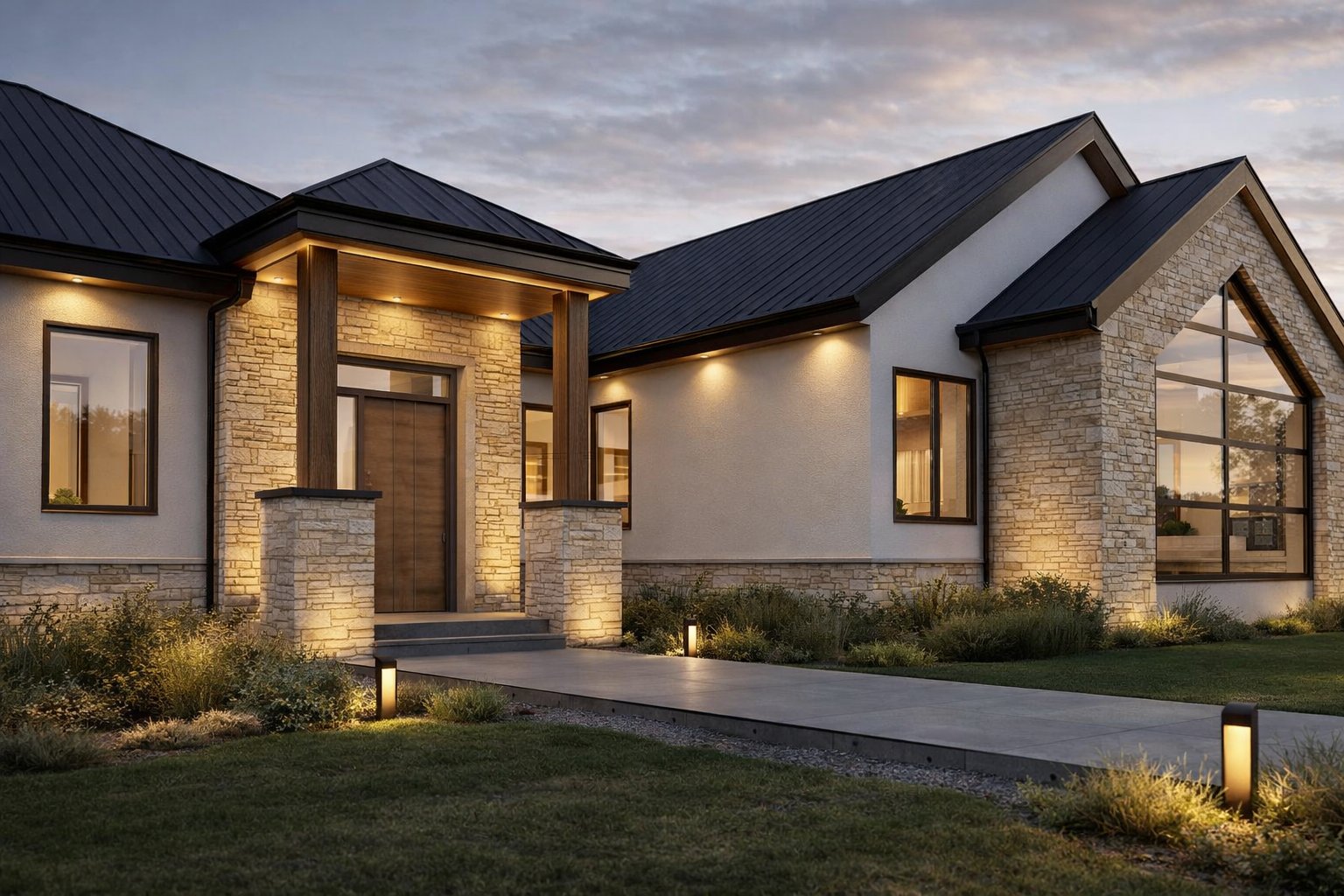
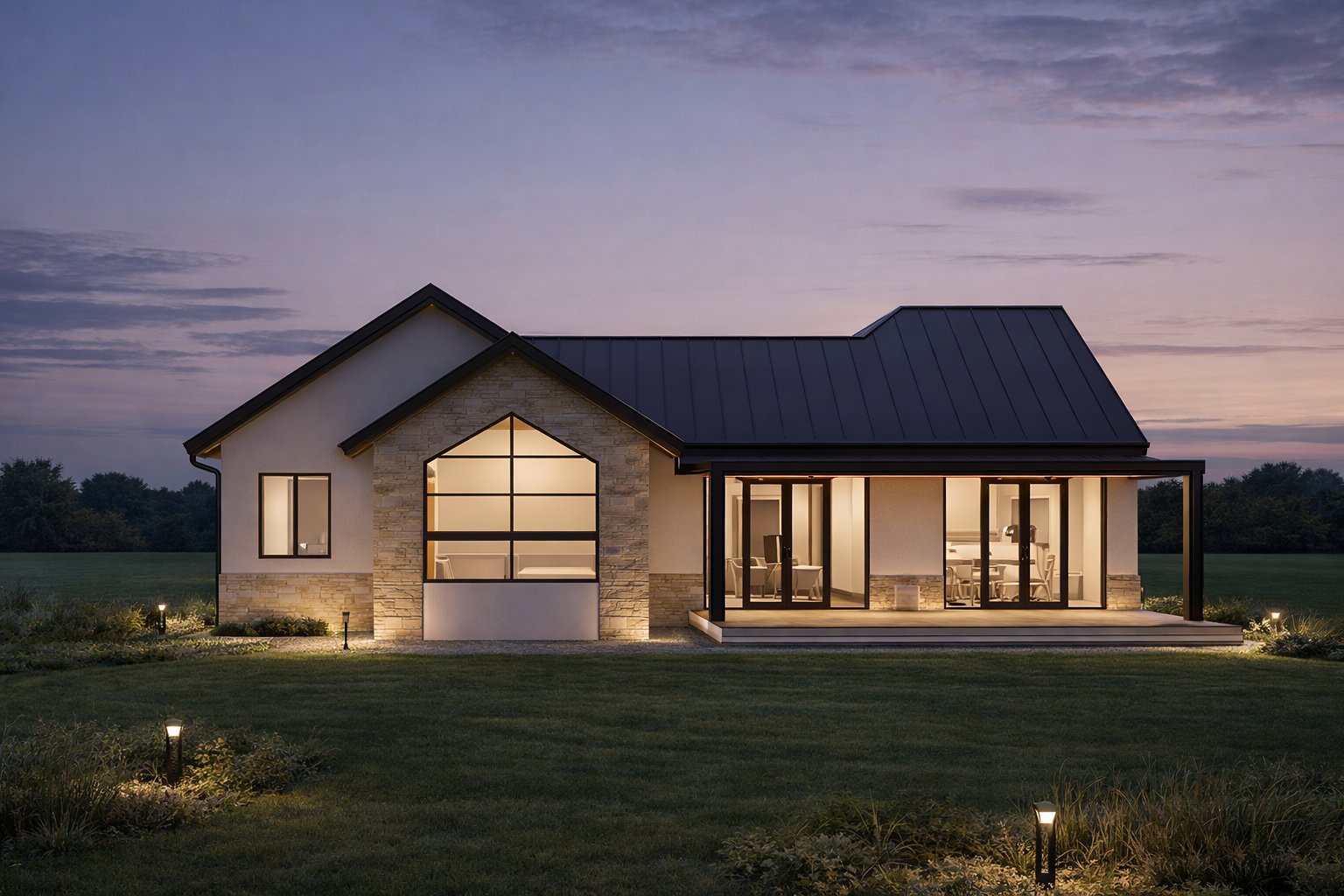
Karatina Bungalow — Entrance & Exterior Design
The Karatina bungalow — entrance facade, rear elevation, and covered terrace · Aalis Studios, Nyeri County 2025
04 — Building Materials Cost
How Much Do Building Materials for a 3 Bedroom Bungalow Typically Cost in Kenya?
Materials typically account for 50–65% of the total construction cost of a 3 bedroom bungalow in Kenya, with labour making up the remainder. The table below gives you 2026 Nairobi market rate benchmarks for the main materials you will need.
| Material | Unit | 2026 Price (KES) | Qty for 100m² Bungalow |
|---|
| Cement (50kg bag) | Per bag | 750 – 850 | 250 – 350 bags |
| Quarry stone (6-inch) | Per piece | 28 – 38 | 3,500 – 5,000 stones |
| Sand (builder’s) | Per tonne | 2,500 – 3,500 | 15 – 25 tonnes |
| Ballast / aggregates | Per tonne | 2,000 – 3,000 | 10 – 18 tonnes |
| Steel rebar (Y12) | Per tonne | 110,000 – 130,000 | 1.5 – 2.5 tonnes |
| Timber (for roof) | Per piece (4×2, 3m) | 350 – 500 | 80 – 120 pieces |
| IBR roofing sheets | Per m² | 650 – 950 | ~120m² roof area |
| Ceramic floor tiles | Per m² | 1,200 – 1,800 | ~100m² |
| Porcelain floor tiles | Per m² | 2,500 – 4,500 | ~100m² |
| Aluminium windows | Per m² | 6,500 – 10,000 | ~30m² total |
| Internal doors (flush) | Per door | 8,000 – 15,000 | 8 – 12 doors |
| Gypsum ceiling | Per m² | 650 – 950 | ~100m² |
| Paint (interior, 20L) | Per tin | 4,500 – 8,500 | 8 – 14 tins |
| Kitchen cabinets (local) | Per linear metre | 15,000 – 35,000 | 4 – 6 linear metres |
| WC suite (standard) | Per unit | 8,000 – 18,000 | 3 – 4 units |
Total Materials Budget (100m², Mid-Range)
A 100m² 3 bedroom bungalow with mid-range finishes in Kenya will typically require materials costing between KES 2.5 million and KES 4.5 million in 2026, depending on finish level and location. This is the bulk of your construction budget. Getting accurate quantities from a Quantity Surveyor before purchasing prevents wastage and overbuying.
Labour: 35–50% of Total Cost
Labour for a 3 bedroom bungalow in Kenya typically costs between KES 1 million and KES 2 million. Rates vary by county — Nairobi and Mombasa are highest. Skilled trades (tiling, plumbing, electrical) command more than general construction labour. A clear, milestoned contract with your contractor prevents idle labour costs.
How Many Bags of Cement for a 3 Bedroom House in Kenya?
A standard 3 bedroom bungalow requires approximately 250 to 350 bags of cement (50kg) for foundation, slab, walling, screeding, and plastering combined. Black cotton soil sites requiring deeper foundations may need 350–450 bags. At 2026 prices of KES 750–850 per bag, the cement budget alone is KES 185,000–380,000.
How Many Building Stones for a 3 Bedroom House in Kenya?
A 100m² bungalow typically requires 3,500 to 5,000 quarry stones depending on wall height, number of window and door openings, and walling material type. At KES 28–38 per stone in 2026, this represents KES 98,000–190,000 in stone cost before laying labour.
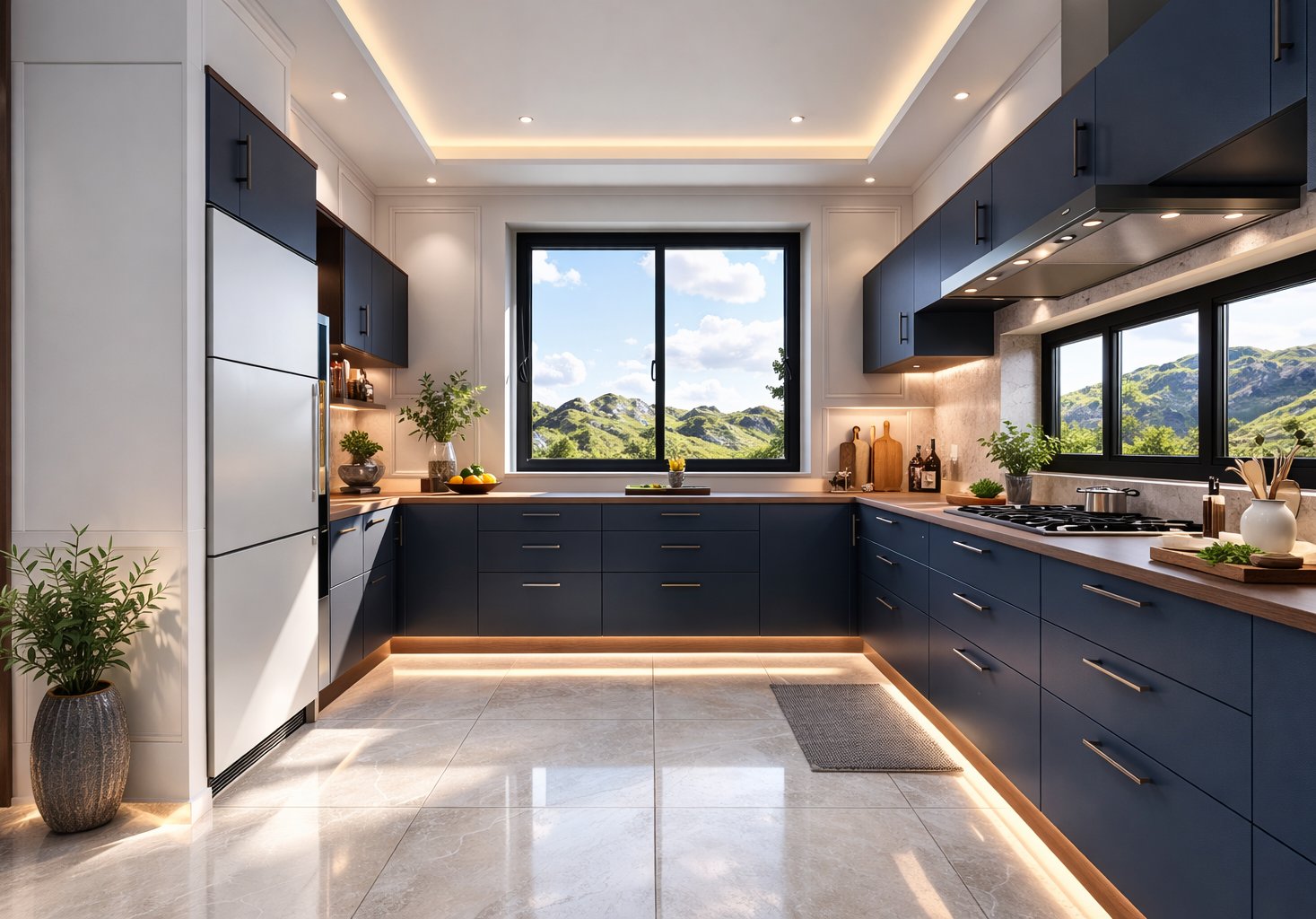
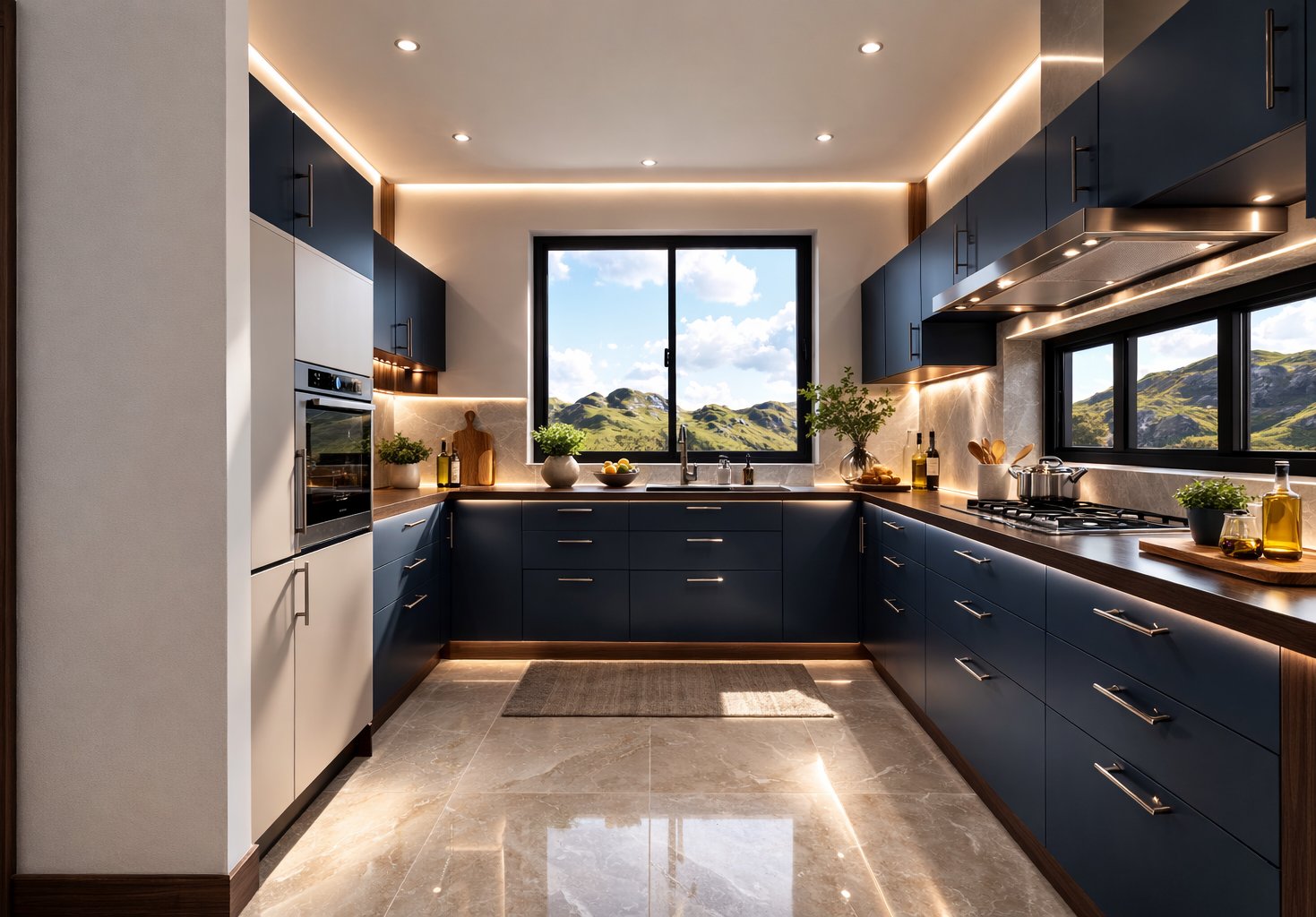
Karatina Bungalow — Interior Finishes Detail
Kitchen finish options — from basic local cabinets to the premium navy & timber specification shown above · The Karatina, Aalis Studios
05 — Cost Drivers
What Drives the Cost of a 3 Bedroom Bungalow Up or Down in Kenya?
The 3 million shilling gap between a basic rural bungalow and a high-end suburban one is not random. It comes down to six key variables, each of which you have meaningful control over if you understand them before design begins.
Location & Labour Rates
Nairobi and Mombasa command the highest construction rates in Kenya — typically 20–35% more than upcountry or rural areas. This reflects higher material transport costs, higher skilled labour rates, and the elevated cost of doing business in urban areas. Rural Central Kenya, Western, and Rift Valley can deliver the same house at significantly lower cost if local materials are well-sourced.
Finish Level — The Biggest Variable
Two houses with identical floor plans and structural designs can cost 60–80% more or less depending purely on finish choices. Ceramic vs imported porcelain tiles, local vs custom kitchen cabinets, standard aluminium vs high-performance bi-fold doors — these decisions collectively determine more of your final cost than almost anything else. Finishes should be decided before your Bill of Quantities is prepared, not after construction begins.
Foundation Conditions — Black Cotton Soil
Black cotton (expansive) soil is common across large parts of Kenya including parts of Nairobi, the Rift Valley, and Western Kenya. It requires deeper strip foundations, additional reinforcement, or raft slab designs that can add KES 300,000–600,000 to foundation cost compared with a normal ground condition site. A site investigation (trial pits) before design is non-negotiable if there is any uncertainty about your soil.
Roof Complexity
A simple single-gable or hip roof is the cheapest option. Every additional valley, gable, or roof feature adds 10–25% to the roofing stage cost through increased material wastage, more complex carpentry, and additional waterproofing requirements. The most expensive common roof type in Kenya is the multi-gable standing seam metal roof — beautiful and durable, but 2–3 times the cost of standard IBR.
Professional Fees & Approvals
Architect fees, structural engineering, quantity surveying, county approval fees, NEMA clearance, and NCA registration typically add 8–15% to the total project cost. On a KES 5M construction project, expect professional fees of KES 400,000–750,000. These are not optional — BORAQS-registered drawings are a legal requirement for county approval in Kenya.
Contractor Selection & Project Management
Poorly managed projects in Kenya consistently overrun budgets by 20–40% through design changes mid-construction, material wastage, rework of substandard work, and labour idle time. Engaging an NCA-registered contractor under professional oversight (architect or construction manager) is the single most cost-effective investment you can make in a building project.
“The most expensive house in Kenya is not the one with the most expensive finishes. It is the one where construction started without proper drawings and a Bill of Quantities. Change orders, rework, and abortive costs routinely add 25–40% to the budget of under-planned builds.”
— Arch. Vincent Abuya, Principal Architect, Aalis Studios
06 — Affordable Building
Getting an Affordable 3 Bedroom Bungalow in Kenya
An affordable 3 bedroom bungalow does not mean a cheap or poorly built house — it means a house where every shilling is spent intentionally. These are the strategies that our architects consistently recommend to clients who want maximum value from their construction budget.
Invest in Design First
A detailed design and Bill of Quantities prepared before construction begins is the single most cost-effective investment in any build. It eliminates guesswork pricing, enables competitive tendering, prevents mid-construction surprises, and gives you a document to manage costs against throughout the project. BORAQS-registered architectural drawings are required for county approval anyway — commission them properly and get full value from them.
Keep the Floor Plan Simple and Compact
A compact rectangular floor plan with clear room adjacencies costs significantly less to build than an irregular or L-shaped plan of the same total area. Fewer external corners means less formwork, less roofing complexity, and less perimeter walling. Every additional external corner in a wall adds cost without adding habitable space.
Specify Finishes Selectively
Use premium materials where they are seen and touched daily — the kitchen, master bathroom, and main living area. Use cost-effective materials in service areas, secondary bedrooms, and outdoor spaces. This selective approach delivers a high-quality impression at a fraction of the cost of full luxury specification throughout.
Use Locally Sourced Materials
Quarry stone sourced locally in Central and Eastern Kenya is often significantly cheaper than hollow concrete blocks of equivalent wall thickness, and produces a more attractive and thermally comfortable wall. Local timber, local sand, and aggregate sourced within 50km of your site all reduce transport costs meaningfully.
Phase Construction Sensibly
If your budget does not allow for the full house at once, design the complete house first but build it in logical phases that leave each stage habitable. A well-designed phase plan prevents abortive work later — never build walls that will have to be broken to add a room you always planned to include.
Ready-Made Affordable Design
The Karatina — 3 Bedroom Bungalow for Kenya
A fully resolved, BORAQS-registered 3 bedroom bungalow design for rural and suburban Kenya. Stone cladding, standing seam roof, vaulted living room, all ensuite. Plan fee from 3% of build cost. Construction cost from KES 12M for the full 280m² design.
07 — Choosing a Contractor
How to Choose a Reputable Contractor for Your 3 Bedroom Bungalow in Kenya
Choosing the wrong contractor is the most common reason bungalow projects in Kenya go over budget, take twice as long as planned, or result in substandard construction that requires expensive rectification. These are the criteria that genuinely separate reliable contractors from risky ones.
NCA Registration — Non-Negotiable
Under the NCA Act, all contractors undertaking construction projects above KES 5 million in Kenya must be registered with the National Construction Authority. You can verify any contractor on the NCA portal at nca.go.ke. An unregistered contractor cannot legally manage your project and provides no regulatory accountability if things go wrong.
Verifiable Track Record
Ask for photographs and physical addresses of completed projects similar to yours. Visit at least one site if possible. A contractor who cannot provide references from recent clients, or who is evasive about past work, should be disqualified immediately. The quality of completed work is the most reliable predictor of what yours will look like.
Price Against a Bill of Quantities — Not a Lump Sum
Always tender your project against a Quantity Surveyor’s Bill of Quantities, not against vague verbal estimates or lump-sum quotations. A BOQ ensures all contractors are pricing the same scope of work, makes comparison meaningful, and gives you an itemised document to manage costs and variations against throughout construction.
Professional Oversight Protects You
An architect or construction manager overseeing your contractor is not an additional cost — it is the mechanism that ensures your contractor delivers what they promised, at the quality specified, within the budget agreed. Aalis Studios provides construction management services that include contractor procurement, site supervision, payment certification, and quality control from foundation to handover.
Contractor Procurement & Construction Management
Aalis Studios Can Manage Your Entire Build — From Contractor Selection to Handover
NCA-Registered Construction Firm · Design+Build Available
We handle contractor tendering, BOQ preparation, site supervision, payment certification, and quality control. Whether you are in Nairobi or in the diaspora — we protect your investment at every stage of construction.
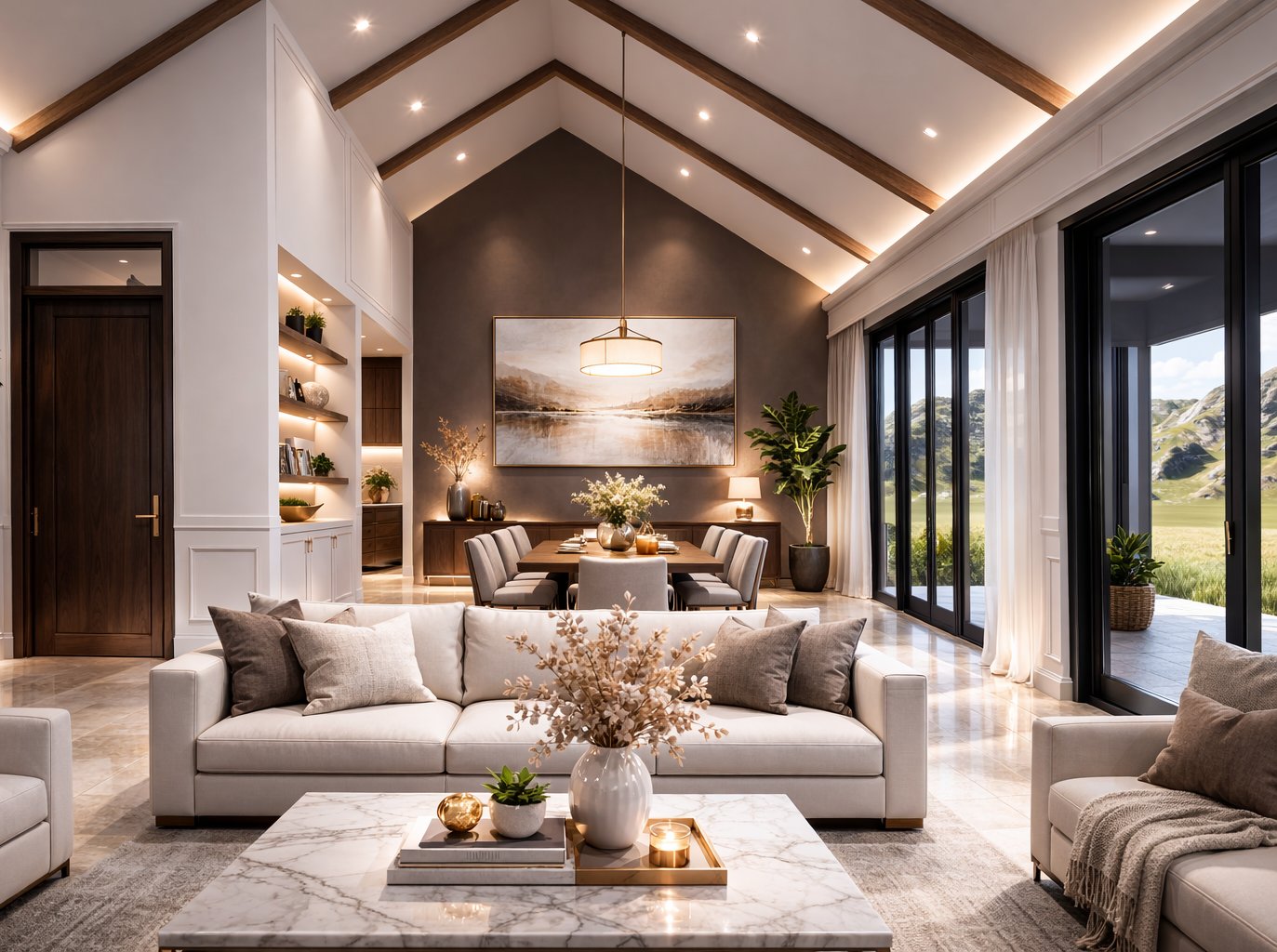
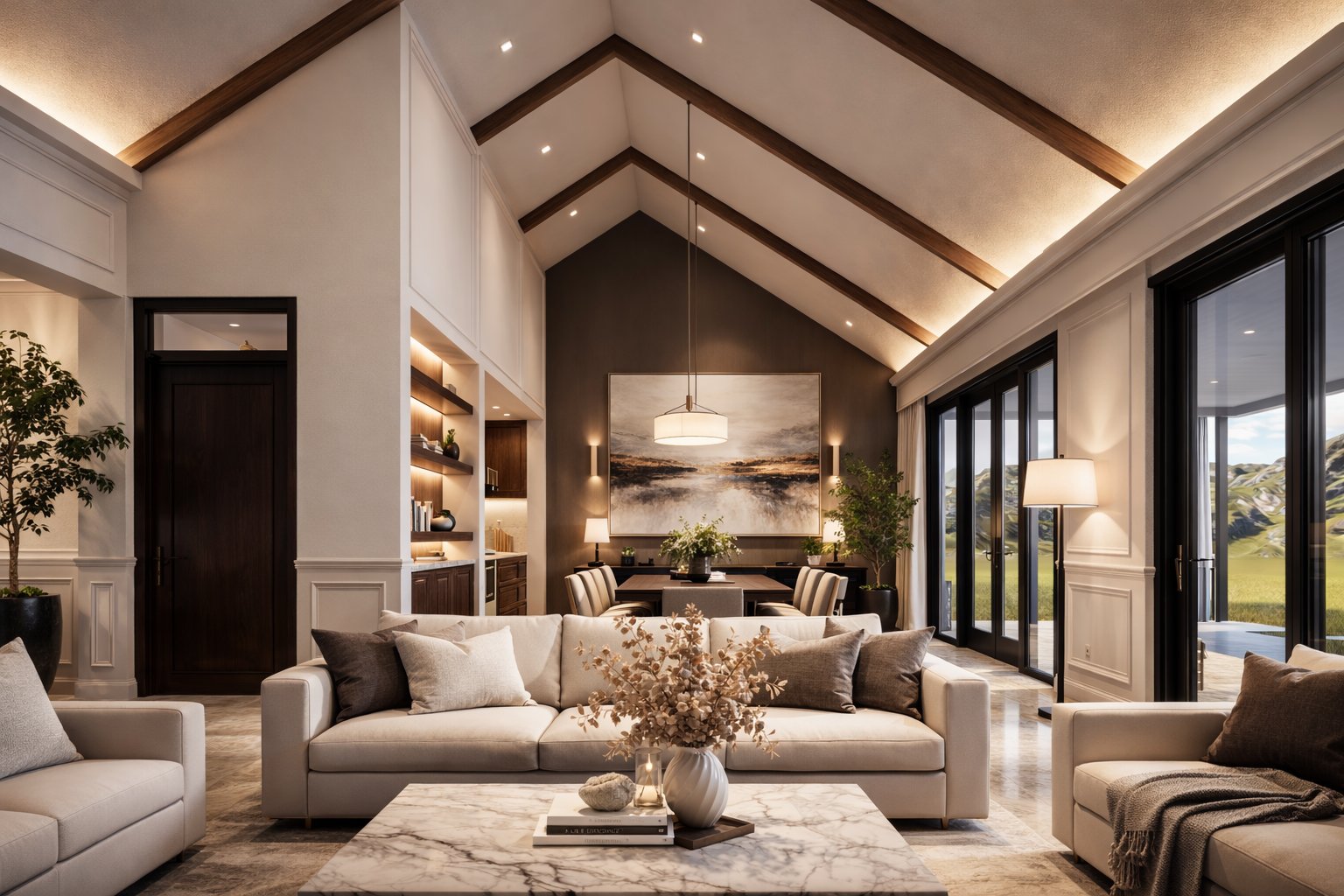
Interior Living Spaces — The Karatina, Aalis Studios
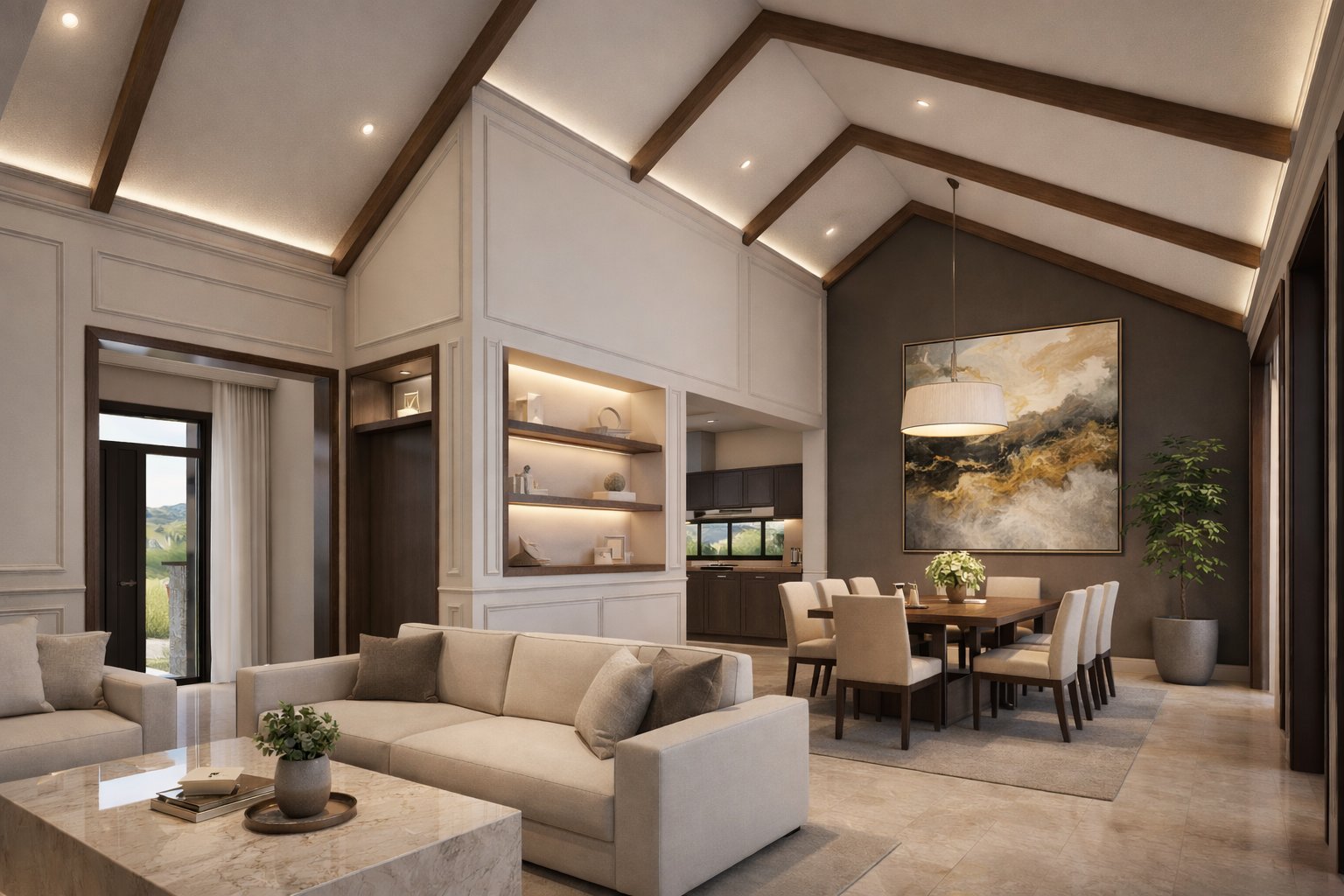
Open-plan living and dining with vaulted ceiling to 7.5m · exposed timber trusses · The Karatina, Aalis Studios 2025
08 — Financing Your Build
Construction Loans & Home Building Finance in Kenya
Financing the construction of a 3 bedroom bungalow in Kenya through a bank loan is increasingly accessible — but the application process requires specific documentation that many applicants are not fully prepared for. Understanding what lenders require, and preparing that documentation correctly, is the difference between a loan that is approved quickly and one that stalls for months.
Financial Institutions Offering Construction Loans in Kenya
Kenya Commercial Bank (KCB)
KCB Mortgage & Construction Loan
From 12.5%
Up to KES 50M · Up to 25 years · Up to 90% financing · Title deed required as security
Equity Bank Kenya
Equity Mortgage & Home Construction
From 13%
Up to KES 30M · Up to 20 years · Stage disbursements · Valuations at each stage
Co-operative Bank of Kenya
Co-op Mortgage
From 12.5%
Up to KES 50M · Up to 25 years · CRB check required · Plot or completed property as security
Housing Finance (HFC)
HFC Home Construction Loan
From 13%
Specialised construction lender · Stage disbursements · BORAQS drawings required for approval
NCBA Bank Kenya
NCBA Mortgage & Construction
From 12.5%
Up to KES 60M · Up to 25 years · Self-build with architect oversight preferred
National Housing Corporation (NHC)
NHC Construction Loan
Subsidised rates
Government-backed · Lower income support · County partnership programmes available
Documents Required for a Construction Loan in Kenya
Every construction loan application in Kenya requires a package of technical and financial documents. Incomplete or incorrectly prepared documents are the most common reason for loan delays and rejections. Aalis Studios helps clients prepare this documentation correctly the first time.
BORAQS-Registered Architectural Drawings
All major Kenyan lenders require BORAQS-signed architectural drawings as a condition of construction loan approval. The drawings must include floor plans, elevations, sections, and a site plan. Unregistered or unsigned drawings will not be accepted. Aalis Studios produces all drawings under BORAQS registration and knows exactly what lenders require at each stage of the approval process.
Bill of Quantities (BOQ) from a Registered QS
Lenders require a detailed, itemised Bill of Quantities prepared by a registered Quantity Surveyor to establish the construction cost upon which the loan value is based. Aalis Studios coordinates QS services for all clients, producing a BOQ to the standard required by all major Kenyan mortgage lenders.
Title Deed (or Allotment Letter)
The land title deed — or in some cases a long-term lease agreement — is required as collateral for most construction loans. An official land search (dated within 3 months) is also required to confirm clean title with no encumbrances.
Building Approval & NCA Registration
Most lenders require evidence of county building approval and NCA project registration before disbursing construction funds. Aalis Studios manages the entire approval process — from county submission to NCA registration — as part of our full-service engagement, producing exactly the documentation your bank requires.
Financial Documentation
Pay slips (typically 3 months), bank statements (6 months), KRA PIN certificate, ID documents, and a completed loan application form. For business owners or self-employed applicants, audited financial statements for 2–3 years are typically required alongside business registration documents.
ⓘ
How Aalis Studios helps with loan applications: We prepare the complete technical documentation package — BORAQS architectural drawings, structural drawings, BOQ, county approval, and NCA registration — to the standard required by Kenyan mortgage lenders. Many of our clients have successfully accessed construction loans using documentation we prepared. WhatsApp us at +254 757 743 454 to discuss your project and loan requirements.
09 — Real Design Example
A Real 3 Bedroom Bungalow Design in Kenya — The Karatina
Abstract cost figures only go so far. The Karatina is a specific, fully-designed 3 bedroom bungalow by Aalis Studios — designed for rural and suburban Kenya, BORAQS-registered, and available as drawings or as a full Design+Build engagement. Here are the real 2026 numbers.
The Karatina — Design AS-BG-003 · Cost Summary 2026
Floor area: ~280m² (including veranda, garage & all rooms)
Habitable area: ~200m² · Plot: 1/8 acre minimum (50×100ft)
Economy finish: KES 12M – 14M · Mid-range: KES 14M – 18M · Luxury: KES 18M – 26M
Plan fee: 3% of estimated build cost · Includes BORAQS drawings, 3D flythrough, county-submission ready package
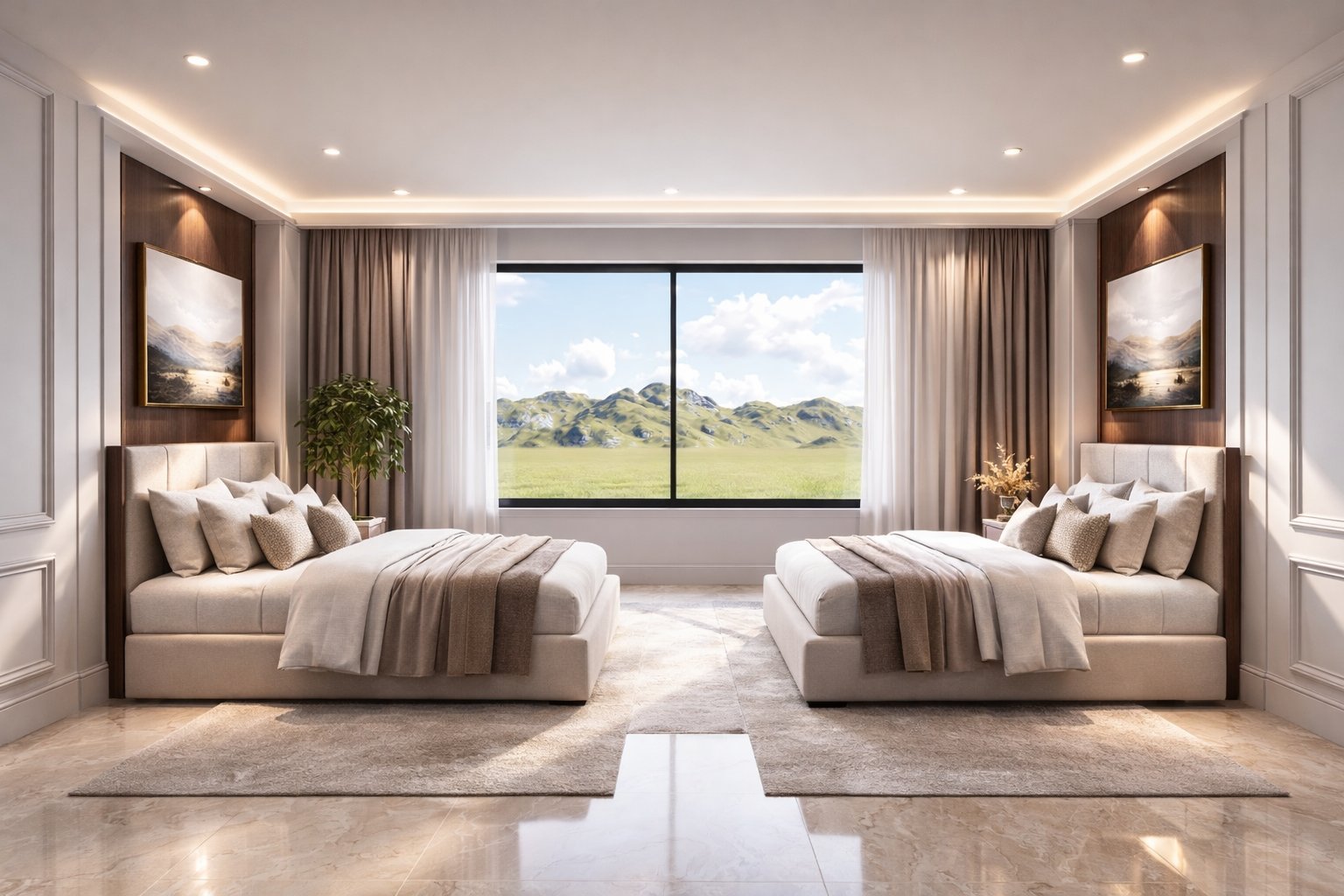
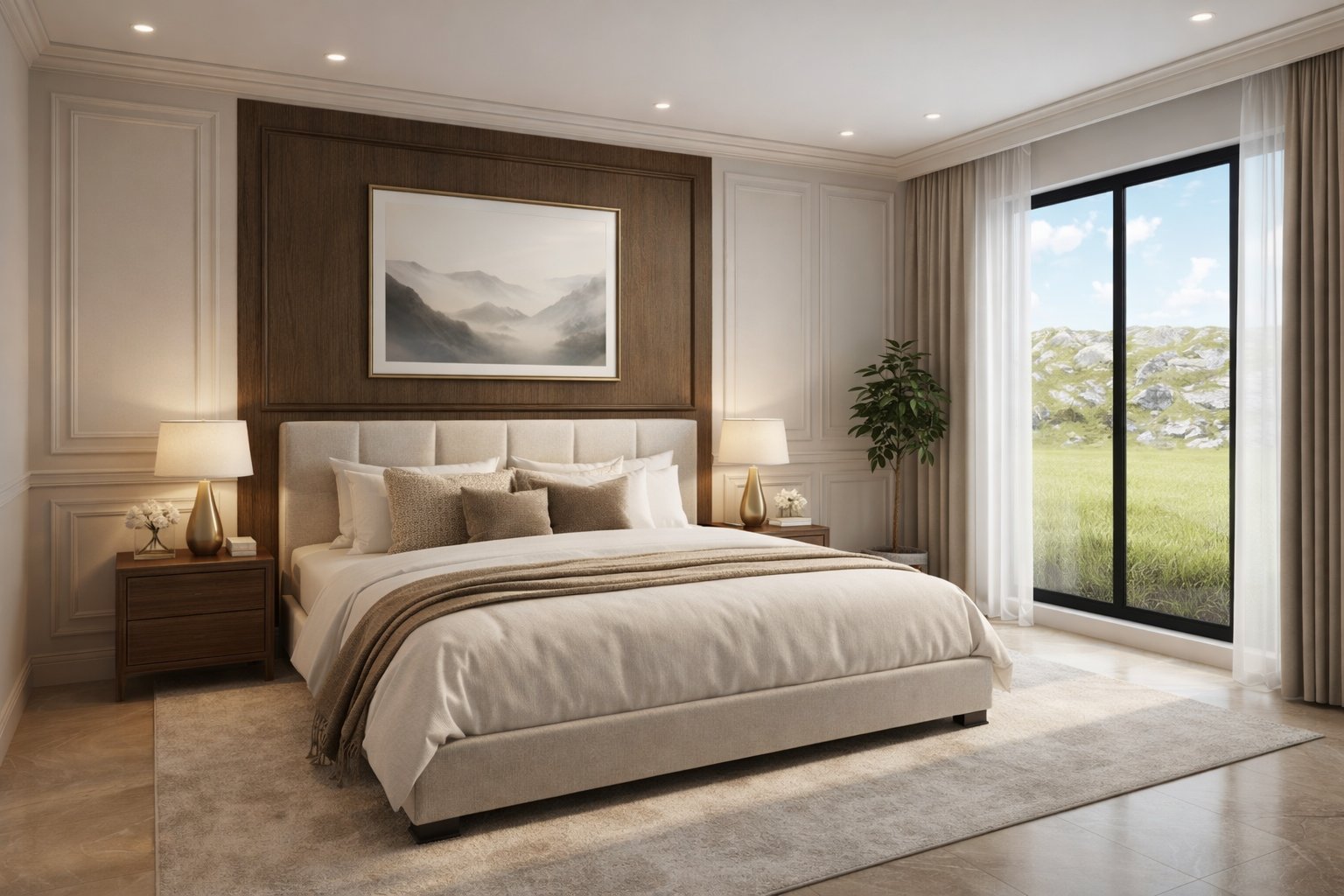
The Karatina — Bedrooms & Living Spaces
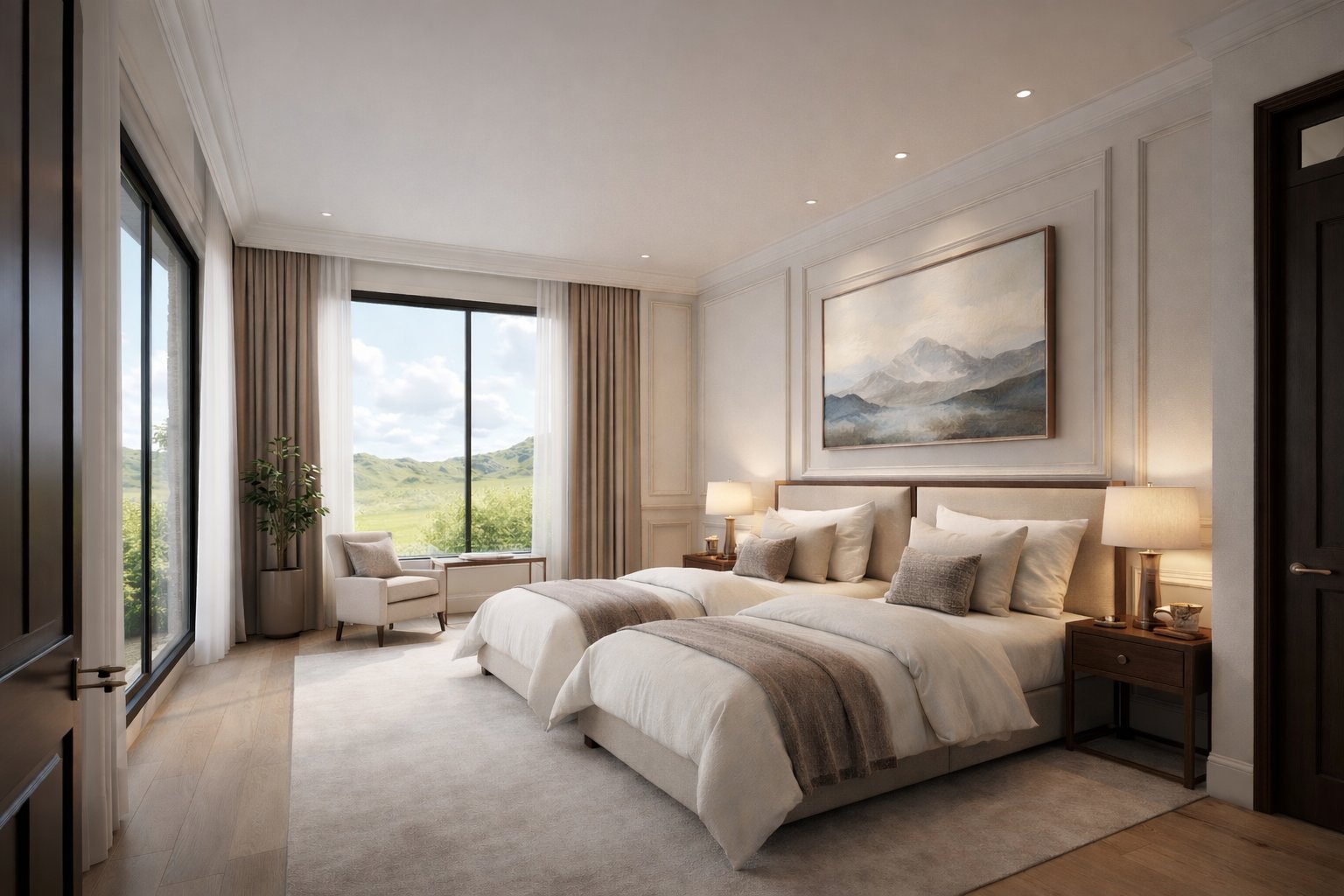
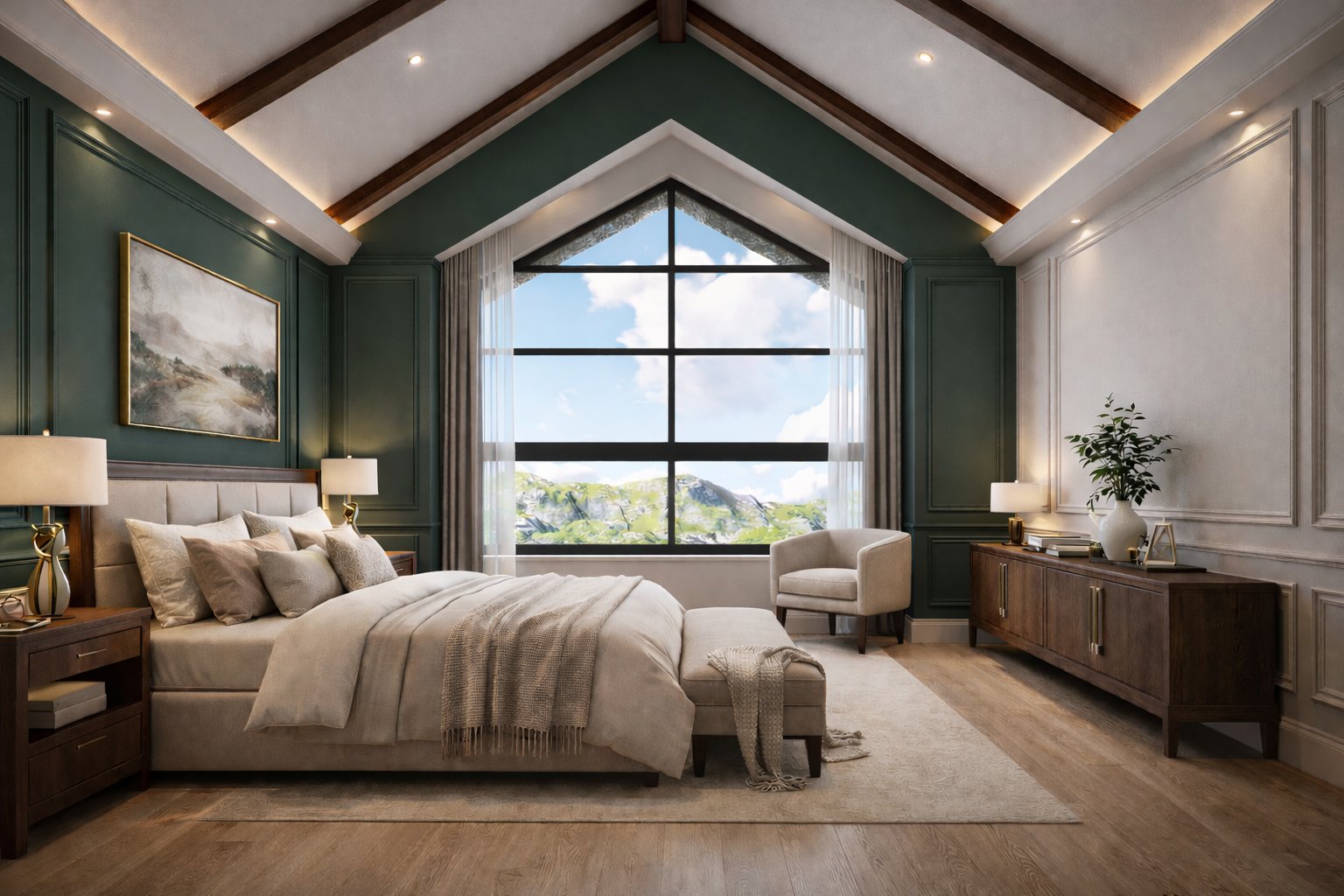
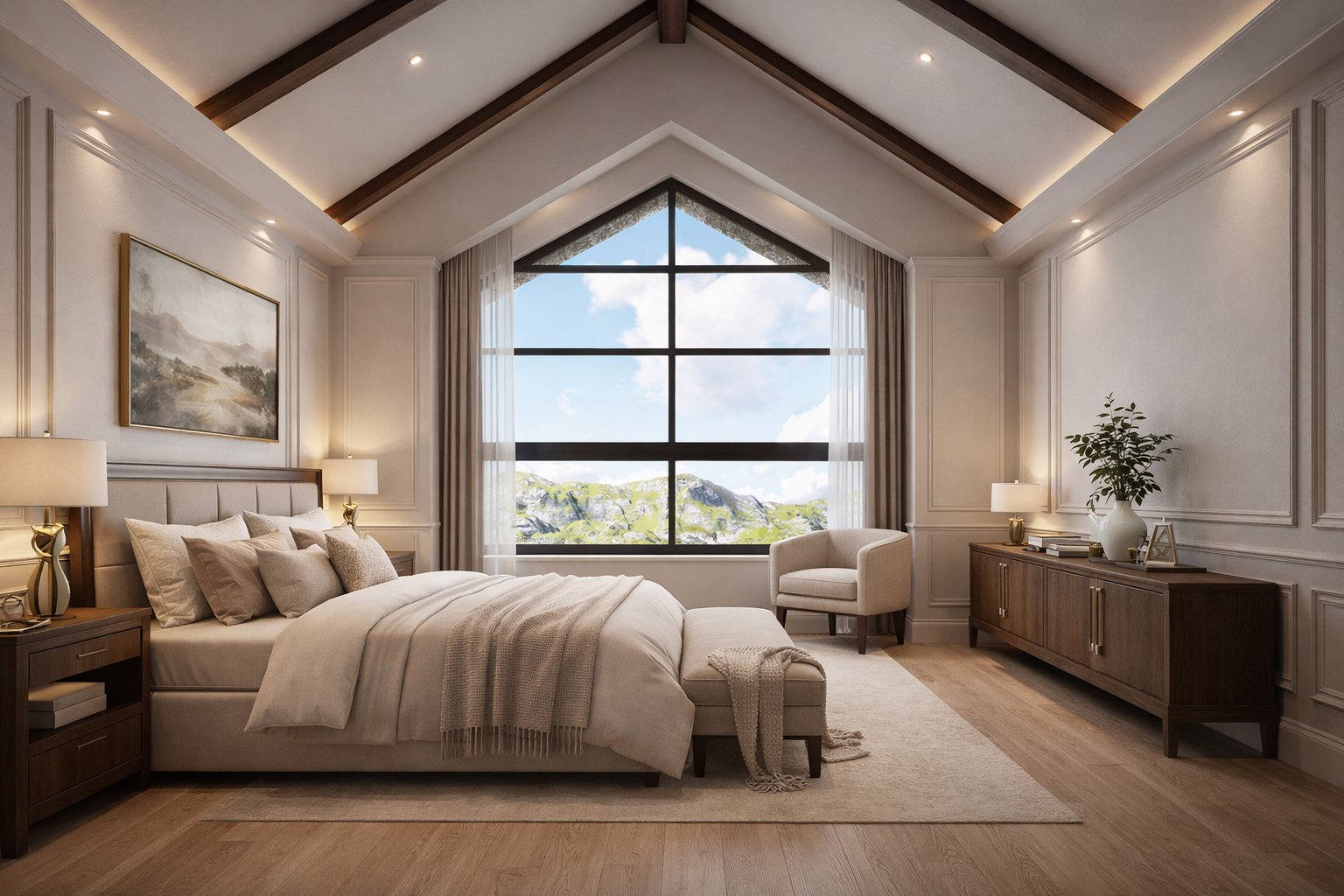
Master bedroom with cathedral ceiling · Twin bedroom option · Accessible grandmother’s room · The Karatina, Aalis Studios
Karatina — Open Plan Living & Veranda
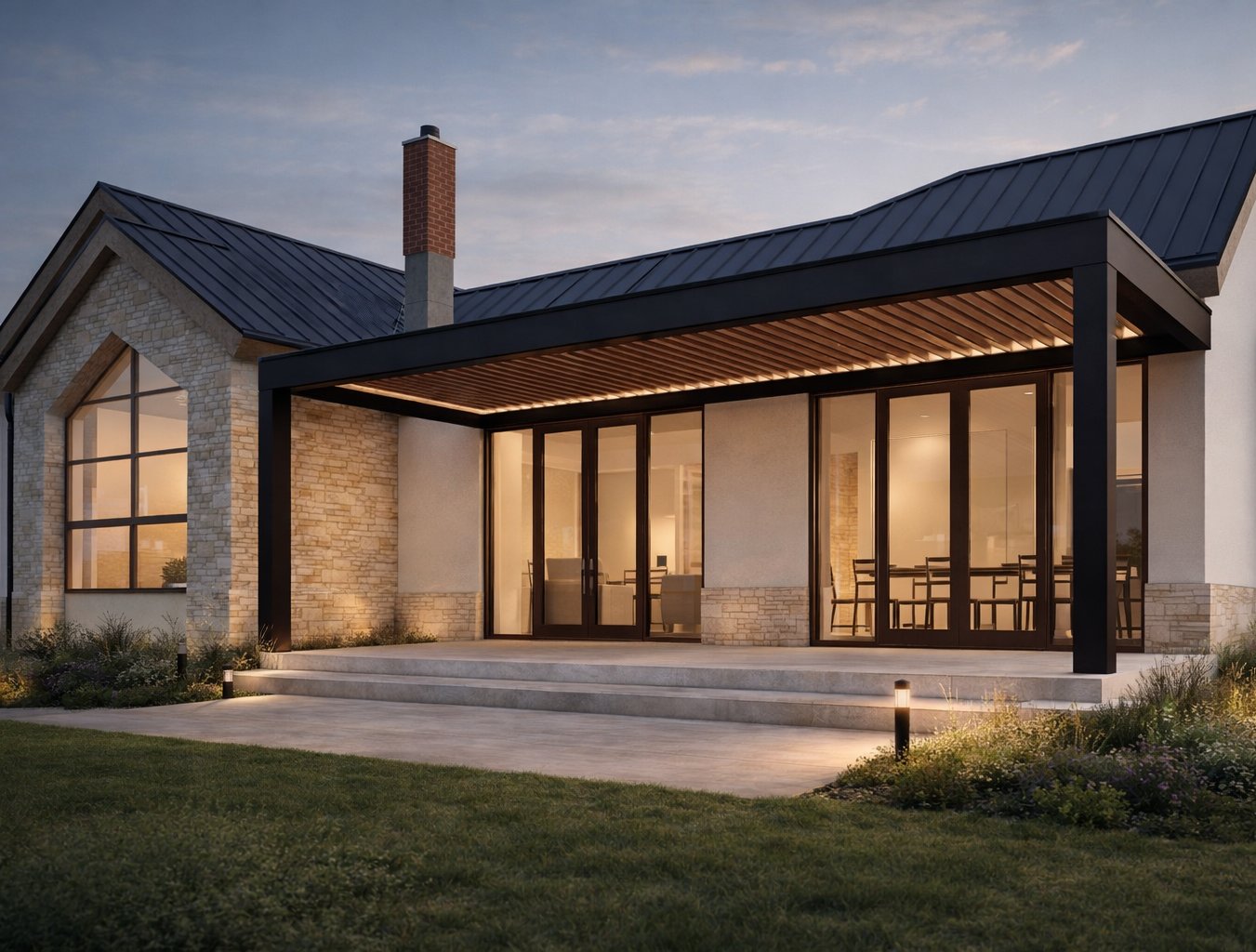
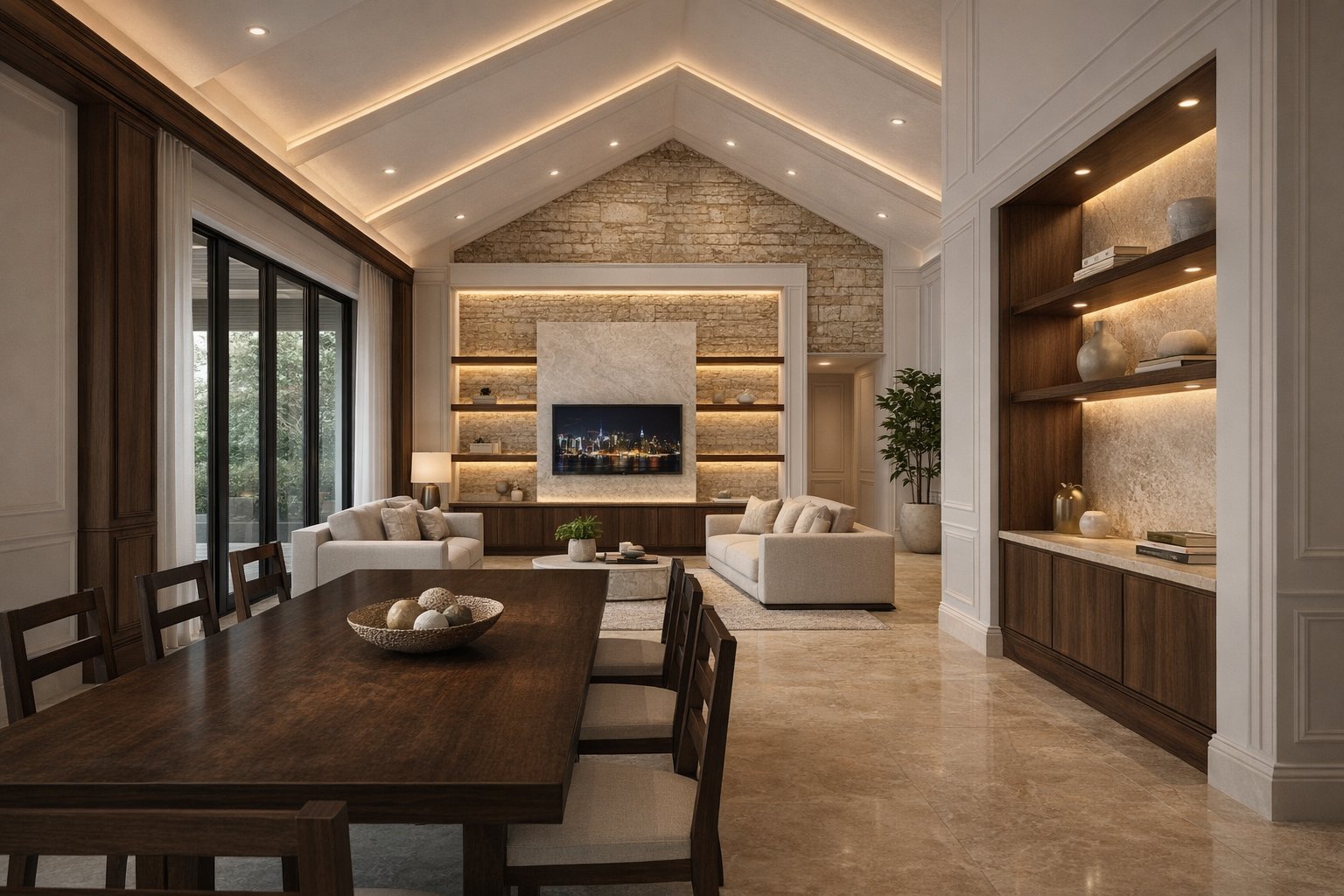
Open-plan living, dining, and kitchen · Rear covered veranda with timber louvre ceiling · The Karatina, Aalis Studios 2025
Karatina — Floor Plan

The Karatina floor plan — single storey, 3 bedrooms all ensuite, open-plan living · BORAQS-registered · Aalis Studios Design No. AS-BG-003
View the Full Karatina Design →
10 — People Also Ask
Frequently Asked Questions
What is the most expensive part of building a 3 bedroom bungalow in Kenya? +
The walling and superstructure stage — covering columns, beams, and block or stone walling — is typically the single most expensive stage, representing 25–35% of total construction cost. However, finishes (tiles, paint, kitchen cabinets, windows, doors, bathroom fittings) collectively represent a similar proportion and are the biggest variable between a cheap and an expensive build. The foundation is also significant, especially on poor ground conditions such as black cotton soil.
How much to build a new 3 bedroom bungalow in Kenya in 2026? +
The cost of building a new 3 bedroom bungalow in Kenya in 2026 ranges from KES 2.5 million (basic, rural, 70–80m²) to KES 7 million or more (high-end, urban, 120m²+). The most common range for a standard 100m² suburban bungalow is KES 4.5 million to KES 6 million with mid-range finishes. Construction rates are approximately KES 25,000–65,000 per m² depending on location and specification.
Can 500,000 shillings build a house in Kenya? +
KES 500,000 is not enough to build a complete 3 bedroom bungalow in Kenya in 2026. It may cover the foundation stage of a small basic unit in a rural area, or a single room. A habitable 3 bedroom bungalow requires a minimum of KES 2.5 million in rural areas and KES 4 million or more in suburban and urban locations. Planning your full budget before beginning is essential — starting a build without sufficient funds to complete it is one of the most common and costly mistakes Kenyan homebuilders make.
How many houses can fit in a 50 by 100 plot in Kenya? +
A 50×100ft (approximately 465m²) plot in Kenya can comfortably accommodate one well-designed 3 bedroom bungalow with a garden, driveway, and boundary wall, while meeting county setback requirements. With a more compact footprint, some developments fit a main house plus a servant's quarter (SQ). County setback regulations vary — typically 3m from the front boundary, 1.5–2m from side boundaries — and always need to be confirmed with your specific county government before design begins.
How much does it cost to build a simple 3 bedroom house in Kenya? +
A simple 3 bedroom house in Kenya with basic finishes — ceramic tiles, standard paint, local windows, and a simple roof — costs between KES 2.5 million and KES 3.5 million for a 70–90m² footprint in rural or upcountry Kenya. In Nairobi and suburban areas, the same specification costs KES 3.5 million to KES 5 million due to higher labour and material transport rates.
Can 1,000 blocks build a 3 bedroom house in Kenya? +
1,000 hollow concrete blocks is not enough to build a complete 3 bedroom bungalow in Kenya. A standard 100m² bungalow requires approximately 2,500–4,500 blocks (or equivalent quarry stones) for the walls alone, depending on wall height, number of openings, and block size. Your Quantity Surveyor will calculate the exact quantity from your architectural drawings. Buying on vague estimates rather than a BOQ often results in either shortage mid-construction or significant wastage.
How much is a building stone in Kenya in 2026? +
Building stones (6-inch quarry stones) in Kenya in 2026 range from approximately KES 28 to KES 38 per stone at the quarry, with prices varying by region and proximity to quarrying areas. Transport adds KES 5–15 per stone depending on distance. Stones from Central Kenya quarries (Karatina, Murang'a, Kiambu) are typically cheaper in that region than in Nairobi or the Coast where transport costs are higher. Hollow concrete blocks are typically KES 50–75 per block (6-inch).
VA
Arch. Vincent Abuya
BORAQS Registered
NCA Registered
Principal Architect
Arch. Vincent Abuya is the Principal Architect and founder of Aalis Studios, one of Nairobi’s leading architecture and construction management practices. With over a decade of experience delivering residential and commercial projects across Kenya and East Africa, he has helped hundreds of clients plan and execute bungalow and maisonette builds — from initial cost estimation through to handover. He is a recognised advocate for professional standards, regulatory compliance, and cost transparency in Kenya’s construction industry.