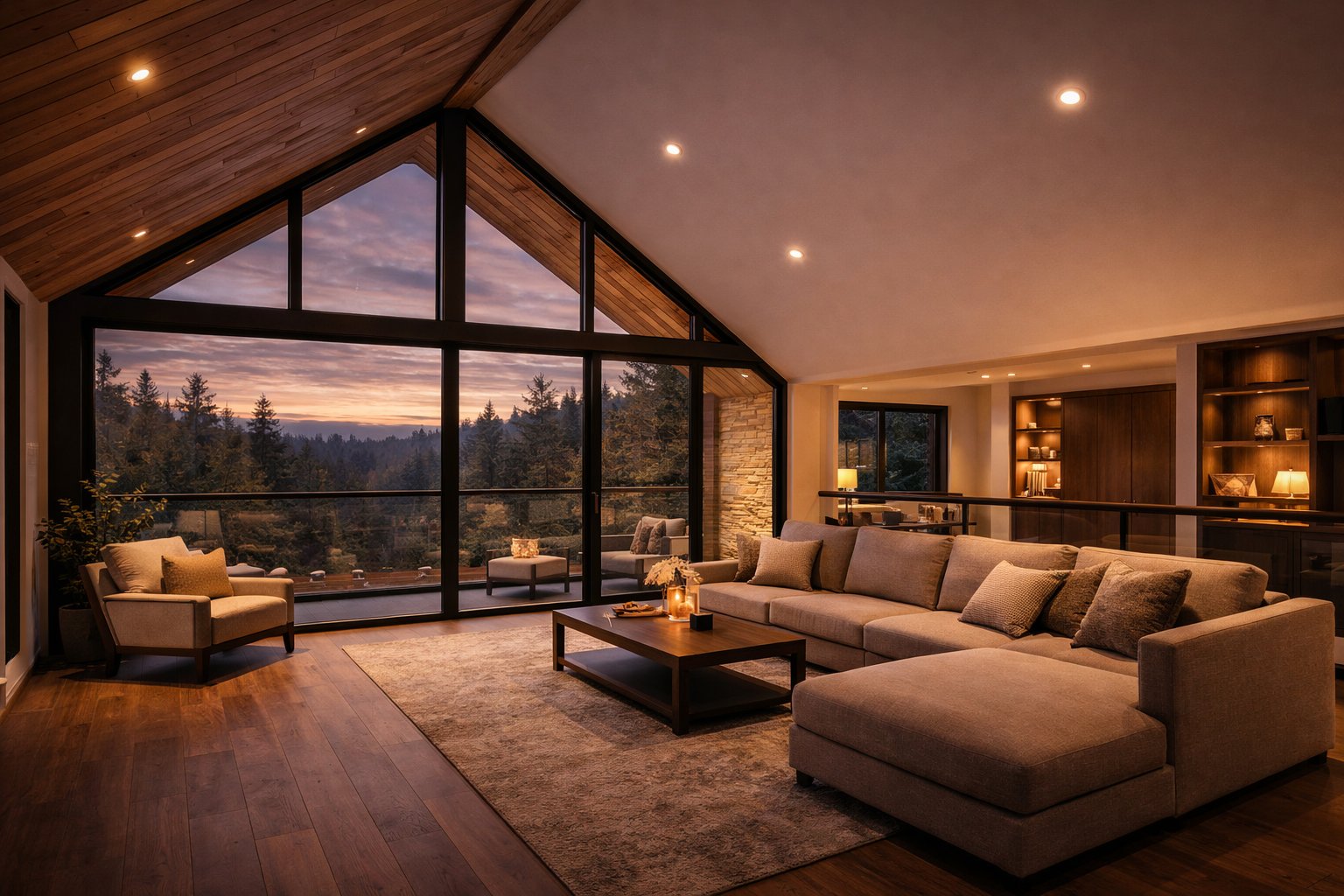
Every week, a Kenyan in the diaspora or an expat in Nairobi thinks the same thought: "I should build a cabin on the coast, put it on Airbnb, and earn passive income." It is a genuinely good idea. The Kenya coast is underexplored, underpriced relative to comparable destinations globally, and increasingly in demand from international tourists. But the gap between the idea of building a holiday cabin and the reality of owning one is where most investors lose money, time, or both. This guide is an honest, architect's-eye view of what it actually costs to build a holiday cabin in Kenya for Airbnb in 2026 — including the real short-term rental Kenya market data, the achievable rental yield Kenya coast figures, and an honest answer to whether it is worth it for diaspora and expat investors.
Co-Own an Architect-Designed Kenya Coast Cabin.
From $12,750.
Kaskazi Retreat is a fractional co-ownership cabin on Watamu's Indian Ocean coast — designed, built, and managed by Aalis Studios. Quarterly USD passive income. 45 owner nights per year. No construction, no management, no occupancy risk on your own.
The True Cost of Building a Holiday Cabin in Kenya
Let's start with the number everyone searches for and no one gives honestly. A contemporary architect-designed 2-bedroom holiday cabin in Kenya — the kind that photographs well for Airbnb, commands premium nightly rates, and actually attracts international guests — costs between KES 8 million and KES 15 million to build in 2026. Here is the full breakdown for a KES 15M cabin on the Kenya coast:
Note that the professional fees — architect and construction manager — alone add KES 1,430,000 ($9,728) on top of the build cost. Many first-time cabin builders budget for construction but not for the team needed to manage it properly. The result is a project that runs over time and over budget. On the Kenya coast, where contractor availability is lower than in Nairobi, this risk is amplified. A BORAQS-registered architect is not optional — it is a legal requirement for any building permit application in Kenya, and the construction management fee is what stands between your cabin and a structure you cannot sell or insure.
"The cabin that earns you money is not the cheapest one to build. It is the one designed to photograph like a hotel, managed like a hotel, and priced like a hotel — from day one."
— Aalis Studios, Nairobi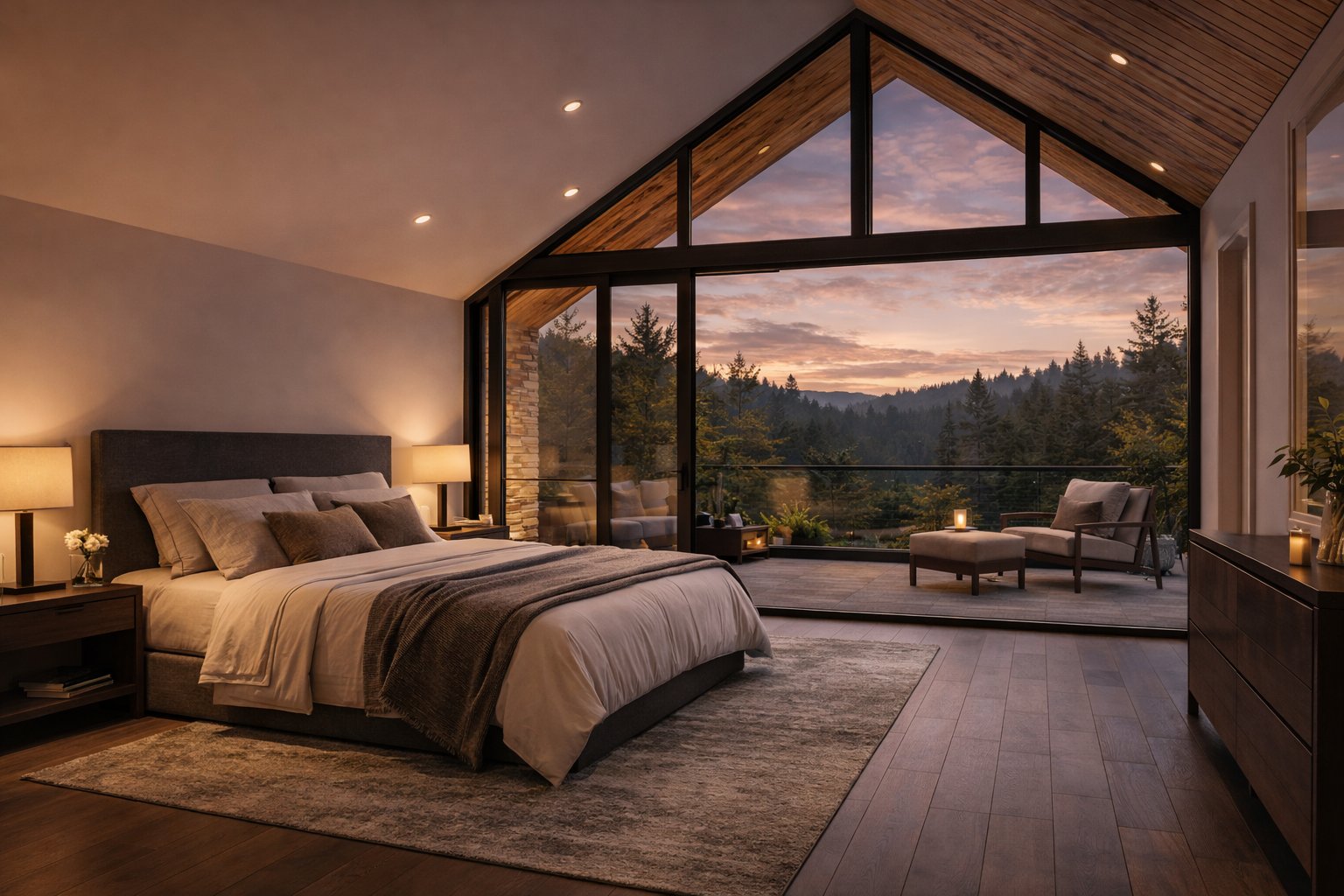
The design standard that earns premium Airbnb rates — a contemporary Kenya coast cabin with fire pit lounge, full-height glazing, and warm interior lighting. This is what charges KES 20,000–30,000 per night and books 60%+ of available nights.
What Does a Kenya Coast Cabin Actually Earn on Airbnb?
This is where most investment guides become vague. Here are the real numbers from the Watamu short-term rental market in 2025/2026, sourced from verified STR analytics data.
The headline number — 30% average occupancy — needs context. That is the market average across all 34 active listings, including poorly photographed properties, those without off-grid infrastructure, and those with no professional management. Top-performing Watamu properties achieve occupancy of 50–65% and earn over $2,800 per month in revenue. The gap between average and top-performing is almost entirely explained by design quality, photography, and management responsiveness.
A well-designed, professionally managed 2-bedroom cabin at 50% occupancy (183 nights per year) at an average daily rate of KES 20,000 generates:
Against a total project cost of KES 15,000,000 ($102,000), that is a net yield of approximately 7% on a full sole-ownership build. Not bad — but you must also factor in the 18–20 months of zero income during construction, the KES 15M you have locked into a single illiquid coastal asset, and the ongoing management responsibility.
Occupancy is not guaranteed. The average Watamu listing sits at 30% occupancy — below the rate needed to cover operating costs on a KES 15M build. Only well-designed, professionally photographed and managed properties break through to 50–65%. Management is a job. Guest messaging, dynamic pricing, maintenance coordination, cleaning supervision, and local contractor relationships are not passive — unless you pay someone else to do them, which reduces your yield further. Currency risk is real. KES income distributed in USD is subject to exchange rate movement — a meaningful risk for diaspora investors over a 7-year horizon.
The Alternative: Co-Own Instead of Build
The question is not whether a holiday cabin on the Kenya coast is a good investment. The market data says it is. The question is whether building and solely owning one is the right structure for your capital, your timeline, and your lifestyle — particularly if you are a diaspora Kenyan or expat investor who does not live locally.
The fractional co-ownership model — applied to the Kenya coast for the first time through Kaskazi Retreat — addresses each of these constraints directly. Instead of committing $102,000 to a single cabin, you commit $12,750 for a 1/8 share of an architect-designed, already-specified, professionally managed cabin. The design is done. The construction management is done. The Airbnb listing strategy is done. Your job as an investor is to subscribe, receive quarterly USD income, and book your 45 owner nights when you want to use the Kenya coast.
Build vs. Co-Own — A Direct Comparison
| Factor | Kaskazi Retreat — Co-Own | Build Your Own Cabin |
|---|---|---|
| Capital required | $12,750 per share | $102,000 (full build) |
| Time to first income | ~Month 10 from subscription | 18–24 months minimum |
| Design quality | Lexus Award-winning architect | Depends on your choices |
| Construction risk | Zero — already managed | Full exposure — overruns common |
| Management | Aalis Studios — fully managed | You, or a manager you hire (–15%) |
| Occupancy risk | Shared across 8 co-owners | 100% yours |
| Personal use | 45 nights / year | Unlimited (but reduces income) |
| Net yield | ~10.4% on $12,750 | ~7% on $102,000 (at 50% occupancy) |
| Liquidity / exit | Year 7 structured sale | Whenever you find a buyer |
| Capital diversification | $89,250 still deployed elsewhere | $102,000 in one illiquid asset |
| Suitable for diaspora / expats | Designed for remote investors | Requires local presence or trust |
| Currency | USD income distributions | KES income, self-convert |
The Kenya Coast Cabin.
Without the Build.
Architect-designed by Aalis Studios — BORAQS-registered, Lexus Design Award 2020 Grand Prix winners. On Watamu's Indian Ocean coast. Quarterly USD passive income. 45 owner nights per year. 7-year exit with capital appreciation. Designed for diaspora Kenyans, expats, and international investors.
Who Should Build? Who Should Co-Own?
Building your own holiday cabin on the Kenya coast makes sense if you have KES 15M+ in capital you are comfortable locking up for 2+ years, you intend to use the property extensively yourself (or have family who will), you are based locally or have a trusted local partner to manage the build, and you want full ownership flexibility — the ability to pass it down, renovate, or convert it to a different use.
Co-owning a share in Kaskazi Retreat makes more sense if you are a diaspora Kenyan or expat seeking passive income without a full property commitment, you want USD-denominated returns with a clear exit horizon, you have $12,750 available but not $102,000, you prefer to invest the balance of your capital in other assets, or you want the Kenya coast experience — the owner nights, the lifestyle, the connection — without the full responsibility of sole ownership.
Neither is wrong. They serve different investors at different stages. What matters is being clear about which category you are in before you commit capital.
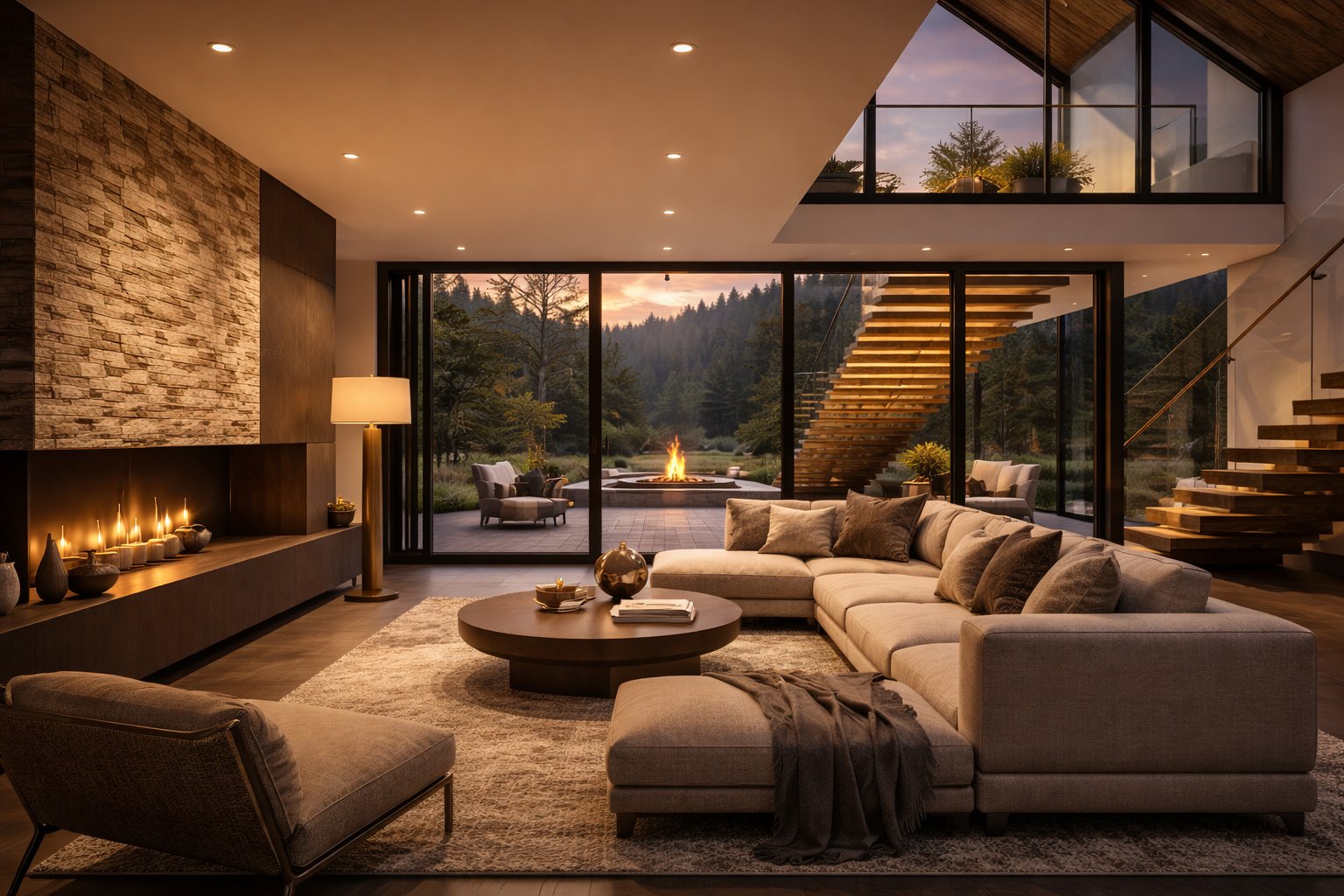
The interior specification that earns premium ADRs — marble waterfall island, dark timber cabinetry, floating staircase, forest view through full-height glass. Designed to photograph like a boutique hotel and justify rates above the market average.
The Watamu Market: Why the Location Matters
Not all Kenya coast locations deliver equal returns. Watamu stands apart for three structural reasons that make it the highest-potential STR location in Kenya in 2026:
1. Undersupply. With only 34 active Airbnb listings in the entire Watamu area, a new high-quality cabin does not compete in a crowded market — it essentially sets the standard. Compare this to Diani (250+ listings) or Mombasa (500+ listings), where a new property enters a saturated field.
2. International demand. 79% of Watamu's Airbnb guests are international — predominantly French, British, and German travellers who pay in EUR and USD. This insulates STR revenue from domestic market fluctuations and maintains strong ADRs even in shoulder seasons.
3. Natural protection. Watamu is a UNESCO Biosphere Reserve and Marine National Park. Development is constrained by conservation regulations, which means the supply of new quality cabins will remain limited. The properties that exist will appreciate in value as demand grows and supply cannot keep pace.
The Bottom Line — Numbers Investors Need
Here is the condensed version for investors who want a single reference point:
| Kenya Coast Cabin — Key Figures | 2026 Data |
|---|---|
| Cost to build a 2BR cabin on Kenya coast | KES 8M–15M ($55K–$102K) |
| Build time | 14–20 months |
| Professional fees (architect + construction mgmt) | 11% of build cost (6% design + 5% CM) |
| Avg. Watamu Airbnb occupancy (market) | 30% |
| Top-performing Watamu cabin occupancy | 50–65% |
| Avg. daily rate — premium cabin | KES 18,000–25,000 ($120–$170) |
| Net yield — sole ownership at 50% occupancy | ~7% on KES 15M build |
| Net yield — Kaskazi Retreat co-ownership | ~10.4% on $12,750 share |
| Minimum to co-invest in a Kenya coast cabin | $12,750 (Kaskazi Retreat) |
| Shares available in Kaskazi Retreat | ~7 remaining at $12,750 |